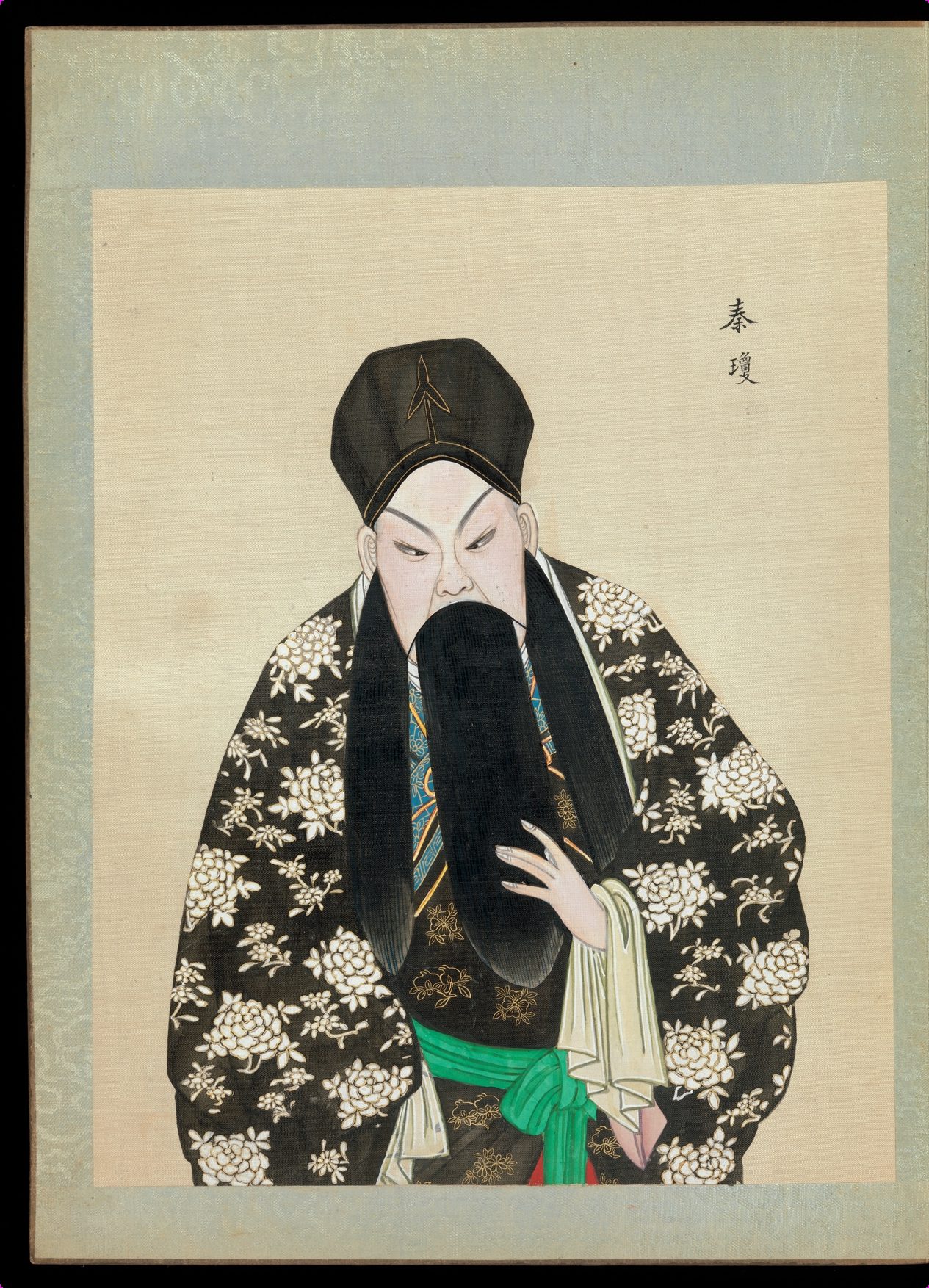
The tradition & historical record
4 min read · 2 sourcesThe "18 Warriors of Sui-Tang Transition" (traditional Chinese: 隋唐十八好漢; simplified Chinese: 隋唐十八好汉) are fictional legendary heroes who lived during the Sui and early Tang dynasties. The concept of the 18 Warriors was first introduced in the traditional historical novel Shuo Tang. The warriors' rankings are based on their martial arts skills and physical strength. Some of them are based on historical figures, such as Qin Shubao and Shan Xiongxin, while others were invented as folk heroes, such as Luo Cheng and Yuwen Chengdu. 1
Ranking
The exact rankings are disputed, partly because the novel Shuo Tang only ranks 13 of the 18 warriors. In order, the 13 ranked by the book are: 1
Li Yuanba (李元霸) Yuwen Chengdu (宇文成都) Pei Yuanqing (裴元庆) Xiong Kuohai (熊阔海) Wu Yunshao (伍云召) Wu Tianxi (伍天锡) Luo Cheng (罗成) Yang Lin (杨林) Wei Wentong (魏文通) Shang Shitu (尚师徒) Xin Wenli (新文理) N/A N/A N/A N/A Qin Shubao (秦叔宝) Yuchi Gong (尉迟恭) Shan Xiongxin (单雄信) The identities of the five unnamed warriors are often disputed. Among the characters mentioned in the book, several possible figures include Yuchi Gong (尉迟恭), Wang Bodang (王伯当), Cheng Yaojin (程咬金), Hua Gongyi (华功义), Liang Shitai (梁师泰), Han Qinhu (韩擒虎), Ma Shumou (麻叔谋), and Cao Yanping (曹延平). Other historical or fictional characters from the Sui and early Tang dynasties are also potential candidates for this list, such as Zuo Tiancheng (左天成), Lai Hu'er (来护儿), Luo Shixin (罗士信), Hou Junji (侯君集), Wang Junke (王君可), Wang Bo (王薄), and Lu Mingyue (卢明月). The most popularly accepted version of the list includes Cao Yanping, Lai Hu'er, Liang Shitai, and Zuo Tiancheng as warriors 12 through 15, and Yuchi Gong as warrior 17. 1
In the novel
In Shuo Tang, Li Yuanba (李元霸) is portrayed as the most powerful and skillful warrior of his time. He is the fourth son of Li Yuan, the founder of the Tang dynasty. Li Yuanba possesses extraordinary physical strength, exemplified by his weapons: a pair of golden hammers weighing 400 jin(236.1 kg) each. With Li Yuanba's assistance, Li Yuan not only defeated the Turks, but also easily captured the capital city of Chang'an after his rebellion. However, Li Yuanba is not known for his intelligence and can be quite foolish. His teacher had instructed him never to kill anyone who wielded a Golden-Tang (a spade-like weapon) in battle. Despite this, in two separate battles, Li Yuanba kills Wu Tianxi and Yuwen Chengdu, both of whom used Golden-Tangs. After killing Yuwen Chengdu, Li Yuanba is caught in a thunderstorm. Annoyed by the lightning and thunder, he throws his heavy hammers into the sky to strike the clouds. When the hammers fall back to the ground, one of them strikes and kills him. 1
Archetype
There are two inspirations for the character of Li Yuanba. The first is Li Xuanba (李玄霸), the historical third son of Li Yuan, who died young. Li Yuanba's name and social identity are derived from Li Xuanba. The second is Li Daoxuan (李道玄), a renowned general of the early Tang dynasty. Li Yuanba in the novel shares many similarities with Li Daoxuan in history: both are skilled martial artists, great generals, and royal-family members who died young. 1
In the novel
In the novel, Yuwen Chengdu (宇文成都) is the elder son of Yuwen Huaji, a politically powerful figure in the Sui dynasty. Before Li Yuanba gained prominence, Yuwen Chengdu was considered the strongest warrior. His weapon is a Golden-Tang, weighing 200 kg. He is so formidable that most opponents flee at the mere mention of his name. In the Battle of Siming Mountain, Yuwen Chengdu single-handedly fights against Wu Yunshao, Wu Tianxi, and Xiong Kuohai for an entire day, ultimately defeating them. Though generally regarded as a hero, he is negatively influenced by his family, especially his father, Yuwen Huaji, who kills Yang Guang, the emperor of the Sui dynasty, in a military rebellion. Yuwen Chengdu is eventually killed by Li Yuanba during the Battle of Lintong Pass following the rebellion. 1
Archetype
Yuwen Chengdu is based on Yuwen Chengji (宇文承基), the historical son of Yuwen Huaji. Yuwen Chengji is notable primarily because of his father. After the military rebellion, Yuwen Chengji was killed by Dou Jiande, along with his father, Yuwen Huaji, his uncle, Yuwen Zhiji, and his younger brother, Yuwen Chengzhi (宇文承趾), who was the inspiration for Yuwen Chenglong (宇文成龙) in the novel. The only surviving member of his family, Yuwen Shiji (宇文士及), eventually became a high-ranking officer in the Tang dynasty. 1
The text above is adapted from the Wikipedia article “18 Warriors of Sui-Tang Transition”, available under the Creative Commons Attribution-ShareAlike 4.0 licence. 1
18 Warriors of Sui-Tang Period is fictional heroes of 6th- and 7th-century China, according to the structured record cited below. This entry was generated automatically from that record and has not yet been reviewed by a person familiar with the tradition. 2
The source record links this tradition to 1 external register, which can be verified through the citation. 2