The tradition & historical record
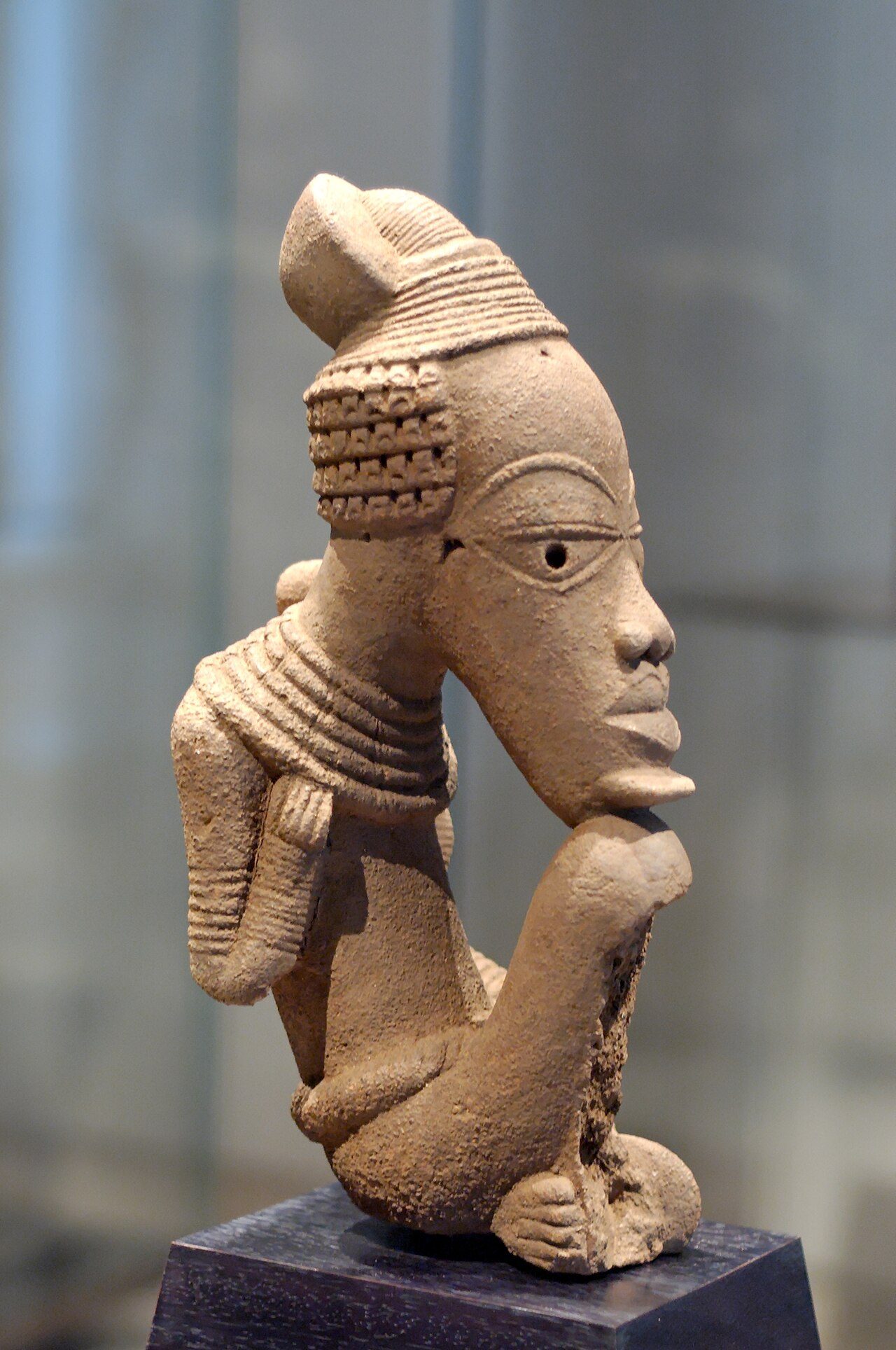
5 min read · 2 sourcesAfrican art refers to works of visual art, including works of sculpture, painting, metalwork, and pottery, originating from the various peoples of the African continent and influenced by distinct, indigenous traditions of aesthetic expression. While the various artistic traditions of such a large and diverse continent display considerable regional and cultural variety, there are consistent artistic themes, recurring motifs, and unifying elements across the broad spectrum of African visual expression. As is the case for every artistic tradition in human history, African art was created within specific social, political, and religious contexts. Likewise, African art was often created not purely for art's sake, but rather with some practical, spiritual, and/or didactic purpose in mind. In general, African art prioritizes conceptual and symbolic representation over realism, aiming to visualize the subject's spiritual essence. Ethiopian art, heavily influenced by Ethiopia's long-standing Christian tradition, is also different from most African art, where Traditional African religion (with Islam prevalent in the northeast and northwest presently) was dominant until the 20th century. African art includes prehistoric and ancient art, the Islamic art of West Africa, the Christian art of East Africa, and the traditional artifacts of these and other regions. 1
Definitions
Some definitions of African art include the artistic production of African diasporas, such as African-American art, Afro-Caribbean Art, and Latin American art inspired by African traditions. However, African art does not usually encompass the artistic traditions of North Africa, which have been predominantly influenced by distinct artistic traditions, such as Punic art, Greco-Roman Art, Islamic Art, and other styles originating beyond Africa. As a result of geographic factors, namely North Africa's proximity with the Mediterranean and the natural boundaries, such as the Sahara, separating North Africa with the rest of continent, the influence of indigenous African forms of art would have been lower by comparison. 1
Thematic elements
In Western African art there is a particular focus on expressiveness and individuality. The art of the Dan people is an example of this, and it has also extended its influence beyond the continent. The human figure has long been the central subject of most African art, and this emphasis has influenced certain European artistic traditions. For instance, during the fifteenth century, Portugal engaged in trade with the Sapi culture near the Ivory Coast in West Africa. The Sapi artists produced intricate ivory salt cellars that merged African and European design elements—most notably through the inclusion of the human figure, which was typically absent in Portuguese saltcellars. In African art, the human figure can symbolize the living or the dead, represent chiefs, dancers, or various trades, serve as an anthropomorphic image of a deity, or fulfill other votive and spiritual functions. Another recurring theme is the intermorphosis of humans and animals, blurring the boundaries between species to convey symbolic meaning. Visual abstraction: African artworks often prioritize visual abstraction over naturalistic representation. This stylistic tendency stems from the widespread use of generalized and codified forms, which reflect cultural values, spiritual beliefs, and artistic conventions rather than realistic depictions. 1
Scope
The study of African art until recently focused on the traditional art of certain well-known groups on the continent, with a particular emphasis on traditional sculpture, masks and other visual culture from non-Islamic West Africa, Central Africa, and Southern Africa with a particular emphasis on the 19th and 20th centuries. Recently, however, there has been a movement among African art historians and other scholars to include the visual culture of other regions and time periods. The notion is that by including all African cultures and their visual culture over time in African art, there will be a greater understanding of the continent's visual aesthetics across time. Finally, the arts of the African diaspora, in Brazil, the Caribbean and the south-eastern United States, have also begun to be included in the study of African art. 1
Materials
African art is produced using a wide range of materials and takes many distinct shapes. Because wood is a prevalent material, wood sculptures make up the majority of African art. Other materials used in creating African art include clay soil. Jewelry is a popular art form used to indicate rank, affiliation with a group, or purely aesthetics. African jewelry is made from such diverse materials as Tiger's eye stone, Hematite, Sisal, coconut shell, beads and Ebony wood. Sculptures can be wooden, ceramic or carved out of stone like the famous Shona sculptures, and decorated or sculpted pottery comes from many regions. Various forms of textiles are made including Kitenge, mud cloth and Kente cloth. Mosaics made of butterfly wings or colored sand are popular in West Africa. Early African sculptures can be identified as being made of terracotta and bronze. 1
Traditional African religions
Traditional African religions have been extremely influential on African art forms across the continent. African art often stems from the themes of religious symbolism, functionalism and utilitarianism. With many pieces of art that are created for spiritual rather than purely creative purposes. The majority of popular African artworks can be understood as the tools, such as the representative figurines used in religious rituals and ceremonies. Many African cultures emphasize the importance of ancestors as intermediaries between the living, the Gods, and the supreme creator. Art is seen as a way to contact these spirits of ancestors. Art may also be used to depict deities, for example, the Yoruba deity Ogun who presides over iron, war, and craftsmanship, and is valued for its functional purposes. The arrival of both Christianity and Islam greatly influenced the art of the African continent, and the traditions of both have been integrated into the beliefs and artwork of traditional African religion. 1
The text above is adapted from the Wikipedia article “African art”, available under the Creative Commons Attribution-ShareAlike 4.0 licence. 1
African art is modern and historical aesthetic, material, oral/audio and visual culture native to or originating from indigenous Africans or the African continent, according to the structured record cited below. This entry was generated automatically from that record and has not yet been reviewed by a person familiar with the tradition. 2
The source record links this tradition to 26 external registers, which can be verified through the citation. 2