The tradition & historical record
2 min read · 2 sourcesLezim or lazium is a folk dance form, from the state of Maharashtra in India. 1
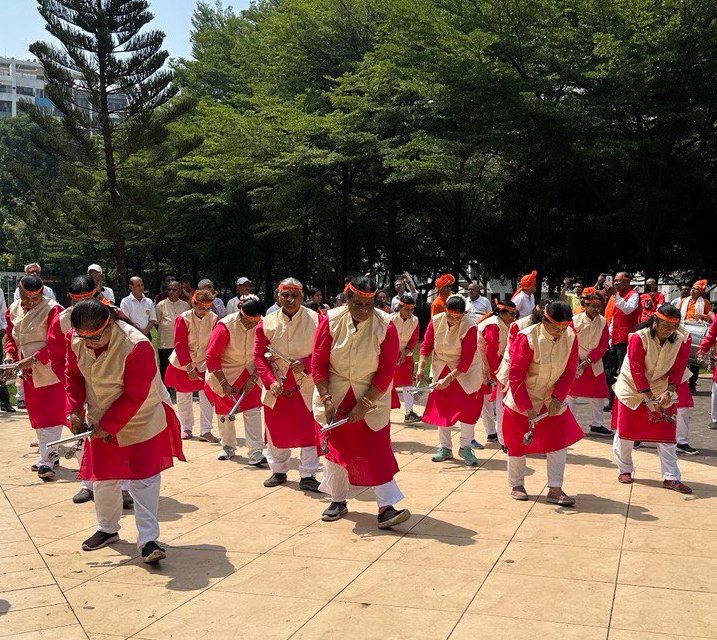
Sometimes also spelt as "Lezium", Lezim dancers carry a small musical instrument with jingling cymbals called the Lezim or lezium, after which the dance form is named. There are a minimum of 20 dancers in a traditional lezim. This dance is named after a wooden idiophone to which thin metal discs are fitted that produce a jingling sound and the dancers use this while classical dancing. Dholki, a drum instrument, is used as the primary percussion music. It is performed dressed in colourful costumes. The dance is frequently used as a fitness drill by schools in Maharashtra, militias and other institutions because it involves many calisthenic moves and can be quite strenuous. Lezim is more of a vigorous physical exercise and drill than a dance; the formations can be in twos, fours and even in a circle. Historically, there were a few variations of the lezim practiced in the villages of Maharashtra and parts of Gujarat, however these are rarely used today. One variation used a 2.5 feet long bamboo pole (Reedh) with an iron chain (Dhanusyasarakhi). This was used more as a form of exercise than dance, as the lezim was heavy. Such lezims were invariably hand made. Another variation of the lezim (called Koyande) used a wooden pole, 15 to 18 inches long, with both ends punctured and an iron linked chain weighing about 1 kg running through it. 1
The text above is adapted from the Wikipedia article “Lezim”, available under the Creative Commons Attribution-ShareAlike 4.0 licence. 1
Lezim is folk dance form from Maharashtra, India, according to the structured record cited below. This entry was generated automatically from that record and has not yet been reviewed by a person familiar with the tradition. 2
The source record links this tradition to 1 external register, which can be verified through the citation. 2