The tradition & historical record
3 min read · 2 sourcesMilonguero is a style of close-embrace tango dancing, the name coined by Susana Miller and Oscar "Cacho" Dante from the Argentine word "milonguero". Milonguero is a term for a skillful and respectful tango dancer who holds a reverence for the type of traditional social tango that is danced at milongas in Buenos Aires, Argentina. The two uses of the term do not coincide: many dancers who are considered to be milongueros do not dance milonguero-style tango. 1
Origin
Milonguero-style tango, also known as estilo milonguero (in Buenos Aires, known by name Estilo del centro because it originates from downtown milongas where dance floors were crowded) or apilado (piled up, stacked), is a close-embrace style of social tango dancing in which the focus is inward and the leg and arm movements are kept small. The style developed from and is appropriate to crowded dance floors. The term was coined by Buenos Aires-born tango dancer Susana Miller in the 1990s in the process of teaching others the kind of inwardly focused tango dancing that was practiced by veteran dancers in the social dance venues of central Buenos Aires, differentiating it from the more pronounced movements of outer Buenos Aires and other less crowded milongas, and especially to separate it from choreographed stage tango. 1
Style
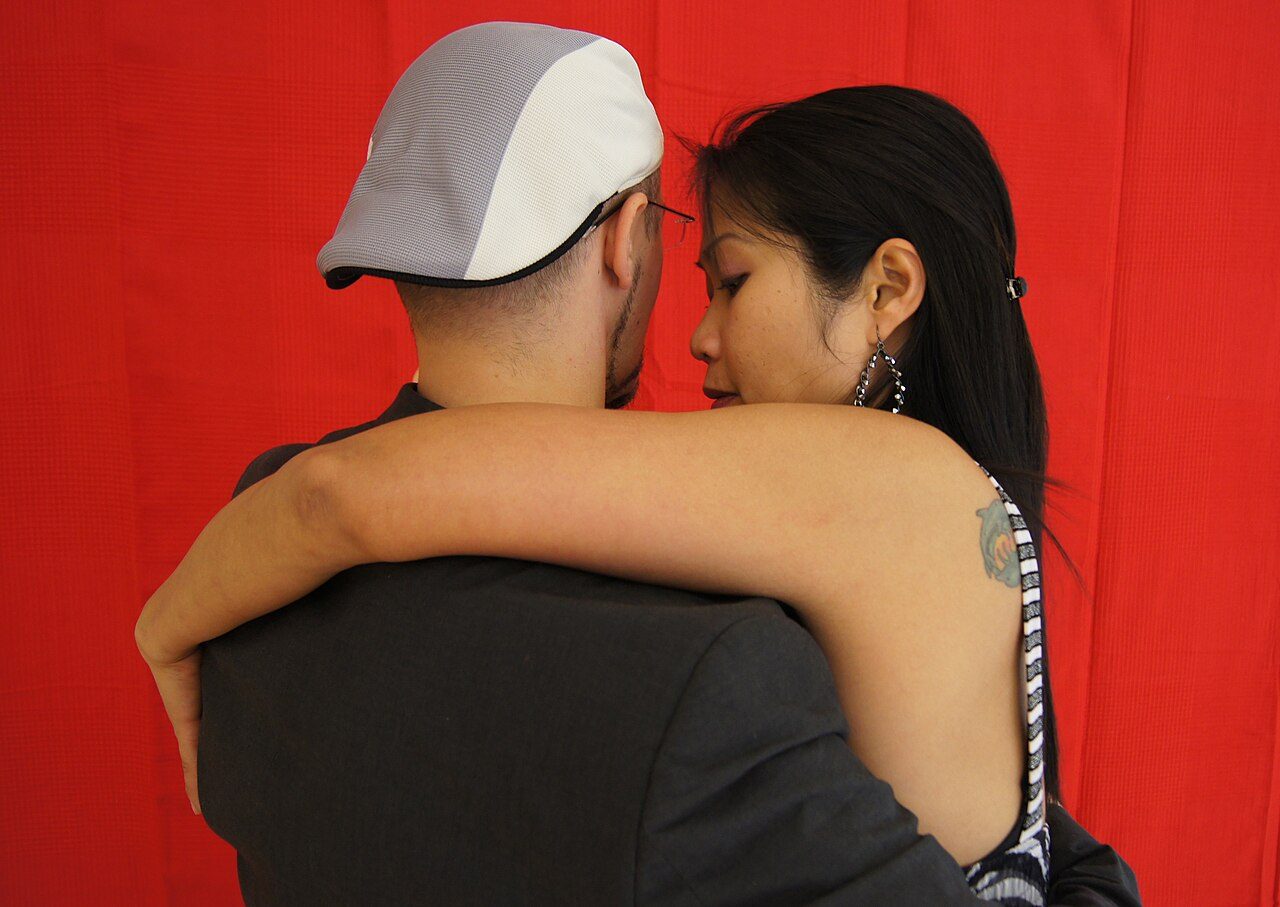
In the milonguero-style embrace, the woman moves her left hand past her partner's right shoulder (where it would be in open embrace) around his neck and back to end up near his left shoulder, depending on the relative heights of the dancers. Her left arm will lie above the man's right arm with no space between them, but she will not hold tension in that arm—he should barely feel the weight of her arm. The two faces may touch, they will at least be very close. With a straight back she leans against her partner at a more pronounced angle than his, he leans slightly toward her but may appear to be standing upright. Rhythmically, the two will indulge in small adornments with the feet until just before the next beat, changing weight at the last possible moment. Barbara Garvey, the co-founder of the Bay Area Tango Association based in San Francisco, said that she and her husband Al saw in 1987 that "a very simple form of close embrace was prevalent in the center of [Buenos Aires], but not in other barrios." This style was expanded upon by Pedro "Tete" Rusconi who was the first to teach close embrace in the US, joined by Susana Miller who gave the style its name. In 1994, Daniel Trenner taught at Stanford University's Tango Week, describing the Rusconi/Miller milonguero style as the only authentic Buenos Aires tango. From the late 1980s, a sense of tango community had been growing in the San Francisco Bay Area, and after '94 it adopted an emphasis on milonguero style, along with other forms of close embrace. By the late-1990s a milonga could be found in San Francisco on any night of the week. Traveling tango performers would appear at the dance venues after their shows, but they would change from show attire and style to salon-style dancing and more conservative clothing. 1
External links / sources
Tango and Chaos in Buenos Aires: online book about tango culture and tango dancing in Buenos Aires of 2000s 1
The text above is adapted from the Wikipedia article “Milonguero style”, available under the Creative Commons Attribution-ShareAlike 4.0 licence. 1
Milonguero style is type of dance, according to the structured record cited below. This entry was generated automatically from that record and has not yet been reviewed by a person familiar with the tradition. 2
The source record links this tradition to 1 external register, which can be verified through the citation. 2