The tradition & historical record
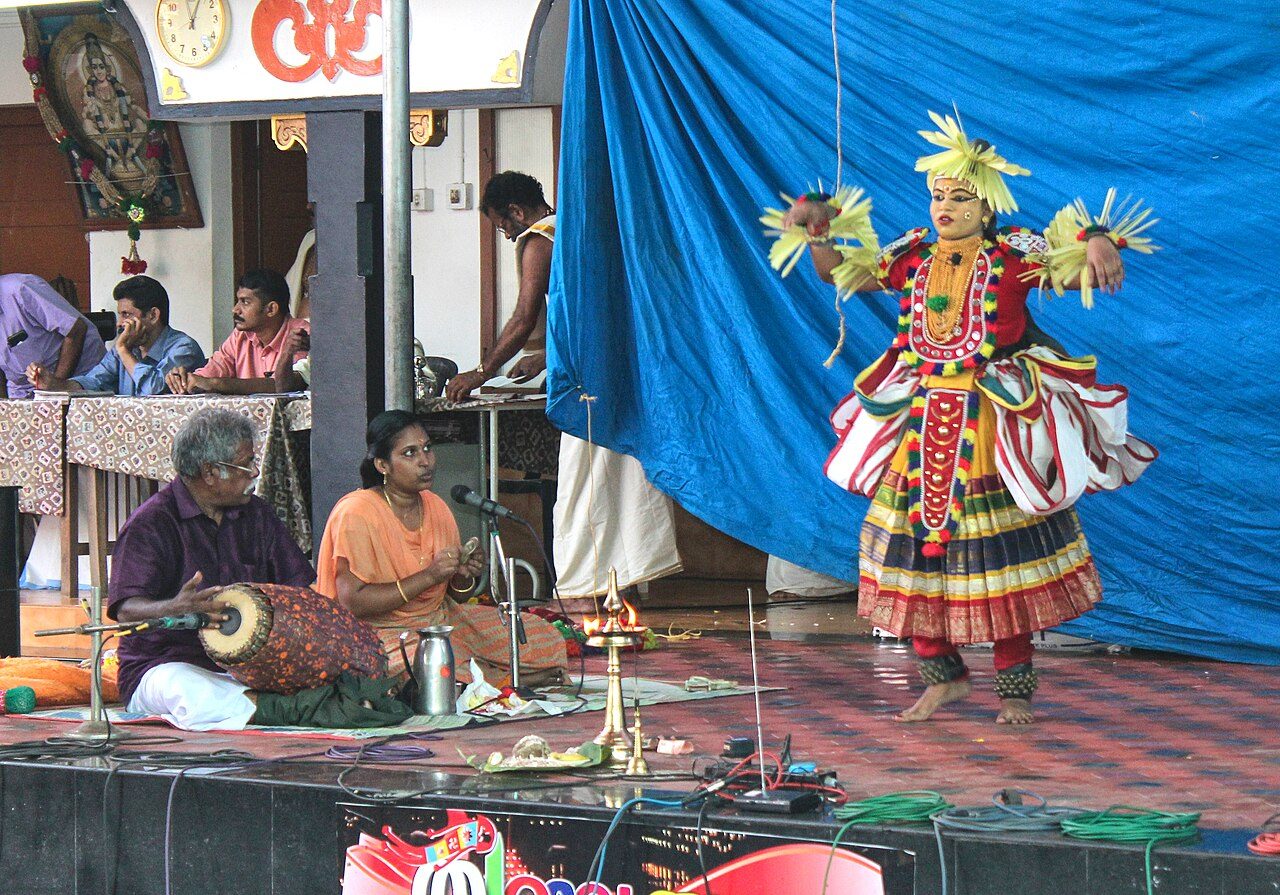
1 min read · 2 sourcesSheethankan Thullal is a dance and poetic performance form in Kerala, India. This one of the three major thullal forms prevailing in Kerala. Others are Ottan Thullal and Parayan Thullal. This dance is performed in a very slow tempo. It gives importance to gestures than vocal actions. 1
Performance
Usually Sheethankan Thullal is performed in midnight. But it can also performed in day time without using any lamps on stage. Minimum three persons should be needed for the performance. One for staging the performance and others for playing musical instruments. 1
Costume
The performer will be dressed with special costume for thullal. They use yellow coloured powder in face and use dress made up of Coconut leaves. Usually Kakali is the metre used in this dance form. 1
Origin
Sheethankan thullal was discovered by famous Malayalam poet Kunchan Nambiar in Ambalappuzha. 1
The text above is adapted from the Wikipedia article “Sheethankan Thullal”, available under the Creative Commons Attribution-ShareAlike 4.0 licence. 1
Sheethankan Thullal is dance and poetic performance form in Kerala, India, according to the structured record cited below. This entry was generated automatically from that record and has not yet been reviewed by a person familiar with the tradition. 2
The source record links this tradition to 1 external register, which can be verified through the citation. 2