The tradition & historical record
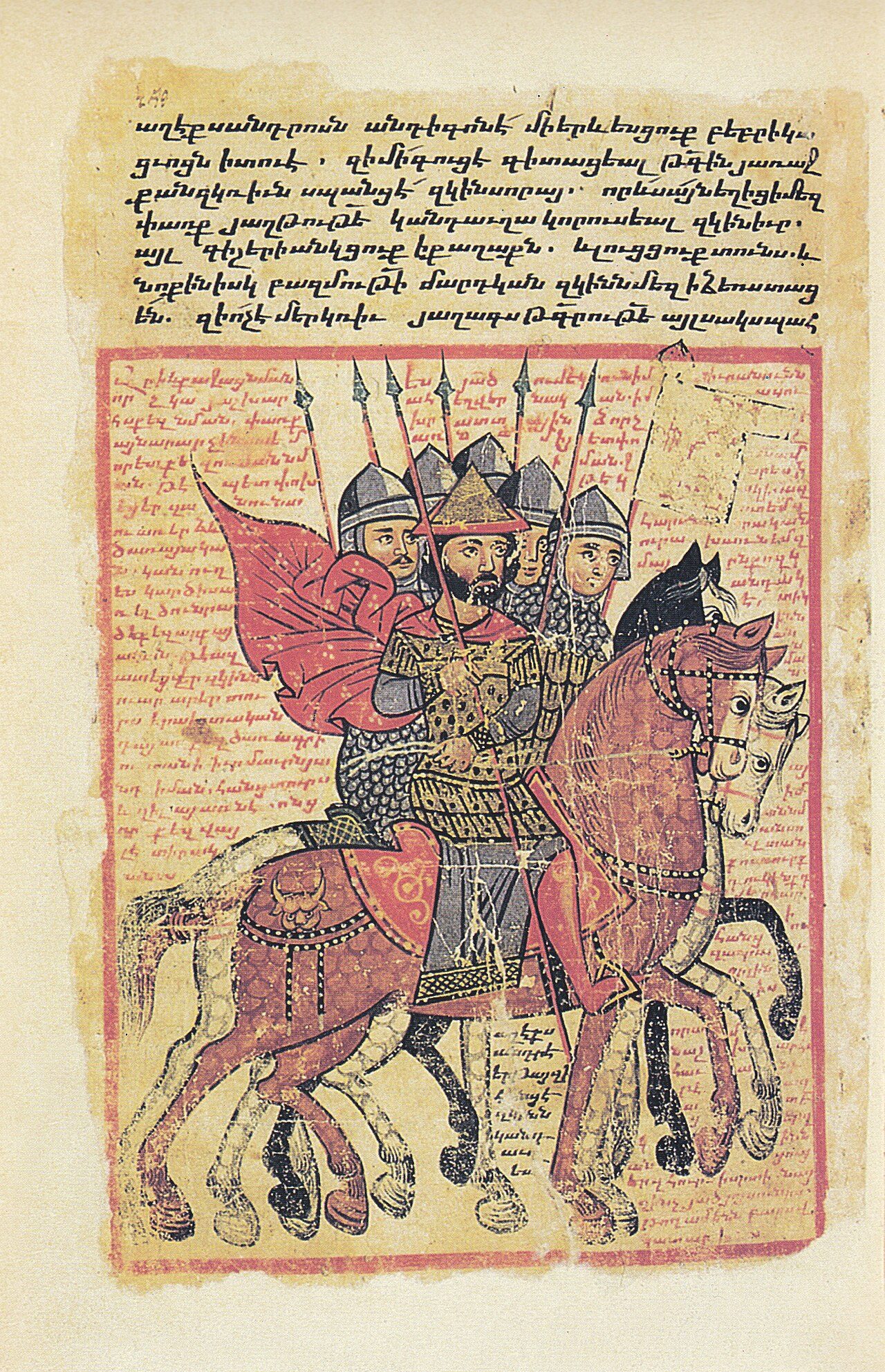
6 min read · 2 sourcesThe Alexander Romance is an account of the life and exploits of Alexander the Great. Of uncertain authorship, it has been described as "antiquity's most successful novel". The book describes Alexander the Great from his birth, to his succession of the throne of Macedon, his conquests including that of the Persian Empire, and finally his death. Although constructed around a historical core, the book is mostly fantastical, including many miraculous tales and encounters with mythical creatures, such as sirens or centaurs. In this context, the term romance refers not to the meaning of the word in modern times but in the Old French sense of a novel or roman, a "lengthy prose narrative of a complex and fictional character" (although Alexander's historicity did not deter ancient authors from using this term). It was widely copied and translated, accruing various legends and fantastical elements at different stages. The original version was composed in Koine Greek some time before 338 AD, when a Latin translation was made, although the exact date is unknown. 1
Plot
Nectanebo II, the last Pharaoh of Egypt, foresees that his kingdom will fall to the Persians and so flees to the Macedonian court under the guise of the identity of a magician. In his time there, he falls in love with the wife of king Philip II of Macedon, Olympias. Olympias becomes pregnant by Nectanebo, but his paternity is kept a secret. Philip develops a suspicion of an affair between the two, but Nectanebo allays Philip's suspicions by sending a magic sea-hawk to him in a dream. Alexander is born from this pregnancy, but while he is growing up he kills Nectanebo, who reveals Alexander's paternity as he dies. Alexander begins to be educated by Aristotle and competes in the Olympics. After Philip dies, Alexander begins his campaigns into Asia, although the story is unclear with respect to the order and location of the campaigns. Once he reaches Egypt, an oracle of the god Amun instructs him where to go to create the city that will become Alexandria. The march into Asia continues and Alexander conquers Tyre. He begins exchanging letters with the Persian emperor Darius III, though the story now delves into more campaigns in Greece. The Persian march resumes and eventually Alexander conquers the Persians. He marries Roxane, the daughter of Darius, and writes letters to Olympias describing all he saw and his adventures during his conquests, including his wandering through the Land of Darkness, search for the Water of Life, and more. Next, he proceeds to conquer India from which he writes letters to Aristotle, though he also receives an omen about his coming death in this time. He visits the temples of the sun and moon, and makes the Amazons his subjects. 1
Gates of Alexander
The Romance locates the Gates of Alexander between two mountains called the "Breasts of the North" (Greek: Μαζοί Βορρά). The mountains are initially 18 feet apart and the pass is rather wide, but Alexander's prayers to God causes the mountains to draw nearer, thus narrowing the pass. There he builds the Caspian Gates out of bronze, coating them with fast-sticking oil. The gates enclosed twenty-two nations and their monarchs, including Gog and Magog (therein called "Goth and Magoth"). The geographic location of these mountains is rather vague, described as a 50-day march away northwards after Alexander put to flight his Belsyrian enemies (the Bebrykes, of Bithynia in modern-day North Turkey). 1
Horns of Alexander
In the α recension of the Alexander Romance, Alexander's father is an Egyptian priest named Nectanebo who sports a set of ram horns. After his death, Alexander is described as "the horned king" (βασιλέα κερασφόρον) by an oracle instructing Ptolemy, a general of Alexander, on where to bury him. This statement was repeated in the Armenian recension of the Alexander Romance in the 5th century. The use of the horned motif, representing the horns of Zeus Ammon to visualize Alexander stems from much earlier, originally in coinage depicting Alexander by his immediate successors Ptolemy I Soter of Egypt and more prominently the king of Thrace Lysimachus were the earliest produce coinage of Alexander with the rams horns. The motif would be carried over into later Alexander legends, such as the Armenian translation of α and the Syriac Alexander Legend. 1
Fountain of Life
Traditions about Alexander's search for the Fountain of Life were influenced by earlier legends about the Mesopotamian hero Gilgamesh and his search for immortality, such as in the Epic of Gilgamesh. Alexander is travelling along with his company in search of the Land of the Blessed. On the way to the Land, Alexander becomes hungry and asks one of his cooks, Andreas, to get him some meat. Andreas gets some fish and begins to wash it in a fountain. Immediately upon being washed, the fish sprang to life and escaped into the fountain. Realizing he has discovered the Fountain of Life, Andreas tells no one else about it and drinks the water for himself. He also stores away some of the water into a silver vessel, hoping to use some of it to seduce Alexander's daughter. Meanwhile, Alexander eventually reaches the Land of the Blessed but is unable to enter it. At the same time, he learns of Andreas losing the fish and questions him over it. Andreas confesses about what happened with the fish, and he is whipped for it, but he denies that he drank any and does not mention that he stored some, and asks Alexander over why he should worry about the past. At a later point, Andreas manages to use the water to seduce Alexander's daughter, who is enticed by the opportunity to drink from it, which she does and becomes immortal. Alexander learns of the miracle and punishes both Andreas and his daughter greatly: for Andreas is turned into a daimōn of the sea and his daughter into a daimōn of the desert. This story was elaborated on in subsequent versions of the Romance, such as in the Syriac Song of Alexander and in the Talmud. 1
Land of Darkness
The original Alexander Romance contains a few statements that would develop into the fully-fledged myths of episodes in the Land of Darkness, especially in versions of the Romance in Islamicate lands. In a journey that is directed towards Polaris, the Polar constellation, he is to find the Land of the Blessed at the edge of the world which in "a region where the sun does not shine" (2.39). The Land of Darkness becomes a prominent feature in subsequent recensions of the Alexander Romance. 1
The text above is adapted from the Wikipedia article “Alexander Romance”, available under the Creative Commons Attribution-ShareAlike 4.0 licence. 1
Alexander Romance is ancient Greek literary work, according to the structured record cited below. This entry was generated automatically from that record and has not yet been reviewed by a person familiar with the tradition. 2
The source record links this tradition to 12 external registers, which can be verified through the citation. 2