The tradition & historical record
6 min read · 2 sourcesThe story of Dhu al-Qarnayn (in Arabic ذو القرنين, literally "The Two-Horned One"; also transliterated as Zul-Qarnain or Zulqarnain), is mentioned in Surah al-Kahf of the Quran. It has long been recognised in modern scholarship that the story of Dhu al-Qarnayn has strong similarities with the Syriac Legend of Alexander the Great. According to this legend, Alexander travelled to the ends of the world then built a wall in the Caucasus Mountains to keep Gog and Magog out of civilized lands (the latter element is found several centuries earlier in the works of Flavius Josephus). Several argue that the form of this narrative in the Syriac Alexander Legend (known as the Neṣḥānā) dates to between 629 and 636 CE and so is not the source for the Quranic narrative based on the view held by many Western and Muslim scholars that Surah 18 belongs to the second Meccan Period (615–619). The Syriac Legend of Alexander has however received a range of dates by different scholars, from a latest date of 630 (close to Muhammad's death) to an earlier version inferred to have existed in the 6th century CE. Sidney H. Griffith argues that the simple storyline found in the Syriac Alexander Legend (and the slightly later metrical homily or Alexander poem) "would most likely have been current orally well before the composition of either of the Syriac texts in writing" and it is possible that it was this orally circulating version of the account which was recollected in the Islamic milieu. 2
Alexander in legend and romance
Alexander the Great was an immensely popular figure in the classical and post-classical cultures of the Mediterranean and Middle East. Almost immediately after his death in 323 BC a body of legend began to accumulate about his exploits and life which, over the centuries, became increasingly fantastic as well as allegorical. Collectively this tradition is called the Alexander romance and some recensions feature such vivid episodes as Alexander ascending through the air to Paradise, journeying to the bottom of the sea in a glass bubble, and journeying through the Land of Darkness in search of the Water of Life (Fountain of Youth). The earliest Greek manuscripts of the Alexander romance, as they have survived, indicate that it was composed at Alexandria in the 3rd century. The original text was lost but was the source of some eighty different versions written in twenty-four different languages. As the Alexander romance persisted in popularity over the centuries, it was assumed by various neighbouring people. Of particular significance was its incorporation into Jewish and later Christian legendary traditions. In the Jewish tradition Alexander was initially a figure of satire, representing the vain or covetous ruler who is ignorant of larger spiritual truths. Yet their belief in a just, all-powerful God forced Jewish interpreters of the Alexander tradition to come to terms with Alexander's undeniable temporal success. Why would a just, all-powerful God show such favour to an unrighteous ruler? This theological need, plus acculturation to Hellenism, led to a more positive Jewish interpretation of the Alexander legacy. In its most neutral form this was typified by having Alexander show deference to either the Jewish people or the symbols of their faith. 2
Dating and origins of the Alexander legends
The legendary Alexander material originated as early as the time of the Ptolemaic dynasty (305 BC to 30 BC) and its unknown authors are sometimes referred to as the Pseudo-Callisthenes (not to be confused with Callisthenes of Olynthus, who was Alexander's official historian). The earliest surviving manuscript of the Alexander romance, called the α (alpha) recension, can be dated to the 3rd century AD and was written in Greek in Alexandria: 2
There have been many theories regarding the date and sources of this curious work [the Alexander romance]. According to the most recent authority, ... it was compiled by a Greco-Egyptian writing in Alexandria about A.D. 300. The sources on which the anonymous author drew were twofold. On the one hand he made use of a `romanticized history of Alexander of a highly rhetorical type depending on the Cleitarchus tradition, and with this he amalgamated a collection of imaginary letters derived from an Epistolary Romance of Alexander written in the first century B.C. He also included two long letters from Alexander to his mother Olympias and his tutor Aristotle describing his marvellous adventures in India and at the end of the World. These are the literary expression of a living popular tradition and as such are the most remarkable and interesting part of the work The Greek variants of the Alexander romance continued to evolve until, in the 4th century, the Greek legend was translated into Latin by Julius Valerius Alexander Polemius (where it is called the Res gestae Alexandri Magni) and from Latin it spread to all major vernacular languages of Europe in the Middle Ages. 2
The Syriac Legend
The version recorded in Syriac is of particular importance because it was current in the Middle East during the time of the Quran's writing and is regarded as being closely related to the literary and linguistic origins of the story of Dhul-Qarnayn in the Quran. The Syriac version of the Alexander Romance (or Pseudo-Callisthenes), as it has survived, consists of six distinct manuscripts, each including separately a Syriac Christian religious legend concerning Alexander in prose text called the Neṣḥānā d-Aleksandrōs or "Exploits of Alexander", often referred to simply as the Syriac Legend or Syriac Christian Legend, and based on it, a sermon known as the metrical homily (mēmrā), or Alexander song or poem ascribed to the Syriac poet-theologian Jacob of Serugh (451–521 AD, also called Mar Jacob), which according to Reinink was actually composed around 629–636. The Syriac Legend appears in each of the six manuscripts containing the Syriac version of the Alexander Romance A key manuscript witness is British Library Add. 25875 (copied 1708–1709), which is the oldest and one of the five used by E. A. W. Budge, who used it as the base text for his critical edition of the Syriac text and English translation of the Legend. The slightly later Metrical Homily (mēmrā) survives in five manuscripts, the oldest of which was copied in the 9th century CE. The Syriac Legend concentrates on Alexander's journey to the end of the World, where he constructs the Gates of Alexander to enclose the evil nations of Gog and Magog, while the Metrical Homily describes his journey to the Land of Darkness to discover the Water of Life (Fountain of Youth), as well as his enclosure of Gog and Magog. 2
Search for the water of life
Besides the Dhul Qarnayn episode, Surah al-Kahf contains another story which has been connected with legends in the Alexander romance tradition. 2
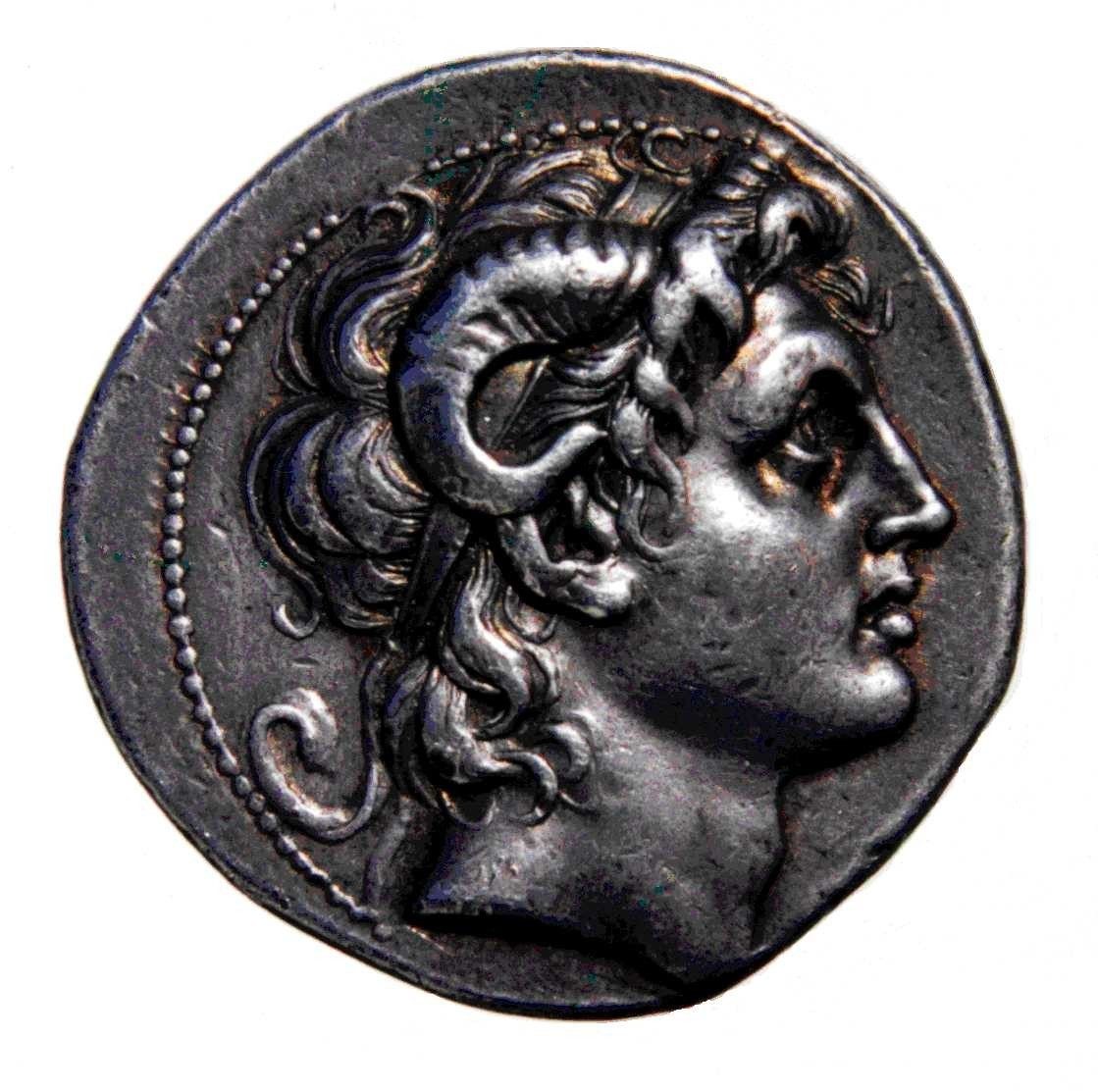
The two-horned one
The literal translation of the Arabic phrase "Dhu al-Qarnayn", as written in the Quran, is "the two-horned man". 2
The text above is adapted from the Wikipedia article “Theories about Alexander the Great in the Quran”, available under the Creative Commons Attribution-ShareAlike 4.0 licence. 2
Alexander the Great in the Quran is theory identifying the character Dhul-Qarnayn in the Quran as Alexander the Great, according to the structured record cited below. This entry was generated automatically from that record and has not yet been reviewed by a person familiar with the tradition. 1
The source record links this tradition to 5 external registers, which can be verified through the citation. 1