The tradition & historical record
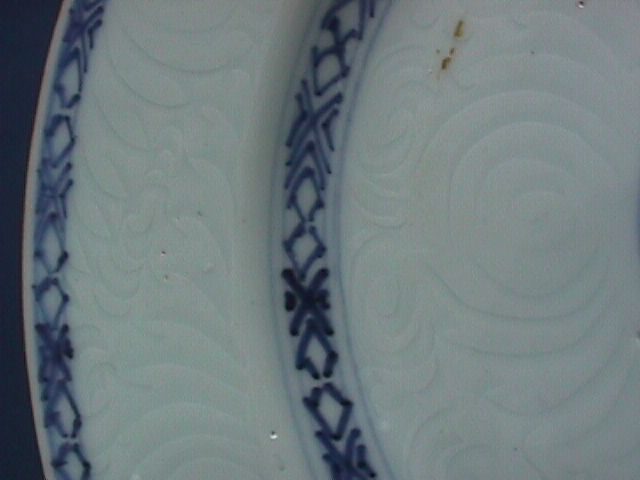
2 min read · 2 sourcesAn hua (Chinese: 暗花; pinyin: ànhuā) is a term used in Chinese ceramics meaning secret or veiled decoration; the designs being visible through transmitted light, produced either by incising the design into the porcelain before glazing and firing or by delicate slip-trailing in white slip on the porcelain body. It is also called "secret" or "hidden decoration". Incised, carved or mould-impressed monochrome decoration under a ceramic glaze was the dominant type of decoration during the Song dynasty, in types of white wares such as Ding ware and Qingbai. But the term is mainly used of the still more discreet version of the technique popularized under the Yongle Emperor (1360–1424) of the Ming dynasty (1368–1644), and continued later, particularly during the reign of the Yongzheng Emperor (1723–1735) in the Qing dynasty. Very often dragons were concealed in the interior of bowls. Some an hua dishes were found inside a storage jar in the mid-15th century (1450–1487?) Belankan shipwreck off the coast of Indonesia, found circa 1999. Of a teapot in the Victoria and Albert Museum (see gallery), the museum says: "One side is very subtly incised with a design of rocks and plants, and the other with a poetic couplet that reads: "At night in springtime one moment is precious like a thousand pieces of gold, the orchid sends forth its fragrance in the shade of the moon." These are the first two lines from a poem by the famous eleventh-century writer Su Shi". 1
The text above is adapted from the Wikipedia article “An hua”, available under the Creative Commons Attribution-ShareAlike 4.0 licence. 1
An hua is technique to hide decoration of a ceramic, that is only visible when light passes through the object, according to the structured record cited below. This entry was generated automatically from that record and has not yet been reviewed by a person familiar with the tradition. 2
The source record links this tradition to 3 external registers, which can be verified through the citation. 2