The tradition & historical record
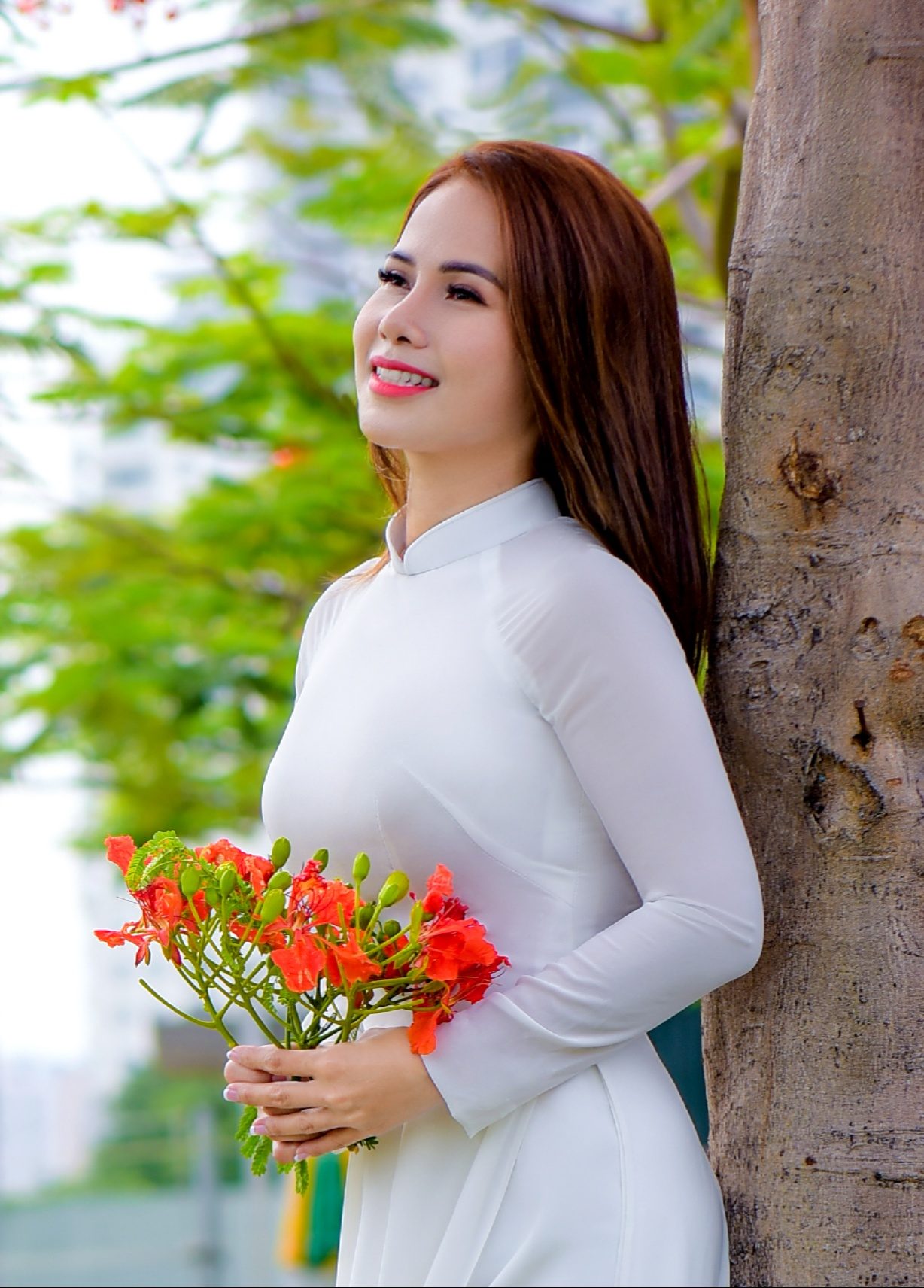
6 min read · 2 sourcesÁo dài (English: ; Vietnamese: [ʔaːw˧˦ zaːj˨˩] (North), [ʔaːw˦˥ jaːj˨˩] (South), lit. “long tunic”) is a traditional Vietnamese outfit consisting of a long split tunic worn over silk trousers. It can serve as formalwear for both men and women. There are inconsistencies in the term áo dài. The currently most common usage is for a Francized design by Nguyễn Cát Tường (whose shop was named "Le Mur"), which is expressly a women's close-fitting design whose shirt is two pieces of cloth sewn together and fastened with buttons. A more specific term for this design would be "áo dài Le Mur". Other writers, especially those who claim its "traditionality", use áo dài as a general category of garments for both men and women, and include older designs such as áo ngũ thân (five-piece shirt), áo tứ thân (four-piece shirt), áo tấc (loose shirt), áo đối khâm (parallel-flap robe), áo viên lĩnh (round-collar robe), áo giao lĩnh (cross-collar robe), áo trực lĩnh (straight-collar robe). 1
History
The predecessor of the áo dài was derived by the Nguyễn lords in Phú Xuân during 18th century. This outfit was derived from the áo ngũ thân, a five-piece shirt commonly worn in the 19th and early 20th centuries. The áo dài was later made to be form-fitting which was influenced by the French, Nguyễn Cát Tường and other Hanoi artists redesigned the áo dài as a modern shirt in the 1940s and 1950s. The updated look was promoted by the artists and magazines of Tự Lực văn đoàn (Self-Reliant Literary Group) as a national costume for the modern era. In the 1950s, Saigon designers tightened the fit to produce the version worn by Vietnamese women. The áo dài for women was extremely popular in South Vietnam in the 1960s and early 1970s. On Tết and other occasions, Vietnamese men may wear an áo gấm (brocade long shirt), a version of the áo dài made of very thick fabric and with sewed symbols. 1
The áo dài has traditionally been marketed with a feminine appeal, with "Miss Ao Dai" pageants being popular in Vietnam and with overseas Vietnamese. However, the men version of áo dài or modified áo dài are also worn during weddings or formal occasions. The áo dài is one of the few Vietnamese words that appear in English-language dictionaries. The áo dài can be paired with the nón lá or the khăn vấn. 1
Parts of shirt
Tà sau: back flap Nút bấm thân áo: hooks used as fasteners and holes Ống tay: sleeve Đường bên: inside seam Nút móc kết thúc: main hook and hole Tà trước: front flap Khuy cổ: collar button Cổ áo: collar Đường may: seam Kích (eo): waist 1
Switch to trousers
For centuries, peasant women typically wore a halter top (yếm) underneath a blouse or overcoat, alongside a skirt (váy). Aristocrats, on the other hand, favored a cross-collar robe called áo giao lĩnh. When the Ming dynasty occupied Đại Việt during the Fourth Era of Northern Domination in 1407, it forced the women to wear Chinese-style pants. The following Lê dynasty also criticized women for violating Neo-Confucian dress norms, but only enforced the dress code haphazardly, so skirts and halter tops remained the norm. During the 17th and 18th centuries, Vietnam was divided into northern and southern realms, with the Nguyễn lords ruling the south. To distinguish the southern people from the northerners, in 1744, Lord Nguyễn Phúc Khoát of Huế decreed that both men and women at his court wear trousers and a gown with buttons down the front. The members of the southern court were thus distinguished from the courtiers of the Trịnh Lords in Hanoi, who wore áo giao lĩnh with long skirts. According to Lê Quý Đôn's record in the book "Phủ Biên Tạp Lục" (recording most of the important information about the economy and society of Đàng Trong for nearly 200 years), the áo dài (or rather, the forerunner of the áo dài) was created by Lord Nguyễn Phúc Khoát based on Chinese Ming dynasty costumes, using the method of making costumes in the book "Sāncái Túhuì" as the standard. 1
19th century
The áo ngũ thân (five-piece shirt) had two flaps sewn together in the back, two flaps sewn together in the front, and a "baby flap" hidden underneath the main front flap. The gown appeared to have two-flaps with slits on both sides, features preserved in the later áo dài. Compared to a modern áo dài, the front and back flaps were much broader and the fit looser and much shorter. It had a high collar and was buttoned in the same fashion as a modern áo dài. Women could wear the shirt with the top few buttons undone, revealing a glimpse of their yếm underneath. 1
Modernization of style
Huế's Đồng Khánh Girls' High School, which opened in 1917, was widely praised for the áo dài uniform worn by its students. The first modernized áo dài appeared at a Paris fashion show in 1921. In 1930, Hanoi artist Cát Tường, also known as Le Mur, designed a shirt inspired by the áo ngũ thân and by Paris fashions. It reached to the floor and fit the curves of the body by using darts and a nipped-in waist. When fabric became inexpensive, the rationale for multiple layers and thick flaps disappeared. Modern textile manufacture allows for wider panels, eliminating the need to sew narrow panels together. The áo dài Le Mur, or "trendy" áo dài, created a sensation when model Nguyễn Thị Hậu wore it for a feature published by the newspaper Today in January 1935. The style was promoted by the artists of Tự Lực văn đoàn ("Self-Reliant Literary Group") as a national costume for the modern era. The painter Lê Phô introduced several popular styles of ao dai beginning in 1934. Such Westernized garments temporarily disappeared during World War II (1939–45). In the 1950s, Saigon (now Ho Chi Minh City) designers tightened the fit of the áo dài to create the version commonly seen today. Trần Kim of Thiết Lập Tailors and Dũng of Dũng Tailors created a shirt with raglan sleeves and a diagonal seam that runs from the collar to the underarm. Madame Nhu, first lady of South Vietnam, popularized a boat neck version beginning in 1958. The áo dài was most popular from 1960 to 1975. A brightly colored áo dài hippy was introduced in 1968. The áo dài mini, a version designed for practical use and convenience, had slits that extended above the waist and panels that reached only to the knee. 1
The text above is adapted from the Wikipedia article “Áo dài”, available under the Creative Commons Attribution-ShareAlike 4.0 licence. 1
áo dài is a Vietnamese costume, according to the structured record cited below. This entry was generated automatically from that record and has not yet been reviewed by a person familiar with the tradition. 2
The source record links this tradition to 8 external registers, which can be verified through the citation. 2