The tradition & historical record
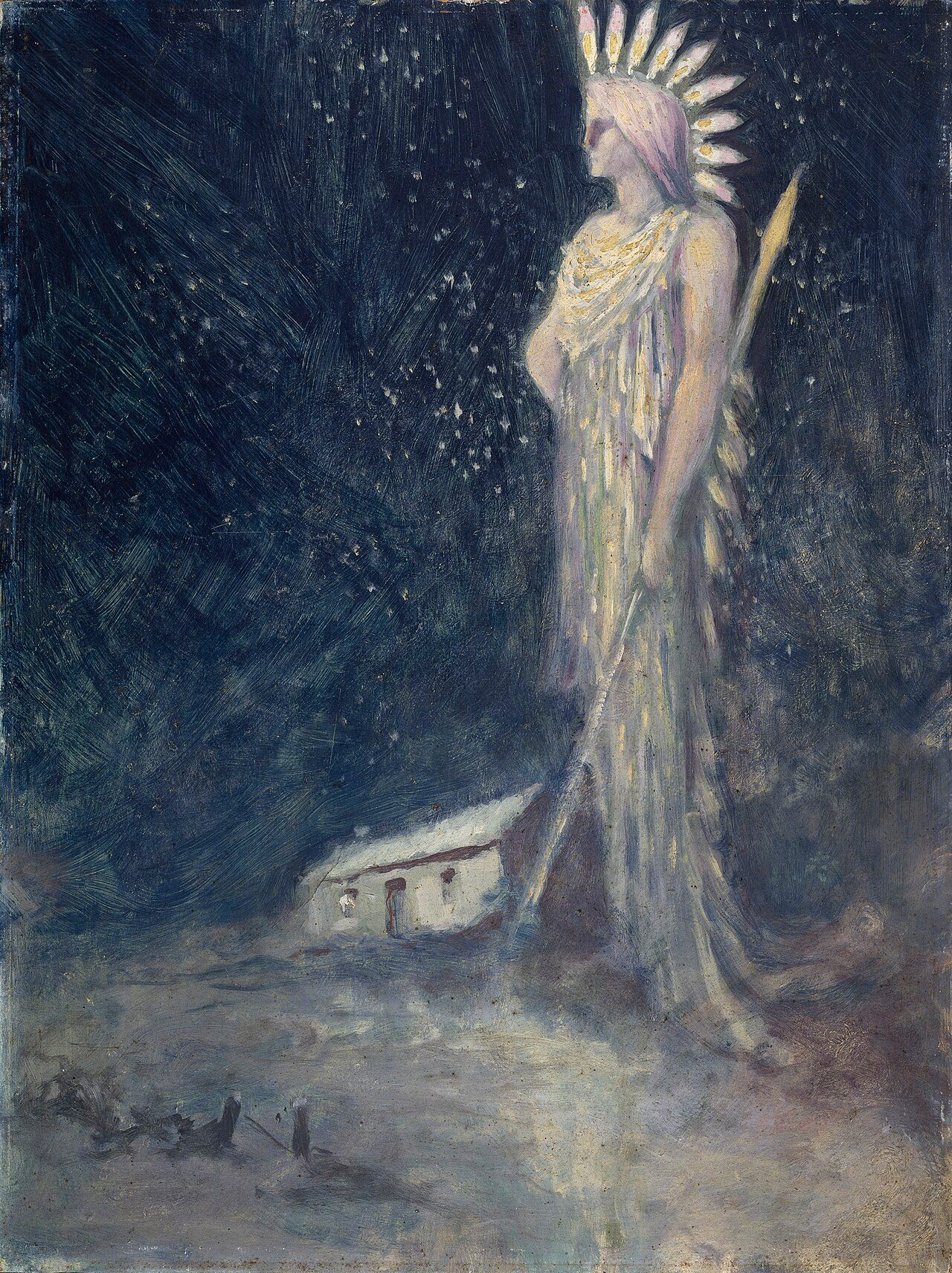
5 min read · 2 sourcesAos sí or aos sídhe (pronounced [iːsˠ ˈʃiː]; English approximation: eess SHEE) is the Irish name for a supernatural race in Gaelic folklore, similar to elves. They are said to descend from the Tuatha Dé Danann or the gods of Irish mythology. The term aos sí means "folk of the sí"; these are the mounds in which they are said to dwell, which are seen as portals to an Otherworld. Such abodes are referred to in English as "shees", "fairy mounds", "elf mounds" or "hollow hills". The aos sí interact with humans and the human world. They are variously said to be the ancestors, the spirits of nature, or goddesses and gods. 1
Etymology
The term aos sídhe (in reformed spelling, aos sí) derives from aos, meaning "people", and sídhe, the genitive form of síodh, meaning "fairy mound" (cf. Old Irish áes síde). The latter word derives from proto-Celtic *sīdos ("abode"), and is related to the English words "seat" and "settle". Another name for the aos sí is daoine sí, which likewise means "people of the fairy mound". The same terms exist in Scottish Gaelic as aos-sìthe and daoine-sìthe. An individual member of the aos sí may be called a síog, anglicised as "sheogue". The aos sídhe are commonly referred to in English simply as "the Sidhe", a usage that is not paralleled in Irish. 1
In medieval literature
In medieval Irish literature, the names aes síde and fír síde (folk of the síd) are equivalent to the terms Tuath Dé and Tuatha Dé Danann. The only difference is that Tuath Dé tends to be used in contexts of legendary history and mythology. Writing in the 7th century, the Irish bishop Tírechán described the sídh folk as "earthly gods" (Latin: dei terreni). The 8th century Fiacc's Hymn says that the Irish adored the sídh folk before the coming of Saint Patrick. 1
In Irish folklore
Due to the oral nature of Irish folklore, the exact origins of the fairies are not well defined. There are enough stories to support two possible origins. The fairies could either be fallen angels or the descendants of the Tuatha Dé Danann; in the latter case, this is equivalent with aos sí. In the former case, it is said that the fairies are angels who have fallen from heaven, but whose sins were not great enough to warrant hell. In many Gaelic tales, the aos sí are later literary versions of the Tuatha Dé Danann ("People of the Goddess Danu")—the deities and deified ancestors of Irish mythology. Some sources describe them as the survivors of the Tuatha Dé Danann who retreated into the Otherworld when fleeing the mortal Sons of Míl Espáine who, like many other early invaders of Ireland, came from Iberia. As part of the terms of their surrender to the Milesians, the Tuatha Dé Danann agreed to retreat and dwell underground. In folk belief and practice, the aos sí are often appeased with offerings and care is taken to avoid angering or insulting them. Often, they are not named directly, but rather spoken of as "The Good Neighbours", "The Fair Folk", or simply "The Folk". The aos sí are generally described as stunningly beautiful, though they can also be terrible and hideous. Aos sí are seen as fierce guardians of their abodes—whether a fairy hill, a fairy ring, a special tree (often a whitethorn) or a particular lough or wood. It is believed that infringing on these spaces will cause the aos sí to retaliate in an effort to remove the people or objects that invaded their homes. 1
The sídhe
A sídh (anglicised "shee") is a mound or tumulus associated with the aos sí. In modern Irish, the word is sí (plural síthe); in Scottish Gaelic it is sìth (plural sìthean); in Old Irish it is síd (plural síde). These sídhe are referred to in English as "fairy mounds", "elf mounds" or "hollow hills". In some later English-language texts, the word sídhe is incorrectly used both for the mounds and the people of the mounds. For example, W. B. Yeats, writing in 1908, referred to the aos sí simply as "the sídhe". However, sidh in older texts refers specifically to "the palaces, courts, halls or residences" of the otherworldly beings that supposedly inhabit them. 1
Other names in Irish folklore
The aos sí are known by many names in Ireland, among them: 1
Aingil Anúabhair: "Proud angels" Daoine Uaisle: "The noble folk" Daoine maithe: "Good people" Deamhan Aerig: "Air demons" Dream Anúabhair: "Excessively proud [people]" Sídhfir: "fairy men" Sídheógaídhe: "Young Moundlings" Slúagh Cille: "Host of the churchyard" Slúagh na Marbh: "Host of the dead" Slúagh Sídhe: "Mound host" Slúagh-Sídhe-Thúatha-Dé-Danann: "Mound host of the Túatha Dé Danann" na Uaisle: "The noble" or "The gentry" 1
The text above is adapted from the Wikipedia article “Aos Sí”, available under the Creative Commons Attribution-ShareAlike 4.0 licence. 1
Aos Sí is supernatural race in Irish and Scottish mythology, according to the structured record cited below. This entry was generated automatically from that record and has not yet been reviewed by a person familiar with the tradition. 2
The source record links this tradition to 2 external registers, which can be verified through the citation. 2