The tradition & historical record
5 min read · 2 sourcesAn arepa (Spanish pronunciation: [aˈɾepa]) is a type of flatbread made of ground maize dough that may be stuffed with a filling, eaten in northern parts of South America since pre-Columbian times, and notable primarily in the cuisine of Colombia and Venezuela, but also present in Bolivia, Ecuador, and Central America. Arepa can be served with accompaniments, such as cheese, cuajada, various types of meat, avocado, or diablito (deviled ham spread). It can also be split to make sandwiches. Sizes, maize types, and added ingredients vary based on preparation. It is similar to the Mexican gordita, the Salvadoran pupusa, the Ecuadorian tortilla de maíz, and the Panamanian tortilla or changa. 1
Origins
The arepa is the name given to a pre-Columbian dish in the area that is now Colombia, Panama and Venezuela, but it exists in other parts of the Americas. Instruments used to make flour for the arepas, and the clay slabs on which they were cooked, were often found at archaeological sites in the area. Although it has not been specified in which country an arepa was cooked for the first time, it has been possible to define the oldest dates of the presence of maize in Colombia and Venezuela. For example, in Colombia, the first record of the presence of corn cultivation dates from about 6,000 years ago. However, the presence of arepas dates from 3,000 years ago (specifically in the Altiplano Cundiboyacense by the Muisca), while in Venezuela, the estimate is about 2,800 years ago. Throughout its history, the arepa has stayed mainly unchanged from the arepas that pre-Columbian native peoples would have consumed, making the arepa one of the few pre-contact traditions that have remained popular in the years since colonization. The name arepa is related to erepa, the word for 'cornbread' in the Cumanagoto language. 1
Characteristics
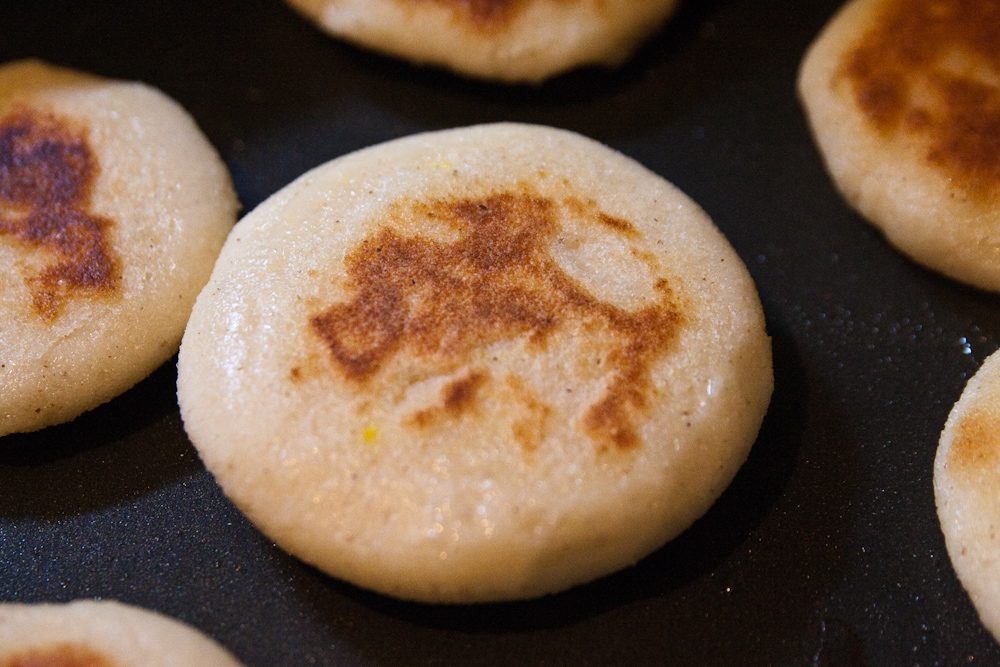
The arepa is a flat, round, unleavened patty of soaked, ground kernels of maize, or—more frequently nowadays—maize meal or maize flour. It can be grilled, baked, fried, boiled, or steamed. The characteristics vary by color, flavor, size, and the food with which it may be stuffed, depending on the region. Simple arepas are filled with butter or cheese and baked. Depending on the meal, more filling varieties can be added with combinations of ingredients like beans, meat, avocados, eggs, tomatoes, salad, shrimp, or fish. Fried arepas are often consumed in northern South America, filled with white cheese on top and served with fried eggs. Sweet fried arepas are another variety often prepared with sugarloaf (papelón) and anise (anís). Venezuelan white cheese is another topping for fried arepas that can be combined with feta cheese. 1
Production
Initially, arepa flour was made by grinding maize at home. In the 1950s, precooked arepa flour was invented by Dr. Luis Caballero Mejías, a Venezuelan engineer, and became an instant success. The flour is mixed with water and salt, and occasionally oil, butter, eggs or milk. Because the flour is already cooked, the blend forms into patties easily. After being kneaded and formed, the patties are fried, grilled, or baked. Some varieties of arepas are made with "peeled" corn using the nixtamalization process; they are known as arepa pelada. Arepa flour is specially prepared (cooked in water, then dried) for making arepas and other maize dough-based dishes, such as hallacas, bollos, tamales, empanadas, atole and chicha. The flour may be called masarepa, masa de arepa, masa al instante, or harina precocida. It is not nixtamalized. The most popular brand names of maize flour are Harina PAN and Harina Juana in Venezuela produced by the companies Alimentos Polar and Monaca; Doñarepa in Colombia produced by the company Harinera del Valle; and Goya elsewhere. However, in countries such as Colombia, it is not common to reconstitute corn flour as it is in Venezuela. Thus, in Colombia, it is more common to see pre-roasted arepas ready for consumption in stores and supermarkets, giving rise to an industry that in 2019 alone had sales of US$124 million with companies such as Arepas Sary and Alpina Productos Alimenticios. 1
Regional varieties
The dish is known in multiple cuisines. According to food anthropologist Ocarina Castillo of the Central University of Venezuela, the dish is likely thousands of years old and originated in the region now occupied by the two countries before colonizers of the area drew borders. 1
Bolivia
Bolivian arepas are made from corn. There are different ways to prepare arepas, but one of the most traditional is the Cotoca recipe. Several varieties of arepa can be found in the country, such as the Cruceña and Andina varieties. 1
The text above is adapted from the Wikipedia article “Arepa”, available under the Creative Commons Attribution-ShareAlike 4.0 licence. 1
arepa is ground maize flatbread dish of Colombia and Venezuela, according to the structured record cited below. This entry was generated automatically from that record and has not yet been reviewed by a person familiar with the tradition. 2
The source record links this tradition to 4 external registers, which can be verified through the citation. 2