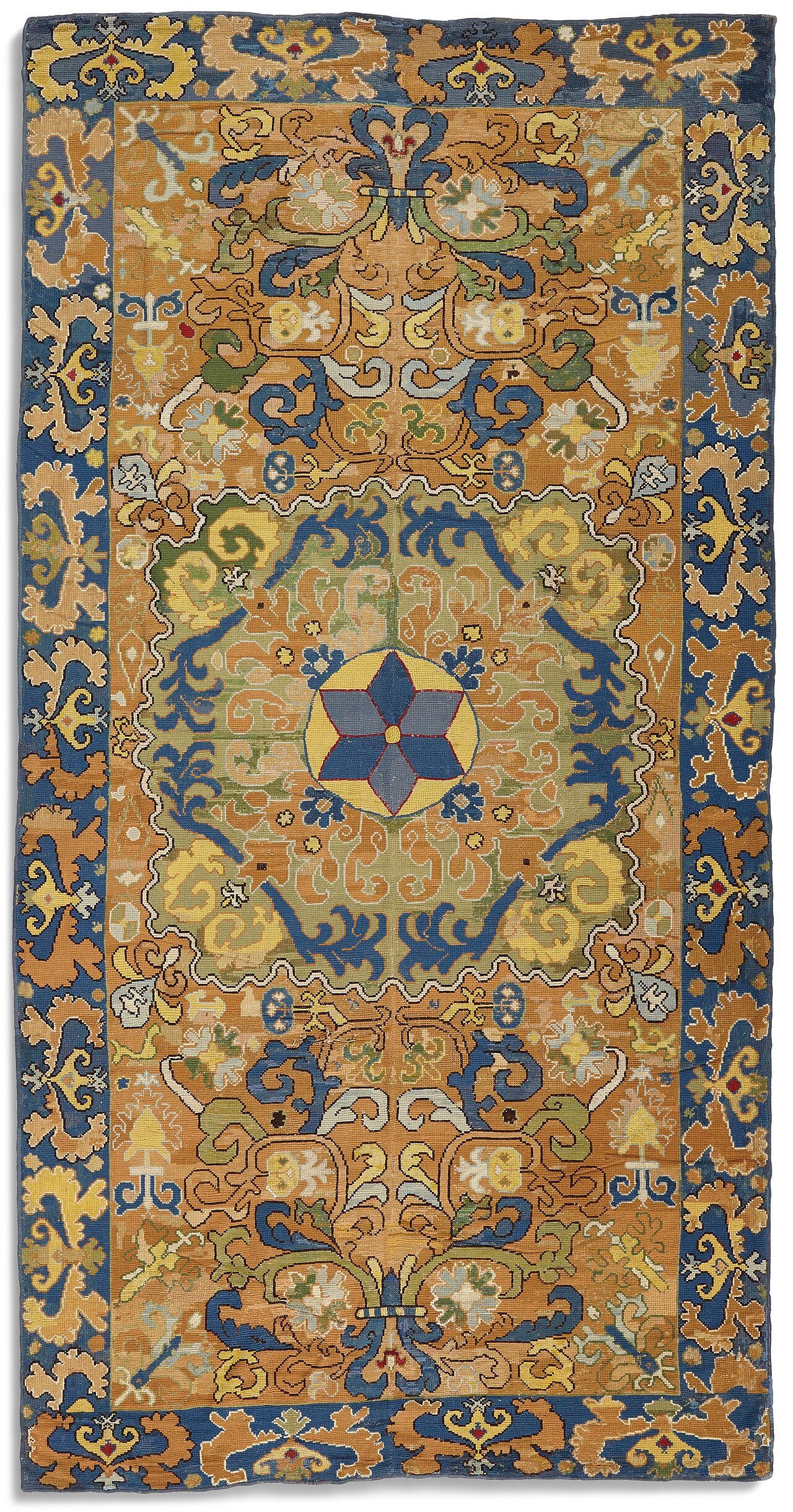
The tradition & historical record
2 min read · 2 sourcesAn Arraiolos rug, Arraiolos tapestry, Arraiolos carpet or Portuguese needlework rug (in Portuguese, Tapete de Arraiolos) is a traditionally embroidered wool rug made in the town of Arraiolos, Portugal, dating back to at least the 16th century. They are partly inspired by Persian carpets, though there are notable differences in their construction and design. Unlike Persian and Turkish rugs, which are woven on looms using knots (asymmetric in Persian rugs and symmetric in Turkish ones), Arraiolos rugs are embroidered using a diagonal cross-stitch technique known as ponto de Arraiolos. This technique is easier to execute than knotting, making it more accessible for local artisans. Despite the difference in construction, the decorative patterns of Arraiolos rugs are closely aligned with those of Persian carpets, with similar motifs and symmetry, influenced by Islamic art. The patterns and structure of the rugs evolved over time, incorporating influences from European textile arts, including Baroque and Rococo styles during the 17th and 18th centuries. 1
The earliest written references to Arraiolos rugs date back to the late 16th century, with a mention of a "tapete da terra" (local rug) in an inventory of goods. By the late 17th century, there is documented evidence of Arraiolos rugs being traded in Lisbon. 1
References and sources
References 1
Sources BAPTISTA DE OLIVEIRA, Fernando. 1992 "Tapeçarias Decorativas de Arraiolos". 1
The text above is adapted from the Wikipedia article “Arraiolos rug”, available under the Creative Commons Attribution-ShareAlike 4.0 licence. 1
arraiolos rug is Type of Portuguese rug, according to the structured record cited below. This entry was generated automatically from that record and has not yet been reviewed by a person familiar with the tradition. 2
The source record links this tradition to 2 external registers, which can be verified through the citation. 2