The tradition & historical record
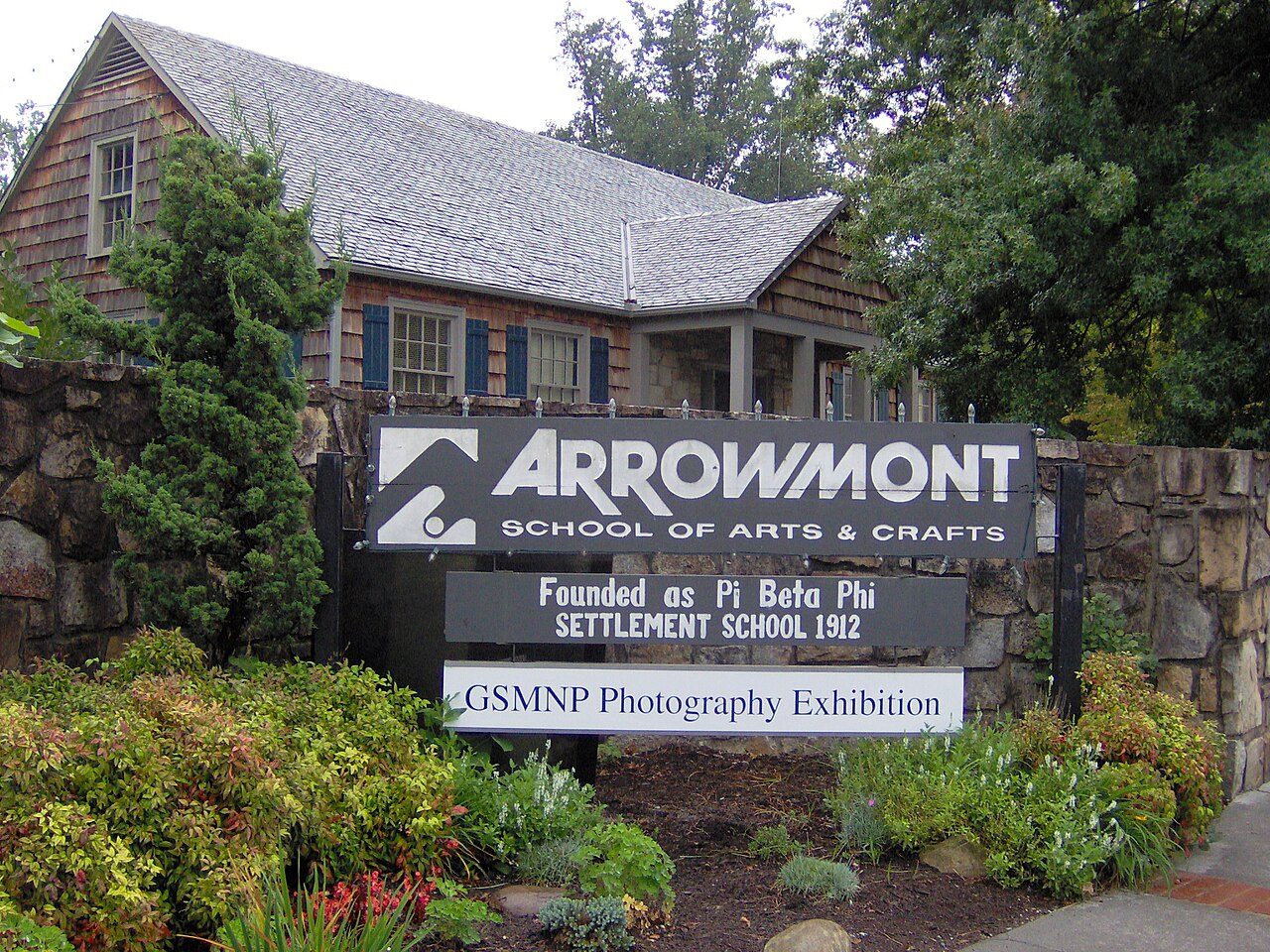
6 min read · 2 sourcesArrowmont School of Arts and Crafts is an Arts and Crafts center in the U.S. city of Gatlinburg, Tennessee. The oldest craft school in Tennessee, Arrowmont offers workshops in arts and crafts such as painting, woodworking, drawing, glass, photography, basket weaving, ceramics, fiber arts, book arts and metalworking. The School has an 11-month Artists-in-Residence program for early career artists. Arrowmont's campus contains the oldest buildings in Gatlinburg and comprises two historic districts listed on the National Register of Historic Places. Arrowmont's history is rooted in a settlement school founded by the Pi Beta Phi women's fraternity in Gatlinburg in 1912. The school provided the only public education for children in the Gatlinburg area until Sevier County assumed control of its public schools in the early 1940s. The early writings and reports of the settlement school's teachers provide an important glimpse of Gatlinburg in the days before the establishment of the Great Smoky Mountains National Park radically changed the city's economy and culture. 1
Establishment of the settlement school
In the early 20th century, reports of widespread poverty and lack of education in Southern Appalachia gained the attention of religious and philanthropic organizations. Inspired by the settlement house movement that began in the previous century, these organizations established "settlement schools" in remote mountain communities to provide free education. In June 1910, former Pi Beta Phi Grand President Emma Harper Turner spoke at the fraternity's national convention and suggested the fraternity establish such a school as a memorial for its 50th anniversary. The fraternity's National Alumnae Association authorized the school on June 30, and fraternity leaders initiated an extensive study to locate a mountain community that would most benefit from a new school. The U.S. Commissioner of Education suggested they establish such a school in Tennessee, and the Tennessee Department of Education identified Sevier County as having the fewest schools. An East Tennessee teacher, Mabel Moore, pointed the Pi Beta Phis to Gatlinburg— then a tiny mountain hamlet at the edge of the Great Smoky Mountains— as the community most in need of a new school. In 1910, Pi Beta Phi Grand President May Lansfield Keller made the 17-mile (27 km) trek from Sevierville to Gatlinburg over what she called "the worst road in Tennessee" and verified that Gatlinburg was the best choice for the fraternity's first philanthropy. Nashville native Martha Hill was chosen as the school's first teacher, and classes began February 20, 1912, in an abandoned schoolhouse at the confluence of Baskins Creek and the Little Pigeon River. 1
Settlement school operations, 1915—1943
Early teachers at the Pi Beta Phi settlement school were moved by the "sad faces" and "stolid character" of the mountain children. The teachers were surprised to learn that many of the children didn't know basic children's games, and most knew nothing about traditional Christmas celebrations. As the mountain children were fond of running through the forest barefooted, hookworm was a common parasite, and teacher Mary Pollard spent much of her 1913–1916 tenure trying to eradicate it. The Pi Beta Phis built a new six-room schoolhouse in 1914, and in 1916 added a new ten-room teacher's cottage. During the 1918 flu pandemic, Head Resident Evelyn Bishop made numerous house calls in Gatlinburg and the vicinity that endeared the school to the local population. In 1920, Pi Beta Phi dispatched Canadian-born nurse Phyllis Higinbotham (who had previously worked at the Henry Street Settlement and Hindman Settlement School) to Gatlinburg to oversee the settlement school's health care needs. 1
In 1920, Pi Beta Phi installed Gatlinburg's first electric generator to provide power to the school. The following year, the school installed the town's first telephone in the Head Resident's office. Around the same time, Pi Beta Phi teachers began teaching classes in the impoverished Sugarlands community south of Gatlinburg. A small hydroelectric dam was built in 1924 to replace the 1920 generator, and the school began publishing Gatlinburg's first newspaper, The Gatlinburg News, in 1925. In 1924, the Pi Beta Phis organized Gatlinburg's first agriculture co-op and later organized the town's first Chamber of Commerce. 1
Arrowcraft
The American Arts and Crafts Revival, which began in the 19th century, helped create a market for traditional handicrafts that settlement house workers seized upon as a means of income for urban immigrants. In the early 20th century, the settlement school movement opened the same markets to the residents of Southern Appalachia. Noting the success of other settlement schools in marketing the region's crafts, Phi Beta Phi Settlement School Head Resident Caroline McKnight Hughes began purchasing handmade baskets and coverlets to sell to the fraternity's alumnae clubs. While Hughes easily found buyers for the items she purchased, she struggled with lack of cooperation from the locals, who didn't fully understand the demand for their products, and often ignored shipment deadlines and refused to sell items on credit. In 1925, weaving instructor Winogene Redding joined the settlement school's staff, and began teaching traditional weaving. By 1926, 30 families were weaving for the school, and had successfully adapted to Redding's strict factory-like regimen of quality and deadlines. In 1927, teachers Harmo Taylor and Lois Rogers opened the Arrowcraft Shop on the settlement school's campus, which acted as both a showroom for passing tourists and a distribution center for shipments (the shop was named after Pi Beta Phi's primary symbol, the arrow). Representatives from Arrowcraft helped establish the Southern Highland Craft Guild in 1929, which gave local artisans greater access to national markets. The Guild presently operates the Arrowcraft Store, which was built in 1940. 1
Arrowmont
After Sevier County assumed control of the Pi Beta Phi schools in 1943, the fraternity began focusing on its Arrowcraft division. In 1945, with the help of the University of Tennessee Home Economics Department, Pi Beta Phi established the Summer Crafts Workshop, which provided craft classes to students and teachers. The success of the workshops led to a proposal at the fraternity's 1954 convention to create a permanent, year-round school in Gatlinburg. The 1962 convention authorized the project. In 1968, Pi Beta Phi disbanded the Settlement School Committee and established a Board of Governors for the new crafts school. The following year, the name "Arrowmont" was chosen, and Summer Crafts Workshop director Marian Heard was selected as head of the new school. In June 1970, Arrowmont dedicated its new 38,200-square-foot (3,550 m2) Emma Harper Turner Building, which provides offices, classrooms, and studio space (the building's architect, Hubert Bebb, earned an Award of Merit from the American Institute of Architects for his design). 1
Arrowmont today
Arrowmont is currently known f… 1
The text above is adapted from the Wikipedia article “Arrowmont School of Arts and Crafts”, available under the Creative Commons Attribution-ShareAlike 4.0 licence. 1
Arrowmont School of Arts and Crafts is Arts and Crafts center in the U.S. city of Gatlinburg, Tennessee, according to the structured record cited below. This entry was generated automatically from that record and has not yet been reviewed by a person familiar with the tradition. 2
The source record links this tradition to 5 external registers, which can be verified through the citation. 2