The tradition & historical record
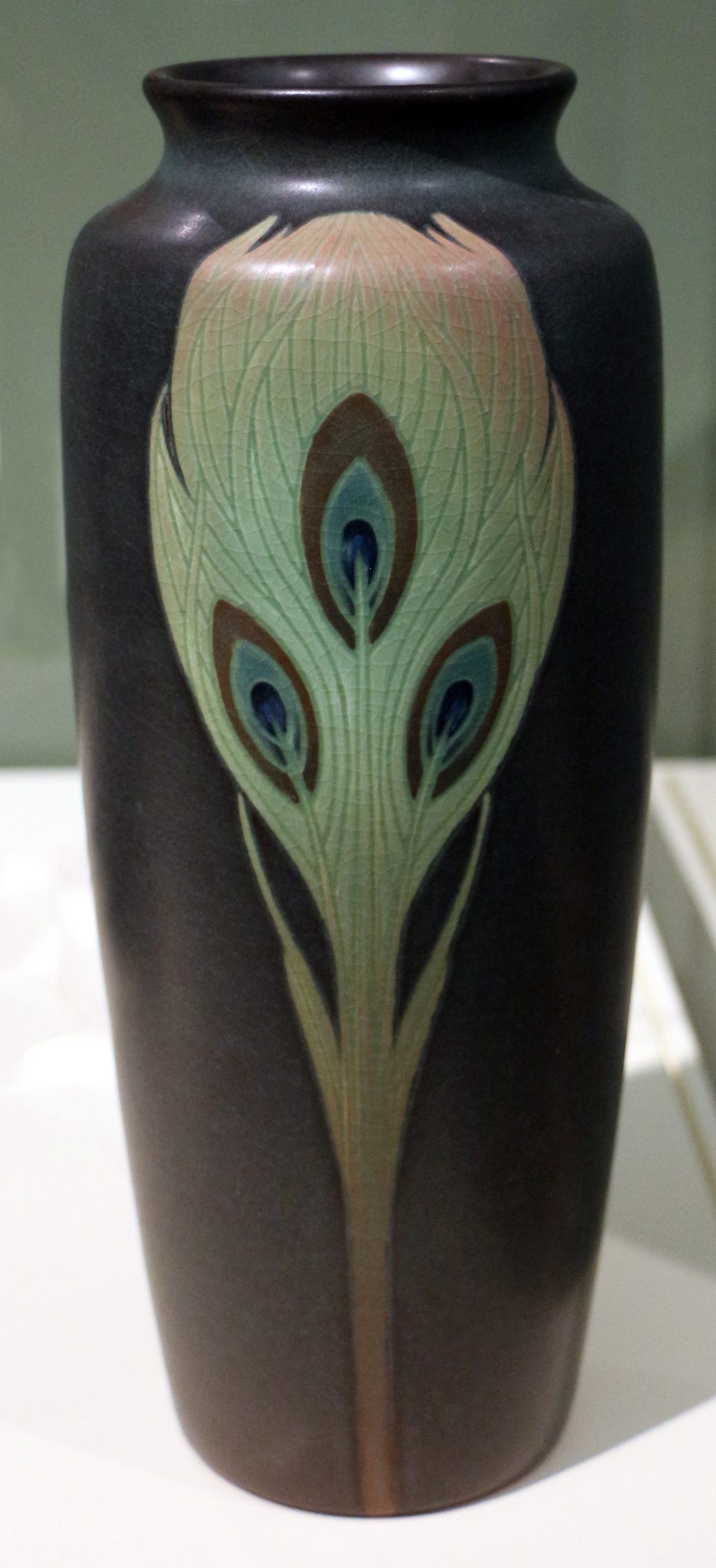
6 min read · 2 sourcesArt pottery is a term for pottery with artistic aspirations, made in relatively small quantities, mostly between about 1870 and 1930. Typically, sets of the usual tableware items are excluded from the term; instead the objects produced are mostly decorative vessels such as vases, jugs, bowls and the like which are sold singly. The term originated in the later 19th century, and is usually used only for pottery produced from that period onwards. It tends to be used for ceramics produced in factory conditions, but in relatively small quantities, using skilled workers, with at the least close supervision by a designer or some sort of artistic director. Studio pottery is a step up, supposed to be produced in even smaller quantities, with the hands-on participation of an artist-potter, who often performs all or most of the production stages. But the use of both terms can be elastic. Ceramic art is often a much wider term, covering all pottery that comes within the scope of art history, but "ceramic artist" is often used for hands-on artist potters in studio pottery. 1
The term implied both a progressive design style and also a closer relationship between the design of a piece and its production process. Art pottery was part of the Arts and Crafts movement, and a reaction to the technically superb but over-ornamented wares made by the large European factories, especially in porcelain. Later art pottery represented the ceramic arm of the Aesthetic Movement and Art Nouveau. 1
History
The movement was strongly linked with the fashion for national and international competitions and awards in the period, with the World's fairs the largest. America's first of these was the Centennial Exposition in Philadelphia in 1876, which "was a critical catalyst for the development of the American Art Pottery movement", both because American commercial potteries exerted themselves to improve the artistic quality of the products specially made for exhibition, and because American visitors were exposed to a wider range of European and Asian ceramics than hitherto. Doulton appears to have exhibited over 500 pieces of its Lambeth art studio stoneware and Lambeth Faience, and these as well as French "barbotine" and Japanese pieces had a decisive influence on many individuals who went on to become significant in American art pottery. There were also close links with amateur china painting, which had become a very popular hobby, especially for middle-class women, in the same decades. In London, the Regent Street jewellers Howell James & Co. became a leading showplace for both amateur and professional work, organizing exhibitions and competitions. 1
Britain
The movement perhaps began in the 1860s. Unlike many terms for styles or movements in art, the name appears to have come from the producers, and was used of their wares by several English manufacturers by the 1870s. In 1870 or 1871 Mintons, one of the large Staffordshire pottery factories, founded in 1793, who had successfully tried to keep up with innovation in design, opened their "Mintons Art Pottery Studio" in Kensington Gore, London. Very many art potteries were newly established, especially in America, but in Europe many long-established ceramic manufacturers embraced the movement, usually by establishing dedicated sections of their business, kept apart from their higher-volume wares. This was especially the case for large English firms who had become mainly associated with less glamorous utilitarian wares. Doulton & Co., later Royal Doulton, was hugely profitable from utilitarian stonewares, above all sewage and drain pipes, and able to experiment, establishing links with the nearby Lambeth School of Art. Doulton revived fine English stoneware, and raised its own profile; it is unclear whether the art wares of Lambeth ever made much profit. Maw & Co was, with Mintons, one of the main makers of decorative encaustic tiles, but launched "Art Pottery" lines by the 1880s, some by Walter Crane, who had been designing tiles for them since the 1870s. 1
While women made up about half the workforce of the Stoke-on-Trent potteries in Staffordshire in the 20th century, they tended to be assistants to husbands or fathers, doing "coarse and degrading labour", often handling toxic materials. Women could not be apprenticed, and men maintained control of higher-skilled and lucrative positions. 1
America
American pottery was made by some 200 studios and small factories across the country, with especially strong centres of production in Ohio (the Cowan, Lonhuda, Owens, Roseville, Rookwood, and Weller potteries) and Massachusetts (the Dedham, Grueby, Marblehead, and Paul Revere potteries). With some exceptions like the Rookwood Pottery Company, founded in 1880, most producers began making it after 1890 and many after 1900. Some were newly established and other had been making other types of wares. Most of the potteries were forced out of business by the economic pressures of competition from commercial mass-production companies as well as the advent of World War I followed a decade later by the Great Depression. 1
France
In continental Europe parts of the faience manufacturing sector had managed to survive the onslaught of English creamwares and bone china, and increasingly cheap hard-paste porcelain from local factories, and many of these embraced the movement. In France, which was the most important continental producer, the famous Service Rousseau designs in Creil-Montereau faience (1867) were early examples of Japonisme, and somewhat in the spirit of art pottery, although the service was commissioned by a wholesaler from Félix Bracquemond, an established artist, and the manufacture contracted out. The earliest significant figure was Théodore Deck, who founded his faience works in 1856, and initially explored styles and techniques from Islamic pottery with great success. When Japonisme arrived in the 1870s he embraced this and other art pottery trends with enthusiasm, finally conquering the French establishment when he was made art director of Sèvres porcelain in 1887. Several important figures from the next generation were trained by Deck. Ernest Chaplet was an artist and hands-on potter, mainly in stoneware, who later worked with Paul Gauguin, whose many ceramic sculptures cannot really be squeezed into the category of art pottery. Much of the ceramic output of Jean-Joseph Carriès, a sculptor who died young in 1894, was also sculpture, including many faces and heads, often with grotesque expressions, but he made several conventional pots, often with thick unctuous ash glaze effects in the Japanese style. Other leading figures were Auguste Delaherche, Edmond Lachenal, Pierre-Adrien Dalpayrat, a great creator of glazes, and Clément Massier. The large American-owned Limoges porcelain firm of Haviland & Co. 1
Netherlands
In the Netherlands De Porceleyne Fles had been founded in Delft in 1653, but by 1840 was the only Delftware factory left in the city. 1
The text above is adapted from the Wikipedia article “Art pottery”, available under the Creative Commons Attribution-ShareAlike 4.0 licence. 1
art pottery is pottery produced by artists emphasizing artistic rather than practical value; generally associated with the Arts and Crafts Movement, according to the structured record cited below. This entry was generated automatically from that record and has not yet been reviewed by a person familiar with the tradition. 2
The source record links this tradition to 5 external registers, which can be verified through the citation. 2