The tradition & historical record
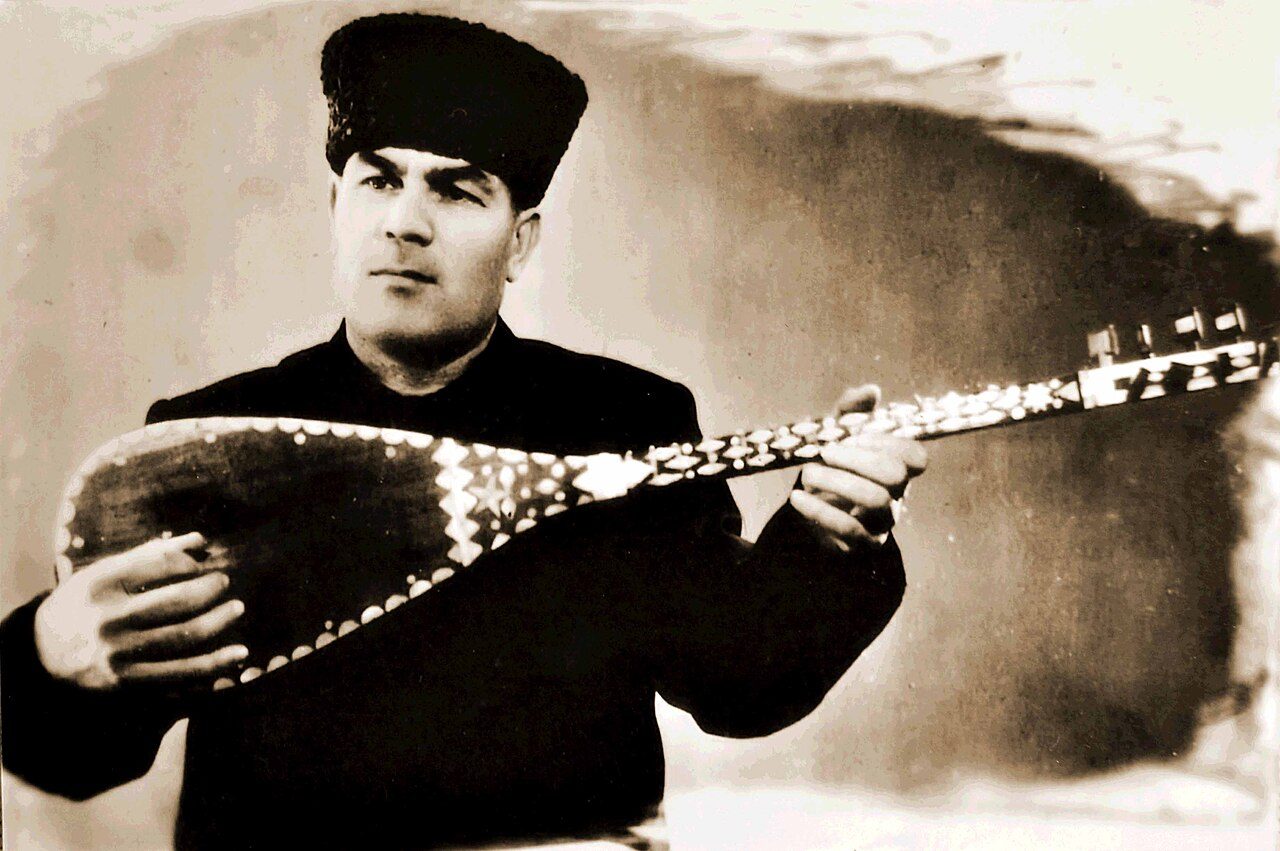
4 min read · 2 sourcesAn ashik (Azerbaijani: aşıq; Turkish: aşık) or ashugh (Armenian: աշուղ; Georgian: აშუღი) is traditionally a singer-poet and bard who accompanies his song—be it a dastan (traditional epic story, also known as hikaye) or a shorter original composition—with a long-necked lute (usually a bağlama or saz) in Azerbaijani culture, including Turkish and Iranian Azeri and non-Turkic cultures of South Caucasus (primarily Armenian and Georgian). In Azerbaijan, the modern ashik is a professional musician who usually serves an apprenticeship, masters playing the bağlama, and builds up a varied but individual repertoire of Turkic folk songs. 1
Etymology
The word ashiq (Arabic: عاشق, meaning "in love" or "lovelorn") is the nominative form of a noun derived from the word ishq (Arabic: عشق, "love"). The term is synonymous with ozan in Turkish and Azerbaijani, which it superseded during the fifteenth to sixteenth centuries. Other alternatives include saz şairi (meaning "saz poet") and halk şairi ("folk poet"). In Armenian, the term gusan, which referred to creative and performing artists in public theaters of Parthia and ancient as well as medieval Armenia, is often used as a synonym. 1
History
The ashik tradition among Turkic peoples of Anatolia, Azerbaijan, and Iran has its origin in pre-Islamic shamanism. The ancient ashiks were called by various names such as bakshy (bakhshi, baxşı), dede (dədə), and uzan or ozan. Among their various roles, they played a major part in the perpetuation of the oral tradition, promotion of the communal value system and traditional culture of their people. These wandering bards or troubadours are part of the current rural and folk culture of Azerbaijan, Iranian Azerbaijan, Turkey, the Turkmen Sahra (Iran) and Turkmenistan. Thus, traditionally, ashik may be defined as travelling bards who sang and played the saz, an eight- or ten-string plucked instrument in the form of a long-necked bağlama. According to the Book of Dede Korkut, the roots of ashiks can be traced back to at least the 7th century, during the heroic age of the Oghuz Turks. This nomadic tribe journeyed westwards through Central Asia from the 9th century onward and settled in what is now Turkey, Azerbaijan, and the northwestern areas of Iran. Their music evolved during their migration and ensuing feuds with the original inhabitants of the acquired lands. An important component of this cultural evolution was when the Turks embraced Islam. Dervishes, desiring to spread the religion among their brothers who had not yet entered the Islamic fold, moved among the nomadic Turks. They chose the folk language and its associated musical form as an appropriate medium to transmit their messages. Ashik literature developed alongside Qalandar and Sufi culture and was refined since the time of Ahmad Yasawi in the early twelfth century. 1
Ashugh music in Armenia
A concise account of the ashik (called ashugh in Armenian) music and its development in Armenia is given in Garland Encyclopedia of World Music. In Armenia, the ashugh are known since the 16th century onward, acting as the successors to the medieval gusan art. By far the most notable of the ashugh of all was Sayat Nova (1712–95), who honed the art of troubadour musicianship to crowning refinement. 1
Ashik music in Iranian Azerbaijan
During the Pahlavi era Ashiks frequently performed in coffee houses in all the major cities of east and west Azerbaijan in Iran. Tabriz was the eastern center for the ashiks and Urmia the western center. In Tabriz ashiks most often performed with two other musicians, a balaban player and a qaval player; in Urmia the ashik was always a solo performer. After the Iranian revolution music was banned. Ten years later, the ashik Rasool Ghorbani, who had been forced to make a living as a travelling salesman, aspired to return to the glorious days of fame and leisure. He started composing songs with religious and revolutionary themes. The government, realizing the propaganda potential of these songs, allowed their broadcast in national radio and sent Rasool to perform in some European cities. This facilitated the emergence of the ashik music as the symbol of Azeri cultural identity. In September 2009, Ashiqs of Azerbaijan was included into UNESCO list of Intangible Cultural Heritage. 1
The foundations of ashik art
Ashik art combines poetic, musical and performance ability. Ashiks themselves describe the art as the unified duo of saz and söz (word).This duo is conspicuously featured in a popular composition by Səməd Vurğun: 1
The following subsections provide more details about saz and söz. 1
The text above is adapted from the Wikipedia article “Ashik”, available under the Creative Commons Attribution-ShareAlike 4.0 licence. 1
ashik is folk poet, singer and saz player in the South Caucasus and Anatolia, according to the structured record cited below. This entry was generated automatically from that record and has not yet been reviewed by a person familiar with the tradition. 2
The source record links this tradition to 10 external registers, which can be verified through the citation. 2