The tradition & historical record
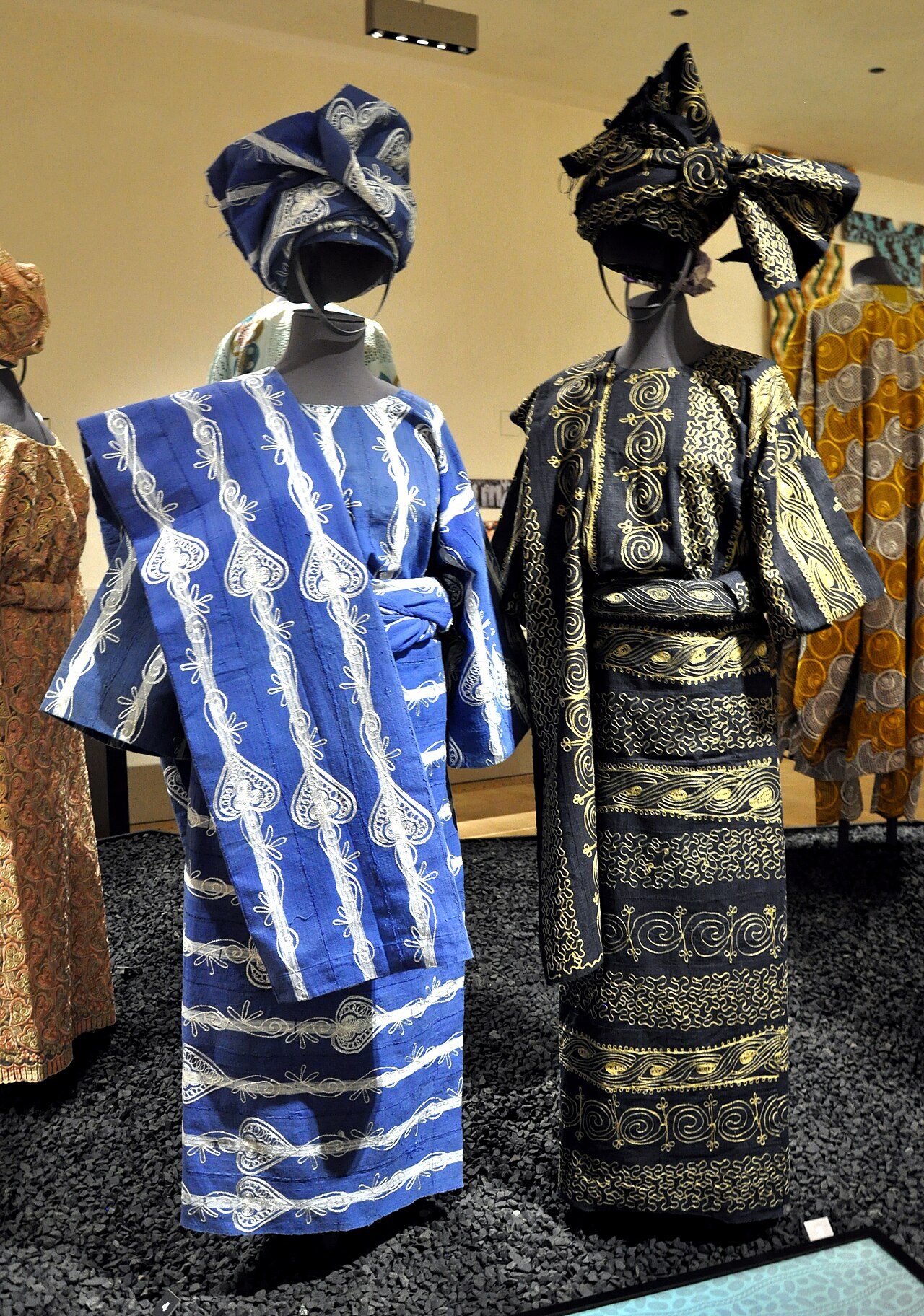
6 min read · 2 sourcesAso oke (Yoruba: Aṣọ òkè), lit. 'cloth from the hinterland' or simply 'country cloth', also known by its original name of Òfì, is a hand-woven cloth that originated among the Yoruba people of Yorubaland within the modern-day countries of Nigeria, Benin and Togo. Aso oke comes in hundreds of unique patterns, at least 150 distinct patterns were observed in a single year — 1978 just in the Ibadan and Lagos market alone, and new patters are constantly being developed based on cultural evolution and consumer requirements. Usually woven by men, the fabric is used to make men's gowns, called agbada and hats called fila, as well as various articles of Yoruba female clothing, such as wrappers called Ìró, blouses called Bùbá, gowns called Komole, head ties called gele, as well as sashes and shoulder shawls called Ìborùn, for both gender, used across the neck by men and across the shoulder or hip by women, large cloths for men called Ibora when used as a cape, and Gogowu when used as a toga, a second wrapper called Ìpèlé, and so on. 1
Aso Oke is from the Yoruba culture in Kwara, Kogi, Ondo, Oyo, Ogun, Ekiti, Lagos, and Osun States in western Nigeria and other parts of Yorubaland. Some of the most prominent production centres are the cities of Iseyin in Oyo state and Ilorin, while Owo in Ondo state is particularly known for its several unique and beautiful varieties. 1
Types of Aso Oke
Aso Oke comes in a wide array of various different designs and colours. Aso Oke fabric can also be worn or interlaced with other Yoruba fabric types, like 'Aran' or 'Seda', velvet-type textiles with concentric designs. Other ways that designers have made this old traditional cloth become more modern is to "structurally manipulate and combine animal and floral motifs into definite shapes of grids and geometry, suitable for computer design applications." The basis of more traditional motifs would have originated from fables and folklore. Although in theory the color combinations and patterns of Aso oke are limitless, a few have become people's favorites. Some of the most popular types include: 1
Sanyan — Woven from Anaphe wild silk (Anaphe infracta and Anaphe venata) and cotton yarns. The color of the silk gives the sanyan a tan, creamy white or brown color with white stripes running through. In ancient times, Sanyan was the most expensive of all Yoruba woven fabrics. Alaari — The Alaari is usually made in a deep red/maroon, crimson or vibrant purple backdrop striped by bands of different other colors, The threads are made from locally spun silk or cotton colored by traditionally dyeing in camwood (osùn) over several dips. Etu — Bears a dark indigo or black colour with thin white or light blue stripes in the warp (vertical) direction noted for their simplicity. Its patterns are more visibly striped with a faint hint of checkering, so named after the pattern of the guinea fowl, called Ẹtu in Yoruba. In ancient times, it was used by chiefs and elders as an important social dress. Black Etu cloths are called Olowududu. Petuje — These are Aso oke with larger plaid/checkered or gridded patterns on lighter blue-purple-white bases. It is a sub-class of the Etu style. 1
As formal wear
Yorubas around the world wear Aso Oke fabric for special occasions, including holidays, weddings, funerals and chieftain title ceremonies. Designer Kenneth Ize has brought the fabric to international runways, with suiting worn by Naomi Campbell and Imaan Hammam. Followers of the Yoruba religion also wear aso oke fabrics and hats. Aso oke, specifically the etu type is used in Egungun masquerade performances. The represented cloth is worn closest to the masker's skin, it has a similar resemblance to a shroud in which the deceased are wrapped in. 1
Yoruba women's garment
Traditional Yoruba women's garment, usually consists of four parts: 1
Buba: A blouse Iro: A wrap skirt (or wrapper) Gele: Head tie Iborun : Shawl or sash Ipele: Shoulder sash or second wrapper However Yoruba women's garments are made from different other Yoruba traditional fabrics, not just Aso Oke. These include Adire, Seghosen, Aso Olona, as well as laces and Ankara. Yoruba women garments also include Pakaja/Kaja and hair-beads. 1
Horizontal loom male weaving
The largest concentration in Yorubaland of male weavers using the narrow strip horizontal loom are in the cities of Iseyin, Osogbo, Ilorin and Oyo, with a smaller group concentration in Abeokuta and Ogbomosho. Of these towns, Iseyin is the most important. In 1952/3, one in five males was a weaver, and the Ole-Oke quarter is made up entirely of weavers. In the same years, Iseyin town alone produced some estimated million square yards of Aso oke each year, and was consuming 20% of all the yarn imported into Nigeria. In Ilorin, just as in Iseyin, weavers occupy a whole quarter, the Pakata, made up entirely of thousands of weaving families. From these major centres, weavers have moved out and spread to outlying villages and towns. The most impotant migration of weavers has been those from the Iseyin—Oyo axis, whose weavers have populated Ibadan, to Ife where they serve the court of the Ooni. Other groups of them have moved to Iwo, Ede, Shaki, Ido-Ekiti, Ado Ekiti, Okeho, and as far north as Mokwa in the Nupe area. Another expansion of weavers has been that outwards from Ilorin, from where weavers have moved into the Yagba area, and the town of Egbe in particular, into Lokoja on the Niger river, Ijebu Ode, and a few have settled in Owo and Iworoko-Ifaki. They have migrated and settled as far east as Keffi. The weaving technique used in Abomey and some other groups in the northern parts of Benin are a result of direct expansion of Yoruba influence on these groups. A lot of the trade in Aso oke is carried out on the basis of individual orders, and weaving compounds may sometimes sub-contract bulk orders of Aso ebi calling for large quantities of finished cloth to other families. 1
Vertical loom female weaving
Vertical loom weaving is the specility of women in Yorubaland. 1
The text above is adapted from the Wikipedia article “Aso oke”, available under the Creative Commons Attribution-ShareAlike 4.0 licence. 1
aso oke is Yoruba woven textile, according to the structured record cited below. This entry was generated automatically from that record and has not yet been reviewed by a person familiar with the tradition. 2
The source record links this tradition to 3 external registers, which can be verified through the citation. 2