The tradition & historical record
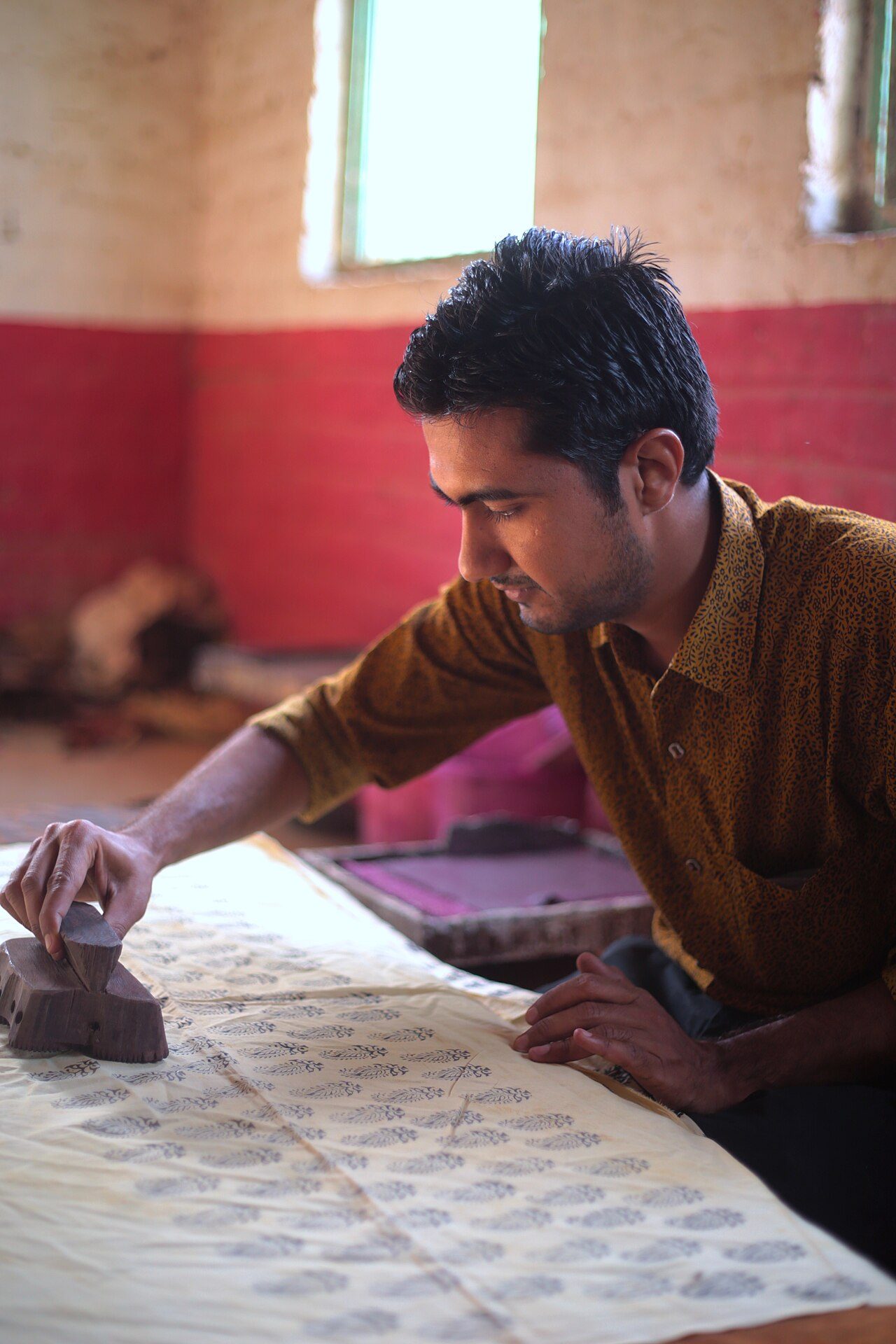
4 min read · 2 sourcesBagh print is a traditional Indian handicraft originating in Bagh, Dhar district of Madhya Pradesh, India. The process is characterised by hand-printed wood block relief prints with naturally sourced pigments and dyes. Bagh print motifs are typically geometric, paisley, or floral compositions design, dyed with vegetable colours of red and black over a white background, and is a popular textile printing product. Its name is derived from the village Bagh located on the banks of the Bagh River. 1
History
The origins of the Bagh print are uncertain, but it is believed that the practice is over 1,000 years old, with the techniques having been handed down through family practice from generation to generation. It is possible that the craft traveled with settlers from Jawad in the Madhya Pradesh state in India or from printers of Rajasthan state. Another possibility is that the Chhipas, or traditional cloth printers, of the Muslim Khatri community which currently practice the craft of Bagh print, traveled to the area around 400 years ago from Larkana in Sindh province, Pakistan, which is known for the Ajrak tradition of block printing. The initial reasons for the migration is unclear, but the area's proximity to the Bagh river, which provided the water necessary for washing of fabric and processing of vegetable dyes, could be the primary reason for settling in Bagh. In addition, the chemical composition of the water from the Bagh river enhances the texture of the vegetable, natural, and black dyes, giving them a luminous quality that distinguishes Bagh prints from other prints in Madhya Pradesh and Rajasthan regions. In the 1960s, many craftsmen abandoned the traditional process of Bagh prints in favour of using synthetic fabrics. However, a number of artisans, including Ismail Sulemanji Khatri, continued to practice and innovate within the traditional framework of the craft and brought Bagh prints to international prominence. In 2011, a Bagh print design was adopted in a tableau theme of the Madhya Pradesh state at the Republic Day parade in New Delhi on 26 January 2011. Featured in the parade was a Shalbhanjika, the celestial apsara of the 11th century, draped in Bagh printed clothing. 1
Process
The process of creating Bagh prints includes pre-printing (washing and pre-dying of the fabric), printing (application of the design), and post-printing (fixing the dyes and applying a fabric finish). 1
Pre-printing
Pre-printing starts with Khara Karna, the initial washing of the fabric for printing. Cotton is the commonly used fabric; however, other fabrics include the Maheshwari suit material, kosa silk, bamboo chicks, chiffon, crepe, georgette tissue, and mulberry silk. The Khara Karna washing consists of washing in running water for two hours and beating the fabric on river stones to remove any starch in the fabric to assist with the dyeing process. Next, the fabric is soaked in a water solution of rock salt, mengni (goat dung), and castor oil, pressed, rinsed, and dried three times, which is known as Mengni Karna. Then, the cloth is pre-dyed with Harara to provide an off-white base color, which also adds a richness to the black and red dyes that will be applied later. 1
Printing
Bagh prints are made by hand applying natural and vegetable-based dyes using carved wood relief blocks. Red and black dyes are most common, but indigo, mustard, and khaki dyes are also used. New blocks for printing are hand carved from teak or sheesham wood, but some blocks have been in use for 200 – 300 years. Motifs for the prints are geometric or floral, sometimes inspired by the 1,500 year old paintings at Bagh Caves. 1
Dyes
Dyes for printing are derived from plant sources (plants, fruits, and flowers), and minerals. To make the dyes, pigments like ferrous sulfate and alum are boiled in water and mixed with tamarind seed powder to make a paste, which acts as black and red dyes respectively. Other colors like indigo, mustard, and khaki can be made using indigo leaves, dhavdi leaves, or pomegranate rinds. 1
The text above is adapted from the Wikipedia article “Bagh print”, available under the Creative Commons Attribution-ShareAlike 4.0 licence. 1
Bagh prints is a traditional wood block printing an Indian handicraft originating in Bagh, Dhar district of Madhya Pradesh, India., according to the structured record cited below. This entry was generated automatically from that record and has not yet been reviewed by a person familiar with the tradition. 2
The source record links this tradition to 1 external register, which can be verified through the citation. 2