The tradition & historical record
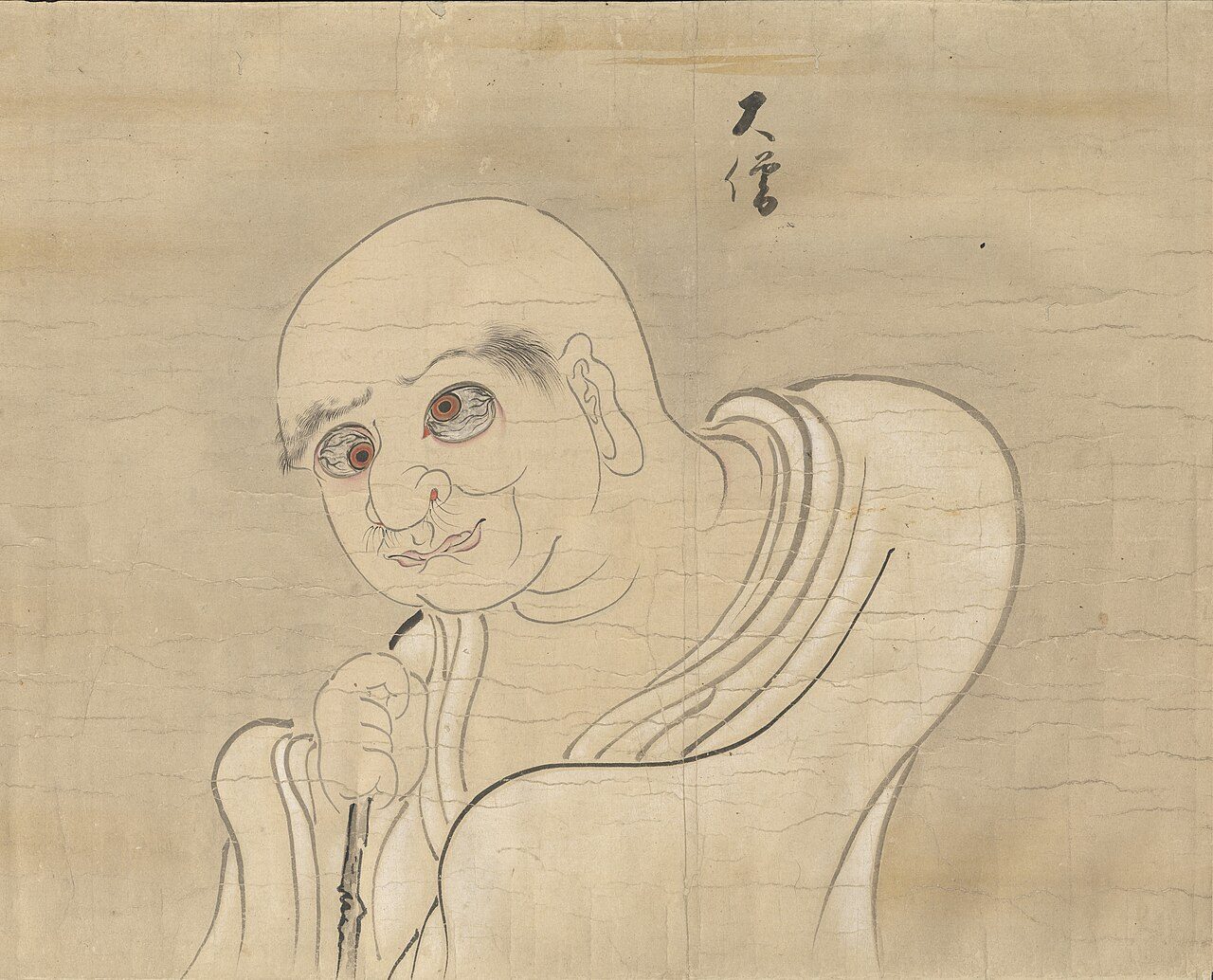
2 min read · 2 sourcesBakemono no e (化物之繪, "Illustrations of Supernatural Creatures"), also known by its alternate title Bakemonozukushie (化物尽繪, "Illustrated Index of Supernatural Creatures"), is a Japanese handscroll of the Edo period depicting 35 bakemono from Japanese folklore. The figures are hand-painted on paper in vivid pigments with accents in gold and silver pigments. Each bakemono is labeled with its name in hand-brushed ink. There is no other writing on the scroll, no colophon, and no artist's signature or seal. 1
Provenance
Bakemono no e is held by the L. Tom Perry Special Collections of the Harold B. Lee Library at Brigham Young University in Provo, Utah, US and is part of the Harry F. Bruning Collection of Japanese rare books and manuscripts. Harry F. Bruning (1886–1975) acquired the scroll from Charles E. Tuttle (1915–1993) in 1952. The artwork is dated to c. 1660 as according to the description of the scroll in Tuttle's catalog 266 (October 1952), which would make it the arguably the oldest extant example of the bakemonozukushi, or monster index, genre. Most of the bakemono illustrated are also found in other scrolls and books of the Edo period, with a few exceptions. 1
Scholarly interest
The scroll came to the attention of Japanese scholars and the famous manga artist Shigeru Mizuki (1922–2015) in 2007 when digital images of the scroll were shared with Kōichi Yumoto (ja:湯本豪一), then curator at the Kawasaki City Museum (ja:川崎市市民ミュージアム). Yumoto was surprised to find an image of a three-eyed bakemono clearly labeled "Nurikabe" in the BYU scroll that matched an unlabeled illustration of the same figure in a scroll Yumoto owns. The Nurikabe image later became the topic of scholarly debate in Japan. 1
Bakemono list
The following is a list of bakemono featured in Bakemono no e, along with their backgrounds. 1
The text above is adapted from the Wikipedia article “Bakemono no e”, available under the Creative Commons Attribution-ShareAlike 4.0 licence. 1
Bakemono no e is recorded in open cultural data. The structured record cited below does not describe the practice, and this entry has not yet been reviewed by a person familiar with the tradition. 2
The source record links this tradition to 1 external register, which can be verified through the citation. 2