The tradition & historical record
6 min read · 2 sourcesBaker's yeast is the common name for the strains of yeast commonly used in baking bread and other bakery products, serving as a leavening agent which causes the bread to rise (expand and become lighter and softer) by converting the fermentable sugars present in the dough into carbon dioxide and ethanol. Baker's yeast is of the species Saccharomyces cerevisiae, and is the same species (but a different strain) as the kind commonly used in alcoholic fermentation, which is called brewer's yeast or the deactivated form nutritional yeast. Baker's yeast is also a single-cell microorganism found on and around the human body. The use of steamed or boiled potatoes, water from potato boiling, or sugar in a bread dough provides food for the growth of yeasts; however, too much sugar will dehydrate them. Yeast growth is inhibited by both salt and sugar, but more so by salt than sugar. Some sources say fats, such as butter and eggs, slow yeast growth; others say the effect of fat on dough remains unclear, presenting evidence that small amounts of fat are beneficial for baked bread volume. Kazachstania exigua (formerly known as Saccharomyces exiguus), is a wild yeast found on plants, grains, and fruits that is occasionally used for baking; however, in general, it is not used in a pure form but comes from being propagated in a sourdough starter. 1
History
It is not known when yeast was first used to bake bread; the earliest definite records come from Ancient Egypt. Researchers speculate that a mixture of flour meal and water was left longer than usual on a warm day and the yeasts that occur in natural contaminants of the flour caused it to ferment before baking. The resulting bread would have been lighter and tastier than the previous hard flatbreads. It is generally assumed that the earliest forms of leavening were likely very similar to modern sourdough; the leavening action of yeast would have been discovered from its action on flatbread doughs and would have been either cultivated separately or transferred from batch to batch by means of previously mixed ("old") dough. Also, the development of leavened bread seems to have developed in close proximity to the development of beer brewing, and barm from the beer fermentation process can also be used in bread making. Without an understanding of microbiology, early bakers would have had little ability to directly control yeast cultures but still kept locally interesting cultures by reusing doughs and starters to leaven later batches. However, it became possible to isolate and propagate favored yeast strains in the same manner as was done in the beer industry, and it eventually became practical to propagate yeast in a slurry with a composition similar to beer wort, usually including malted barley and wheat flour. 1
Types of baker's yeast
Baker's yeast is available in a number of different forms, the main differences being the moisture contents. Though each version has certain advantages over the others, the choice of which form to use is largely a question of the requirements of the recipe at hand and the training of the cook preparing it. Dry yeast forms are good choices for longer-term storage, often lasting more than a year at room temperatures without significant loss of viability. In general, with occasional allowances for liquid content and temperature, the different forms of commercial yeast are considered interchangeable. 1
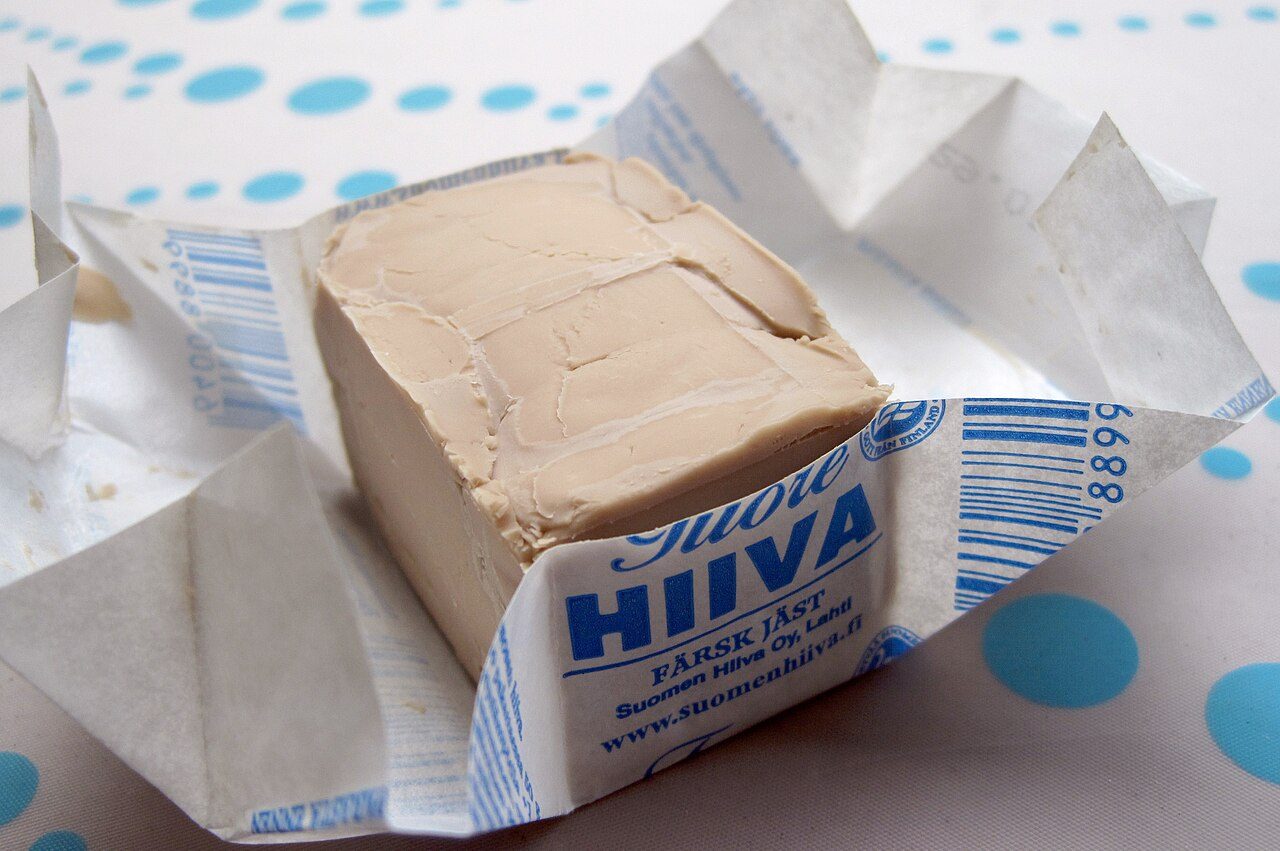
Cream yeast is the closest form to the yeast slurries of the 19th century, in essence being a suspension of yeast cells in liquid, siphoned off from the growth medium. Its primary use is in industrial bakeries with special high-volume dispensing and mixing equipment, and it is not readily available to small bakeries or home cooks. Compressed yeast is, in essence, cream yeast with most of the liquid removed. It is a soft solid, beige in color, and best known in the consumer form as small, foil-wrapped cubes of cake yeast. It is also available in a larger-block form for bulk usage. It is highly perishable; though formerly widely available for the consumer market, it has become less common in supermarkets in some countries due to its poor keeping properties, having been superseded in some such markets by active dry and instant yeast. It is still widely available for commercial use, and is somewhat more tolerant of low temperatures than other forms of commercial yeast; however, even there, instant yeast has made significant market inroads. Active dry yeast is the form of yeast most commonly available to non-commercial bakers in the United States. 1
Difference between instant and active dry yeast
Instant and active dry yeast are essentially the same ingredient, just in slightly different forms and applications. Consumers should keep sealed packets of both yeast types at room temperature and store partially used packets in an airtight container in the refrigerator. The main differences between the two are: 1
Active yeast needs rehydration. Instant yeast can be mixed directly into dry ingredients, whereas active dry yeast must first be dissolved and rehydrated in warm water. Instant yeast needs less time to rise. Since instant yeast has a finer texture than active dry yeast, it is possible to skip the initial rise time and shape loaves immediately after kneading. Loaves made with active dry yeast require longer rising times for the yeast to work its way through the dough. 1
Commercial brands
For most commercial uses, yeast of any form is packaged in bulk (blocks or freezer bags for fresh yeast; vacuum-packed brick bags for dry or instant); however, yeast for home use is often packaged in pre-measured doses, either small squares for compressed yeast or sealed packets for dry or instant. For active dry and instant yeast, in general a single dose (reckoned for the average bread recipe of between 500g and 1000g of dough) is about 2.5 tsp (~12 mL) or about 7 g (1⁄4 oz), though comparatively lesser amounts are used when the yeast is used in a pre-ferment. In general, a yeast flavor in the baked bread is not noticeable when the bakers' percent of added yeast is less than 2.5%. Notable commercial brands of baker's yeast include Lesaffre's SAF red and SAF gold, Fleischmann's, and Red Star Yeast. 1
Model organism
Because it is readily available and easy to culture, baker's yeast has long been used in chemical, biological, and genetic research as a model organism. Saccharomyces cerevisiae is a facultative anaerobe and undergoes aerobic fermentation in the presences of oxygen and sugars. In 1996, after six years of work, S. cerevisiae became the first eukaryote to have its entire genome sequenced. It has over 12 million base pairs and around 6000 genes. Since then, it has remained in the forefront of genetic research. For example, most of our knowledge of the cell division cycle was worked out from experiments with yeast. 1
The text above is adapted from the Wikipedia article “Baker's yeast”, available under the Creative Commons Attribution-ShareAlike 4.0 licence. 1
baker's yeast is strains of yeast commonly used as a leavening agent in baking, according to the structured record cited below. This entry was generated automatically from that record and has not yet been reviewed by a person familiar with the tradition. 2
The source record links this tradition to 15 external registers, which can be verified through the citation. 2