The tradition & historical record
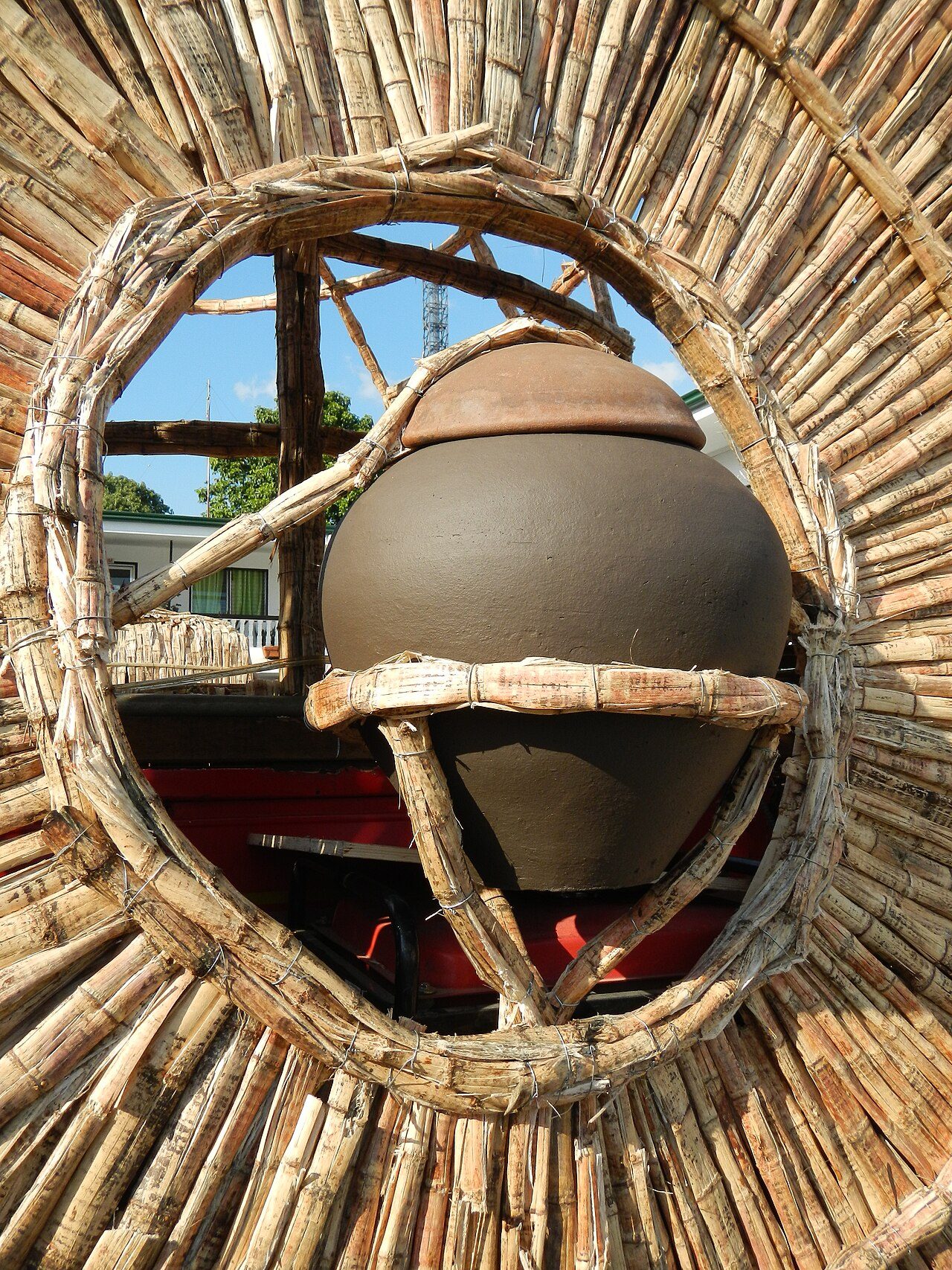
4 min read · 2 sourcesBasí is a traditional Ilocano fermented alcoholic beverage made from sugarcane juice, predominantly produced in Northern Luzon, Philippines particularly in the Ilocos Region. It is fermented in burnáy (earthen jars) and flavored with gamú or natural additives such as samak bark. Basí has been an integral part of Ilocano culture for centuries, commonly featured in various rituals and celebrations, with distinct regional variations in its production methods and flavor profiles. 1
Description
Basi is a non-distilled alcoholic beverage created from fermented sugarcane juice. It is primarily produced in the northern provinces such as Ilocos Norte, Ilocos Sur, La Union, and Pangasinan, where it is more commercialized. Further north, basí is called fvayash in Sadanga and bayas in Kalinga. There are two main types of basí: basi lalaki, which tends to be dry and bitter; and basi babae, which is sweeter. The two types are differentiated by the concentration of sugarcane juice, microorganisms used for fermentation, and additives. Basi lalaki is traditionally prepared for men, and basi babae for women. 1
Preparation
The process of making basí is not standardized, and can vary frommaker to maker. There are three general methods of preparing basí from Ilocos, La Union, and Pangasinan. All three methods use sugarcane juice from crushed one year old disease-free stalks. Wooden presses called dadapilan in Ilocos or poliwes in Sadanga driven by a carabao are traditionally used to crush stalks, though a modern crushing machine may also be used. 1
Ilocos
In Ilocos region, basí is produced primarily in Laoag, Sarrat, Piddig, Vintar, and Vigan. In the Ilocano method, water is added to the sugarcane juice and bagasse left over from pressing is used as fuel to boil the liquid. A mixture called gamu is added, made of ground dry samak bark and leaves combined with powdered cardis seeds and rice. The samak is the source of microorganisms. After cooling, the liquid is added to an earthen jar called a burnay, which is covered with fresh samak leaves secured around the neck of the jar. After three days, half of the gamu is removed and a starter called parec is added, which is made of ground dry samac bark and leaves, cardis seeds, and rice. The burnay is then left to incubate and age for 3–12 months, either sealed with carabao dung or buried in a hole and covered in soil and sealed with a stone. The final product has an alcohol content of 10–13%. 1
La Union
The La Union method is particularly used in the town of Naguilian. As in the Ilocano method, water is added to the sugarcane juice and bagasse is used as fuel for boiling the liquid. One year old duhat bark, tangal bark and green guava leaves are added to the liquid. After boiling, the liquid is poured into a burnay, covered in banana leaves, and left to cool to 40–45 °C. A mixture of steamed rice and bubod starter called binubudan is then added and the mixture is left to incubate for one week. More powdered bubod is added, and fermentation continues for one month with aging taking a further 6–12 months. The resulting basí has an alcohol content of 12–15% and is characterized by a sweet-sour taste and a color varying from dark red to golden brown. 1
Pangasinan
Basí production in Pangasinan is less prevalent and occurs mainly in the town of Binalonan. The Pangasinan method is similar to that of Ilocos, with samak used as the source of microorganisms. After being poured into a burnay, the liquid is left to cool for 24 hours before ground, dried samak fruit is added. The burnay is then covered in brown paper and aged for 3–9 months. The product has an alcohol content of 12–13%. 1
The text above is adapted from the Wikipedia article “Basi”, available under the Creative Commons Attribution-ShareAlike 4.0 licence. 1
Basi is fermented beverage made from sugarcane, according to the structured record cited below. This entry was generated automatically from that record and has not yet been reviewed by a person familiar with the tradition. 2
The source record links this tradition to 1 external register, which can be verified through the citation. 2