The tradition & historical record
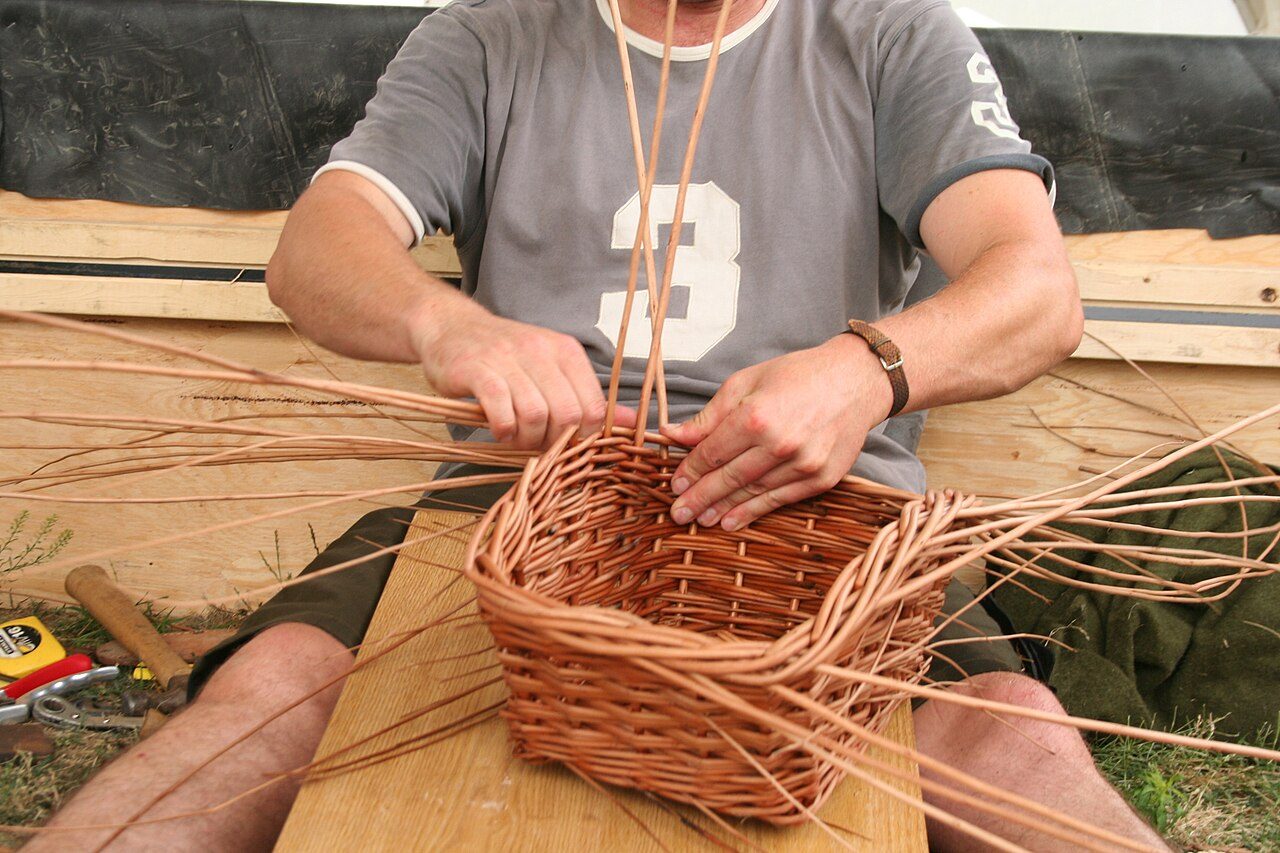
4 min read · 2 sourcesBasket weaving (also basketry or basket making) is the process of weaving or sewing pliable materials into objects, such as baskets, mats, mesh bags or even furniture. Craftspeople and artists specialized in making baskets may be known as basket makers and basket weavers. Basket weaving is also a rural craft. It is also widely known in Middle Eastern regions such as Cyprus. Basketry is made from a variety of fibrous or pliable materials—anything that will bend and form a shape. Examples include pine, straw, willow (esp. osier), oak, wisteria, forsythia, vines, stems, fur, hide, grasses, thread, and fine wooden splints. There are many applications for basketry, from simple mats to hot air balloon gondolas. Many Indigenous peoples are renowned for their basket-weaving techniques. 1
History
While basket weaving is one of the most widespread crafts in the history of any human civilization, it is hard to say just how old the craft is, because natural materials like wood, grass , and animal remains decay naturally and constantly. Techniques used in basket weaving have been indistinguishable from rope-making and evidenced throughout the world since the beginning of recorded hominin presence in South Africa with the repeat discovery of perforated batons. Due to the degradation of natural materials over the millennia, researchers have no specimens to analyze, even though modern tradition includes the use of water-proofing or hardening with additional materials like clay or bitumen. Instead, assumptions of ancient basket weaving methods rely on the study (and assumed usage) of ancient tools combined with observations of modern and protomodern basket weaving in civilizations that still rely on sustainable methods culturally passed down since those ancient times. 1
Middle East
The earliest reliable evidence for basket weaving technology in the Middle East comes from the Pre-Pottery Neolithic phases of Tell Sabi Abyad II and Çatalhöyük. Although no actual basketry remains were recovered, impressions on floor surfaces and on fragments of bitumen suggest that basketry objects were used for storage and architectural purposes. The extremely well-preserved Early Neolithic ritual cave site of Nahal Hemar yielded thousands of intact perishable artefacts, including basketry containers, fabrics, and various types of cordage. Additional Neolithic basketry impressions have been uncovered at Tell es-Sultan (Jericho), Netiv HaGdud, Beidha, Shir, Tell Sabi Abyad III, Domuztepe, Umm Dabaghiyah, Tell Maghzaliyah, Tepe Sarab, Jarmo, and Ali Kosh. The oldest known baskets were discovered in Faiyum in upper Egypt and have been carbon dated to between 10,000 and 12,000 years old, earlier than any established dates for archaeological evidence of pottery vessels, which were too heavy and fragile to suit far-ranging hunter-gatherers. The oldest and largest complete basket, discovered in the Negev in the Middle East, dates to 10,500 years old. However, baskets seldom survive, as they are made from perishable materials. The most common evidence of a knowledge of basketry is an imprint of the weave on fragments of clay pots, formed by packing clay on the walls of the basket and firing. 1
Industrial Revolution
During the Industrial Revolution, baskets were used in factories and for packing and deliveries. Wicker furniture became fashionable in Victorian society. 1
World Wars
During the World Wars, some pannier baskets were used for dropping supplies of ammunition and food to the troops. 1
Types
Basketry may be classified into four types: 1
Coiled basketry, using grasses, rushes and pine needles Plaiting basketry, using materials that are wide and braid-like: palms, yucca or New Zealand flax Twining basketry, using materials from roots and tree bark. This is a weaving technique where two or more flexible weaving elements ("weavers") cross each other as they weave through the stiffer radial spokes. Wicker and Splint basketry, using materials like reed, cane, willow, oak, and ash 1
The text above is adapted from the Wikipedia article “Basket weaving”, available under the Creative Commons Attribution-ShareAlike 4.0 licence. 1
basketry is weaving of pliable materials to make three-dimensional artifacts, according to the structured record cited below. This entry was generated automatically from that record and has not yet been reviewed by a person familiar with the tradition. 2
The source record links this tradition to 34 external registers, which can be verified through the citation. 2