The tradition & historical record
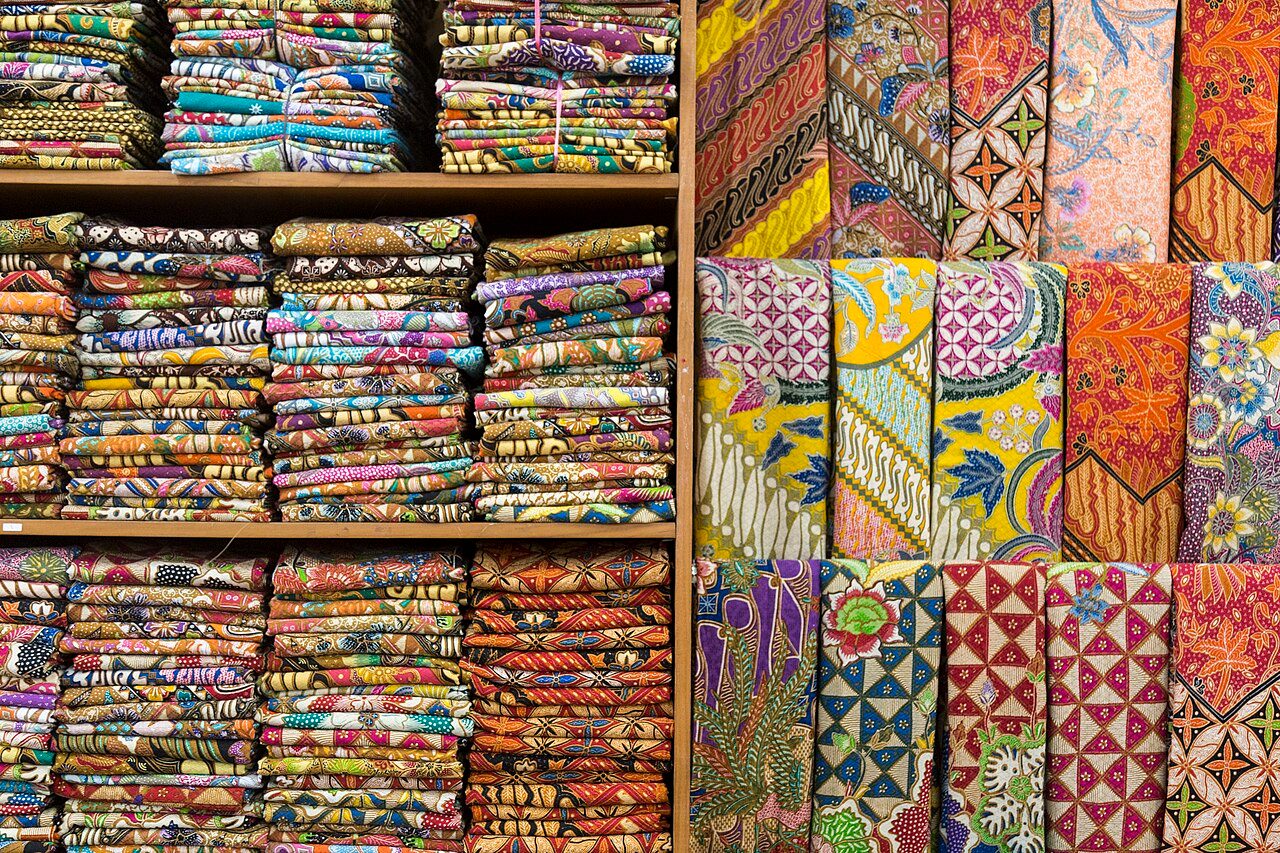
6 min read · 2 sourcesBatik is a dyeing technique using wax resist. The term is also used to describe patterned textiles created with that technique. Batik is made by drawing or stamping wax on a cloth to prevent colour absorption during the dyeing process. This creates a patterned negative when the wax is removed from the dyed cloth. Artisans may create intricate coloured patterns with multiple cycles of wax application and dyeing. Patterns and motifs vary widely even within countries. Some patterns hold symbolic significance and are used only in certain occasions, while others were created to satisfy market demand and fashion trends. Resist dyeing using wax has been practised since ancient times, and it is attested in several world cultures, such as Egypt, southern China (especially among hilltribes like the Miao, Bouyei, and Gejia peoples), India, Indonesia, Malaysia, Nigeria, and Sri Lanka. The technique developed in Indonesia (especially in Java) is among the most sophisticated, although its antiquity is difficult to determine. It first became widely known outside of Southeast Asia when it was described in the 1817 History of Java, leading to significant collecting efforts and scholarly studies of the tradition and crafts. Javanese batik was subject to several innovations in the 19th to early-20th centuries, such as the use of stamp printing of wax to increase productivity. 1
Etymology
The English word batik is borrowed from Javanese bathik (Javanese script: ꦧꦛꦶꦏ꧀, Pegon: باطيء). English dictionaries tend to define batik as a general dyeing technique, meaning that cloths with similar methods of production but culturally unrelated to Javanese batik may be labelled as batik in English. Robert Blust traces the Javanese word as a reflex of Proto-Austronesian *batik and its doublet *beCik which means decorations and patterns in general. In Java, the word is only attested in sources post dating the Hindu–Buddhist period, from the 16th century onward. Outside of Java, the word first appears in a 1641 merchant ship's bill of lading as batick. The term and technique came to wider public notice beyond Southeast Asia following Thomas Stamford Raffles's description of batik process in his 1817 book The History of Java. Colonial era Dutch sources record the word in various spellings, such as mbatik, mbatek, batik, and batek. 1
Ancient to early modern periods
Batik-like resist dyeing is an ancient art form. It existed in Egypt in the 4th century BC, where it was used to wrap mummies; linen was soaked in wax, and scratched using a stylus. It continued to be used into the medieval Byzantine era, although surviving pieces are rare. In Asia, the technique is attested in India, the Tang dynasty in China, and the Nara Period in Japan. In Africa, it was practiced by the Yoruba people of Nigeria, as well as by the Soninke and Wolof of Senegal. 1
The art of batik is highly developed on the island of Java, Indonesia, although the antiquity of the technique is difficult to determine since batik pieces rarely survive long in the region's tropical climate. The Dutch historians G. G. Rouffaer & H. H. Juynboll argue that the technique might have been introduced during the 6th or 7th century from India or Sri Lanka. The similarities between some traditional batik patterns with clothing details in ancient Hindu-Buddhist statuaries, for example East Javanese Prajnaparamita, has made some authors attribute batik's creation to Java's Hindu-Buddhist period (8th-16th century AD). Some scholars cautioned that mere similarity of pattern is not conclusive of batik, as it could be made by other non-related techniques. Since the word "batik" is not attested in any pre-Islamic sources, some scholars have taken the view that batik only developed at the end of Java's Hindu-Buddhist period, from the 16th century onward, following the demise of Majapahit kingdom. However, this view has not taken into account the oldest surviving physical Javanese batik piece, which was only identified in 2022. It is a blue-white valance carbon dated to the 13th or 14th century, which corresponds to the early Majapahit period. 1
Modern period
Batik technique became more widely known (particularly by Europeans outside of Southeast Asia) when the Javanese version was described in The History of Java, starting the collecting and scholarly interest in batik traditions. In 1873, the Dutch merchant Elie Van Rijckevorsel gave the pieces he collected during a trip to Indonesia to the ethnographic museum in Rotterdam. Examples were displayed at Paris's Exposition Universelle in 1900. Today the Tropenmuseum houses the biggest collection of Indonesian batik in the Netherlands. In the 19th to early 20th century, Dutch Indo–Europeans and Chinese settlers were actively involved in the production and development of Javanese batik, particularly pesisir "coastal" style batik in the northern coast of Java. Scholars such as J.E. Jasper and Mas Pirngadi published books extensively documenting existing batik patterns. These in turn were used by Dutch and Chinese artisans to develop new patterns which blended several cultural influences, and who also introduced innovations such as cap (copper block stamps) to mass-produce batiks and synthetic dyes which allow brighter colours. Several prominent batik ateliers appeared, such as Eliza van Zuylen (1863–1947) and Oey Soe Tjoen (1901–1975), and their products catered to a wide audience in the Malay Archipelago (encompassing modern Indonesia, Malaysia, and Singapore). Batik skirts and sarongs, for example, were widely worn by indigenous, Chinese, and European women of the region, paired with the ubiquitous kebaya shirt. Batik was also used for more specialised applications, such as peranakan altar cloth called tok wi (桌帷). It is in this time period as well that the Javanese batik production spread overseas. 1
Techniques
Production begins by washing the base cloth, soaking it, and beating it with a large mallet. Patterns are sketched with pencil and redrawn using hot wax, usually made from a mixture of paraffin or beeswax, sometimes mixed with plant resins. The wax functions as a dye-resist which prevents colour absorption during the dyeing process. This creates a patterned negative when the wax is removed from the dyed cloth. Using this mechanism, artisans may create intricate coloured patterns with multiple cycles of wax application and dyeing. 1
The wax can be applied with a variety of tools, including writing with a pen-like canting tool, printing with a cap, or painting with a brush. The canting is the most basic and traditional tool, creating what is known as "written batik" (batik tulis). It allows the creation of very fine, minute patterns but the process is very labour-intensive. Stamped batik (batik cap) allows more efficient production for larger quantities at the expense of detail. 1
Written batik
Written batik or batik tulis (Javanese script: ꦧꦛꦶꦏ꧀ꦠꦸꦭꦶꦱ꧀; Pegon: باطيء توليس) is made by writing molten wax on the cloth with a pen-like instrument called a canting (Javanese pronunciation: [tʃantiŋ], old spelling tjan… 1
The text above is adapted from the Wikipedia article “Batik”, available under the Creative Commons Attribution-ShareAlike 4.0 licence. 1
batik is Indonesian cloth dyeing technique originating from Java, according to the structured record cited below. This entry was generated automatically from that record and has not yet been reviewed by a person familiar with the tradition. 2
The source record links this tradition to 26 external registers, which can be verified through the citation. 2