The tradition & historical record
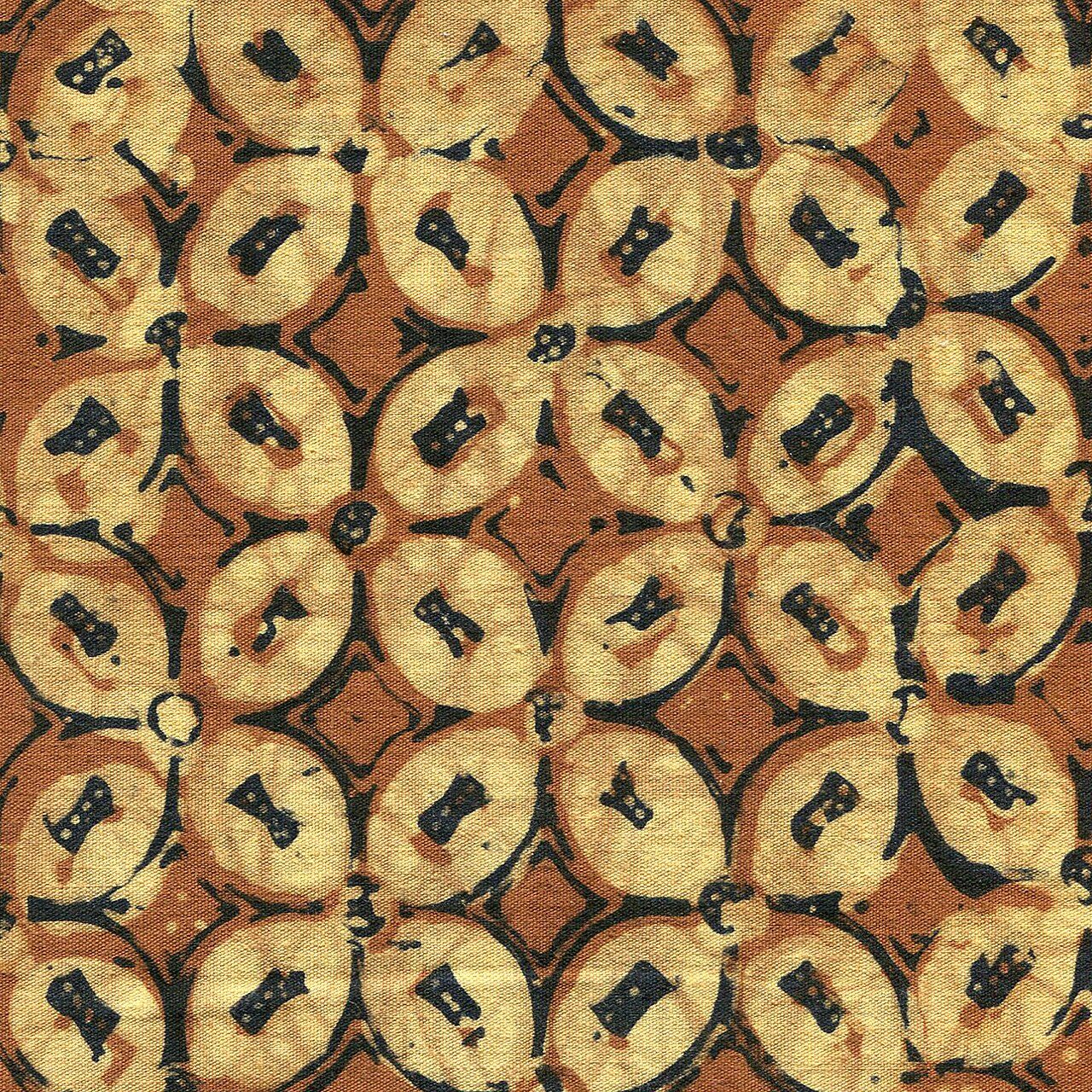
3 min read · 2 sourcesKawung batik (Indonesian: Batik Kawung) is an Indonesian batik motif whose shape is in the form of a circle similar to a kawung fruit (a type of coconut or sometimes also considered as sugar palm or palm fruit) which is neatly arranged geometrically. Sometimes, this motif is also interpreted as an image of a lotus flower with four flower crowns that are open. Lotus is a flower that symbolizes longevity and purity. 1
Etymology
There are several opinions regarding the origin of the word kawung, including the following: 1
Kawung in Javanese means the fruit of the palm tree. Kawung in Javanese means palm tree leaves, generally used for rolling cigarettes. Kawung comes from the Javanese word, kwangwung or in Indonesian known as the horn beetle. 1
History
Batik kawung is one of the oldest batik motifs in Indonesia. Its existence is often mentioned and appears in various written historical sources and oral culture since the days of the Mataram Sultanate in the 16th century. There are 2 theories that explain the origin of this batik. 1
The first theory states that this batik motif was created by the fourth Sultan of Mataram who ruled from 1613-1645, namely Sultan Agung of Mataram. Where the sultan said that he was inspired by the palm tree. 1
For the second theory, this often appears in folklore, which tells of an authoritative young man who is also known to be very polite and wise. Until one day, rumors about this young man reached the royal circle. The royal party also sent a spy to observe the daily life of the young man, until finally he was summoned to appear before the king. The mother, who received news that her son had been called by the king, prepared the best clothes for her child in the form of a kawung motif in the hope that her son could become a useful person for the community. 1
Type
Usually, the Kawung motifs are named based on the size of the oval shape contained in a certain motif and/or in combination with other batik motifs. 1
Kawung picis
Kawung Picis is a kawung motif composed of small circles. A picis is a small 10-cent coin. Although it is said to come from the form of a 10-cent coin, other sources state that the word picis is interpreted as simply something small. 1
Kawung Bribil/Gidril
Kawung Bribil are kawung motifs composed of a larger shape than the kawung Picis. This is in accordance with the name Bribil, a currency whose shape is larger than the picis. Bribil means half a penny in the Javanese dictionary. Other sources state that the bribil or gidril motif is the name of a currency made of nickel, its value equal to five cents. Another source says Bribil is worth 25 cents. 1
The text above is adapted from the Wikipedia article “Batik kawung”, available under the Creative Commons Attribution-ShareAlike 4.0 licence. 1
batik kawung is Indonesian batik motifs, according to the structured record cited below. This entry was generated automatically from that record and has not yet been reviewed by a person familiar with the tradition. 2
The source record links this tradition to 1 external register, which can be verified through the citation. 2