The tradition & historical record
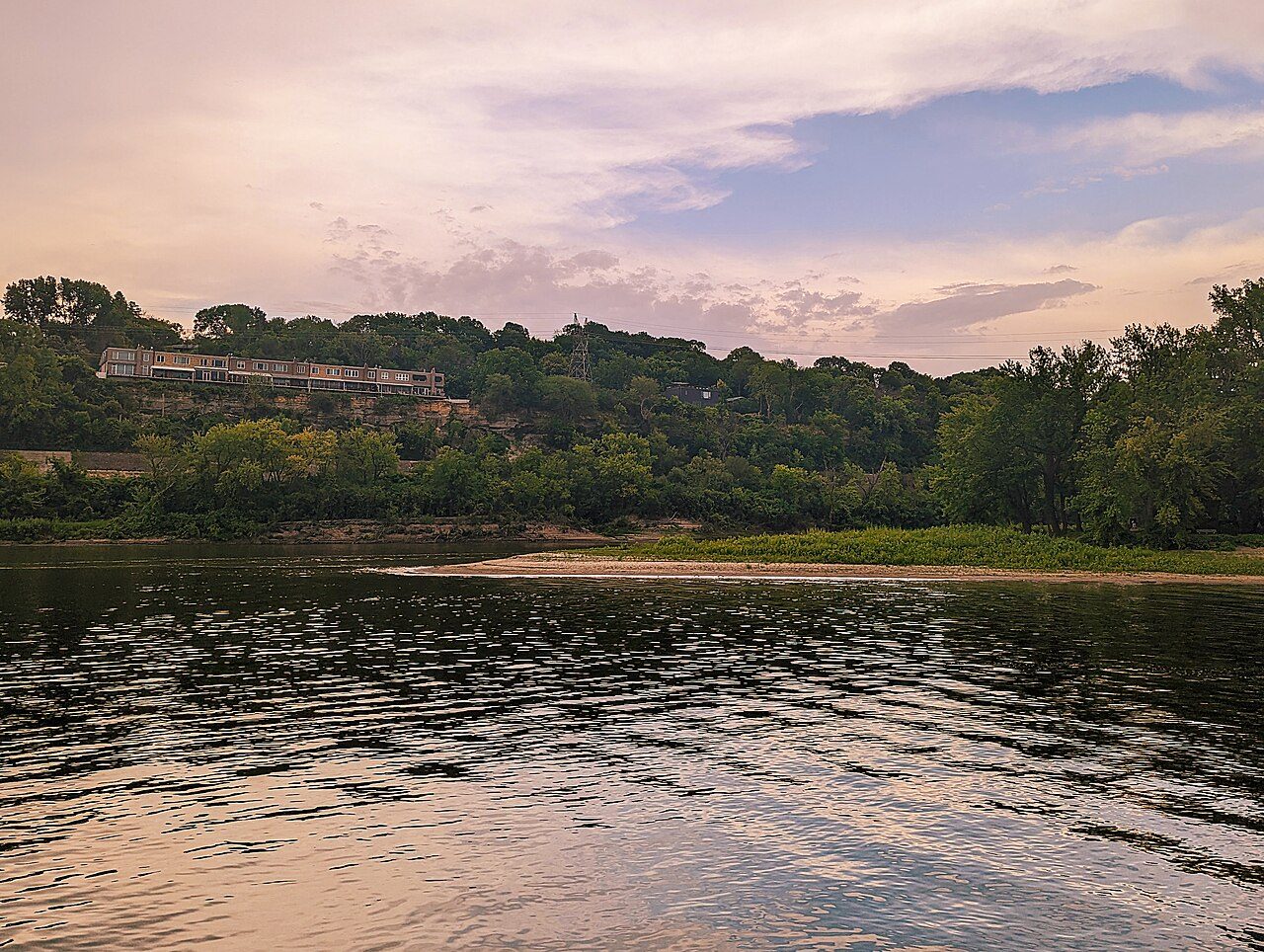
5 min read · 2 sourcesBdóte (English: bə-DOH-tay; lit. 'place where two rivers meet' or 'confluence'; deprecated spelling Mdote) is a significant Dakota sacred landscape where the Minnesota and Mississippi Rivers meet, encompassing Pike Island, Fort Snelling, Coldwater Spring, Indian Mounds Park, and surrounding areas in present-day Minneapolis and Saint Paul, Minnesota, United States. In Dakota geographic memory, it is a single contiguous area not delineated by any contemporary areas' borders. According to Dakota oral tradition, it is the site of creation; the interconnectedness between the rivers, earth, and sky are important to the Dakota worldview and the site maintains its significance to the Dakota people. It is also an important location in the history of European colonization of the region, including the 1805 Treaty of St. Peters with the Dakota people and the 1837 Treaty of St. Peters with the Ojibwe. After the Dakota War of 1862, it was the location of the concentration camp of the Dakota people before they were forcibly exiled from Minnesota. The cities of Mendota and Mendota Heights, Minnesota, which are part of Bdote, take their names from the Dakota name for the region. In recent years, a movement to recognize and protect Bdote as a sacred place has been growing. 1
Etymology
In the Dakota language, bdote can refer to any place where two bodies of water converge and can be translated as the "mouth" of a body of water. A deprecated spelling is mdote. 1
Cosmology
Numerous creation stories within the Dakota communities define their relationships with the land and the stars above, including the sacred sites in Bdote. Many Dakota people identify as part of the Wicahpi Oyate (Star Nation), having spiritually originated from the stars and come into being on the land. In one version, the Big Dipper represents the seven bands of the Dakota and Lakota, collectively known as the Oceti Sakowin (Seven Council Fires). According to another, told by Gwen Westerman, the Dakota came from Orion's Belt and through the Creator, they walked Caŋku Wanagi, the "spirit road" (Milky Way), and arrived at Bdote, later spreading out to establish the sacred sites in the surrounding areas. At Bdote, two bluffs called Caṡḳe Taŋka and Caṡḳe Cistiŋna opened up the earth. The Creator used mud between the bluffs to form the first Dakota man and woman. The earth is called Ina for "mother" because it is where Dakota people came from. Ṡuŋġi (Dakota elder Reverend Gary Cavender) further explains, "In our Creation myth we the Dakota, the Seven Fires of the Dakota, came from the belt of Orion—the seven planets of the belt of Orion, the seven stars—and arrived at the convolution of the Minnesota and Mississippi Rivers, and so in some respects it is our Eden, and the land around there is sacred as well". According to astronomer Jim Rock, Bdote refers to the "Dakota Makoce Cokaya Kin" (Dakota center of the universe). An ancient and important relationship between the land and stars is known by the Dakota term Kapemni, which means "as it is above, it is below". The Mississippi River is reflected above as the Milky Way, the Spirit Road, that life travels to this world and returns to. 1
Sacred sites
There are numerous sites sacred to the Dakota people within Bdote. The specific sites within Bdote are part of what gives the region its significance in Dakota tradition. Lakota Chief Arvol Looking Horse noted during a pipe ceremony on Pilot Knob Preservation (Oheyawahi) that these sacred sites are how Dakota people connect spiritually to the wider landscape. Prairie Island Dakota spiritual leader Chris Leith has said that Bdote's many sacred sites make it a "vortex" in the landscape. 1
Mnísota Wakpá (Minnesota River) Oȟéyawahe (Pilot Knob Preservation) Wíta Tháŋka (Pike Island) Mniówe Sní (Coldwater Spring) Owámniyomni (St. Anthony Falls) 1
Ȟaȟáwakpa (Mississippi River)
Ȟaȟáwakpa ("river of waterfalls", also known as the Mississippi River) was named after the many waterfalls that once cascaded over the bluffs, and the only natural waterfall on the Mississippi River, known in Dakota as Owámniyomni (St. Anthony Falls). Urban development of Minneapolis and Saint Paul led to the destruction of many of the falls or the removal of their water source. The river is reflected above in Dakota thought as the Milky Way, known in Dakota star knowledge as the Spirit Road on which people's spirits travel to and from earth during their birth and death. According to Dakota oral tradition, burial mounds were built along the bluffs to be close to the river of waterfalls and the spirit road. The river is also called Wakpá Tháŋka, the Great River, or less commonly Thaŋčháŋ Wakpa ("the body or principal part anything river"). 1
Owámniyomni (St. Anthony Falls)
Owámniyomni ("whirlpool") is the Dakota name of St. Anthony Falls. As the only natural portage on the Mississippi River in the area, it was considered neutral territory and a practical meeting place for numerous tribes (including the Dakota, Hochunk and, later, the Ojibwe). Above the sacred falls is Wita Waste ("Beautiful Island" or Nicollet Island), an annual maple-sugar camp for the Dakota. Below the falls was an island known as Wita Wanagi ("Spirit Island"), which the U.S. Army Corps of Engineers destroyed in 1960 to dredge the site for boat passage. Wita Wanagi was a birthing place for Dakota women and also home to the spirit of Anpetu Sapa Win ("Clouded Day Woman"), whose death song could still be heard on the island. 1
The text above is adapted from the Wikipedia article “Bdóte”, available under the Creative Commons Attribution-ShareAlike 4.0 licence. 1
Bdóte is recorded in open cultural data. The structured record cited below does not describe the practice, and this entry has not yet been reviewed by a person familiar with the tradition. 2
The source record links this tradition to 1 external register, which can be verified through the citation. 2