The tradition & historical record
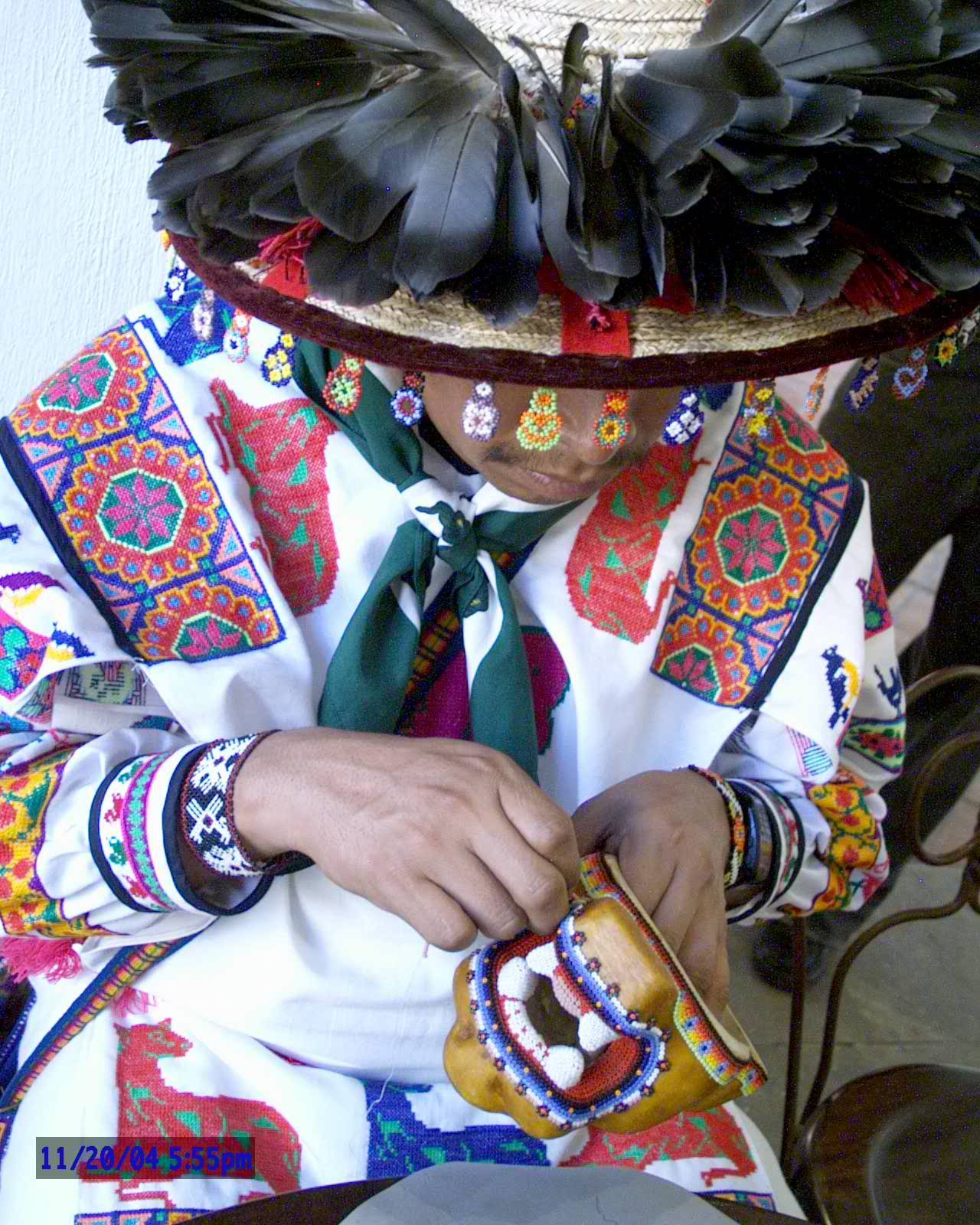
5 min read · 2 sourcesBeadwork is the art or craft of attaching beads to one another by stringing them onto a thread or thin wire with a sewing or beading needle or sewing them to cloth. Beads are produced in a diverse range of materials, shapes, and sizes, and vary by the kind of art produced. Most often, beadwork is a form of personal adornment (e.g. jewelry), but it also commonly makes up other artworks. Beadwork techniques are broadly divided into several categories, including loom and off-loom weaving, stringing, bead embroidery, bead crochet, bead knitting, and bead tatting. 1
Ancient beading
The art of creating and utilizing beads is ancient, and ostrich shell beads discovered in Africa can be carbon-dated to 10,000 BC. Faience beads, a type of ceramic created by mixing powdered clays, lime, soda, and silica sand with water until a paste forms, then molding it around a stick or straw and firing until hard, were notably used in ancient Egyptian jewelry from the First Dynasty (beginning in the early Bronze Age) onward. Faience and other ceramic beads with vitrified quartz coatings predate pure glass beads. Beads and work created with them were found near-ubiquitously across the ancient world, often made of locally available materials. For example, the Athabaskan peoples of Alaska used tusk shells (scaphopod mollusks), which are naturally hollow, as beads and incorporated them into elaborate jewelry. Beadwork has historically been used for religious purposes, as good luck talismans, for barter and trade, and for ritual exchange. 1
Modern beading
Today, beadwork is commonly practiced by jewelers, hobbyists, and contemporary artists; artists known for using beadwork as a medium include Liza Lou, Ran Hwang, Hew Locke, Jeffery Gibson, and Joyce J. Scott. Some ancient stitches have become especially popular among contemporary artists. The off-loom peyote stitch, for example, is used in Native American Church members' beadwork. Jewelry made of beads was widespread and fashionable in Western Ukraine, which was connected with the familiarity of Ukrainian artists with the artistic achievements of the countries of Western Europe, where from the 18th century. There was a fashion for artistic products made of beads. Modern Ukrainian beadwork includes: beaded clothing, collars, bracelets, necklaces, necklaces-gerdanes, clothing accessories, and household items such as pysanka. 1
Europe
Beadwork in Europe, much like in Egypt and the Americas, can be traced to the use of bone and shell as adornments amongst early modern humans. As glassmaking increased in popularity through the Middle Ages, glass beads began to appear extensively in bead embroidery, beaded necklaces, and similar wares. In Northern Russia, the kokoshnik headdress typically includes river pearl netting around the forehead in addition to traditional bead embroidery. By 1291, artists in Murano, Italy had begun production of intricate glass Murano beads inspired by Venetian glassware. With the advent of lampwork glass, Europeans started producing seed beads for embroidery, crochet, and other, mostly off-loom techniques. Czech seed beads are among the most popular contemporary bead styles. One technique of European beadwork is beaded "immortal" flowers. The technique's origins, though indistinct, are generally agreed to range at least several centuries back, as far back as at least the 16th if not 14th century. Two major styles were developed: French beading, in which the wire only goes through each bead once and the wires are arranged vertically, and Victorian (also called English or Russian) beading, in which the wires go through each bead twice and are arranged horizontally. In the late 19th and early 20th century, the beaded flowers were used to create long lasting funeral wreaths, called immortelles (French for "immortals"). In the mid-20th century, the art was introduced to United States with sales of flower beading kits. In 1960s to 1970s, books by emerging beaded flower designers emerged. 1
North America
Native American beadwork, already established via the use of materials like shells, dendrite, claws, and bone, evolved to incorporate glass beads as Europeans brought them to the Americas beginning in the early 17th century. Native beadwork today heavily utilizes small glass beads, but artists also continue to use traditionally important materials. Wampum shells, for instance, are ceremonially and politically important to a range of Eastern Woodlands tribes, and are used to depict important events. Several Native American artists from a wide range of nations are considered to be at the forefront of modern American bead working. These artists include Teri Greeves (Kiowa, known for beaded commentaries on Native voting rights), Marcus Amerman (Choctaw, known for realistic beaded portraits of historical figures and celebrities), and Jamie Okuma (Luiseño-Shoshone-Bannock, known for beaded dolls). 1
Great Lakes tribes
Ursuline nuns in the Great Lakes introduced floral patterns to young Indigenous women, who quickly applied them to beadwork. Ojibwe women in the area created ornately decorated shoulder bags known as gashkibidaagan (bandolier bags). The Anishinaabe in the Great Lakes region use beading to share stories about the traditions and culture of the tribe. There are 7 core teachings from the Teachings of the Seven Grandfathers that the Anishinaabe people embody in their culture, storytelling, and beadwork: Wisdom, love, respect, bravery, honesty, humility, and truth. 1
The text above is adapted from the Wikipedia article “Beadwork”, available under the Creative Commons Attribution-ShareAlike 4.0 licence. 1
beading is decoration technique with beads, according to the structured record cited below. This entry was generated automatically from that record and has not yet been reviewed by a person familiar with the tradition. 2
The source record links this tradition to 15 external registers, which can be verified through the citation. 2