The tradition & historical record
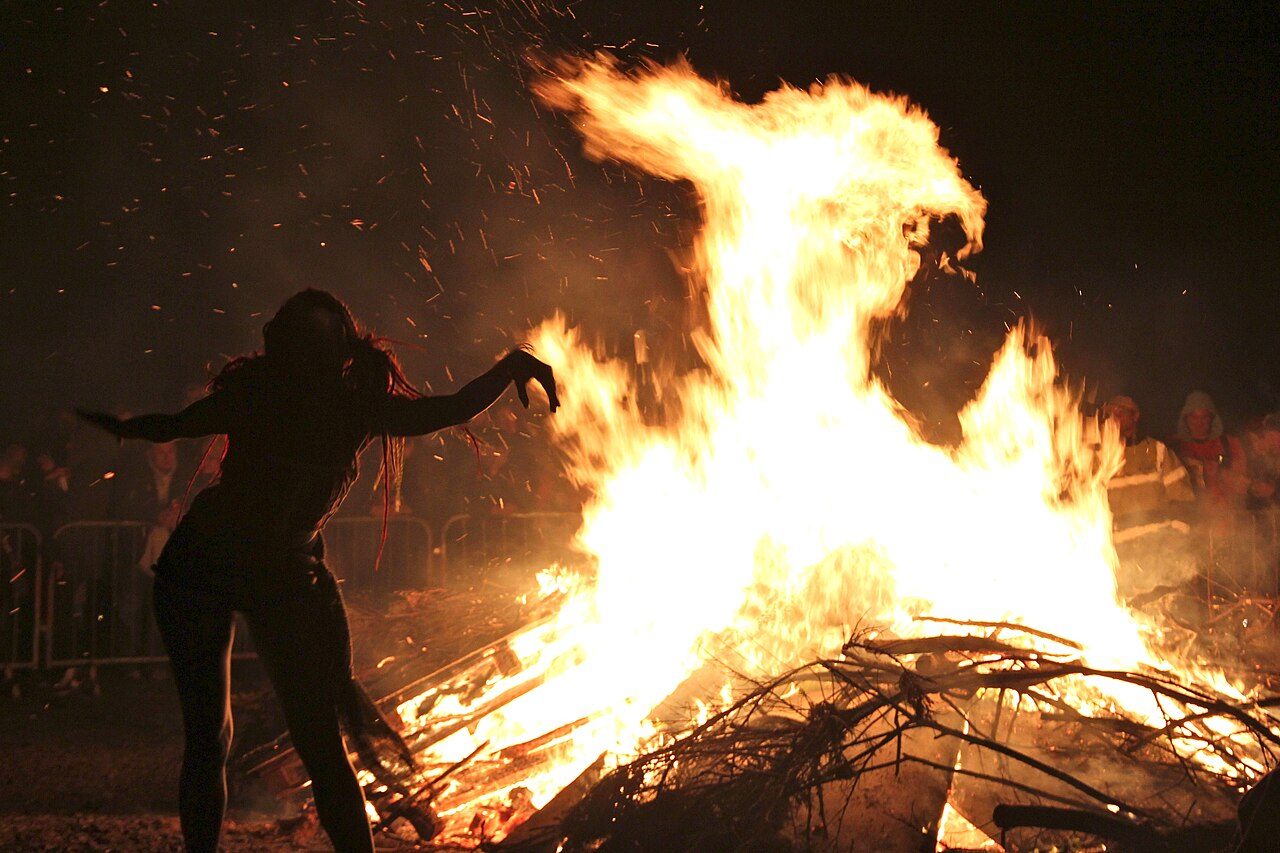
6 min read · 2 sourcesBealtaine (Irish pronunciation: [ˈbʲal̪ˠt̪ˠənʲə]) or Beltane ( BEL-tayn) is the Gaelic May Day festival, marking the beginning of summer. It is traditionally held on 1 May, or about midway between the spring equinox and summer solstice. Historically, it was widely observed in Ireland, Scotland, and the Isle of Man. In Ireland, the name for the festival in both Irish and English is Lá Bealtaine ([l̪ˠaː ˈbʲal̪ˠt̪ˠənʲə]). In Scottish Gaelic it is Là Bealltainn ([l̪ˠaː ˈpjaul̪ˠt̪ɪɲ]), and in Manx Gaelic Boaltinn or Boaldyn. It is one of the four main Gaelic seasonal festivals—along with Samhain, Imbolc, and Lughnasadh—and is similar to the Welsh Calan Mai. Beltane is mentioned in the earliest Irish literature and is associated with important events in Irish mythology. Also known as Cétshamhain (possibly 'first of summer'), it marked the beginning of summer and was when cattle were driven out to the summer pastures. Rituals were performed to protect cattle, people and crops, and to encourage growth. Special bonfires were kindled, whose flames, smoke and ashes were believed to have protective powers. The people and their cattle would walk around or between bonfires and sometimes leap over the flames or embers. All household fires would be doused and then relit from the Beltane bonfire. These gatherings were accompanied by a feast, and some of the food and drink would be offered to the aos sí (the 'fairy folk'). 1
Name
In Old Irish, the name was usually Beltaine or Belltaine. In modern Irish, the festival is usually called Lá Bealtaine ("day of Beltane"), while the month of May is Mí Bhealtaine ("month of Beltane"). In Scottish Gaelic, the festival is Latha Bealltainn. Sometimes the older Scottish Gaelic spelling Bealltuinn is used. The term Latha Buidhe Bealltainn (Scottish) or Lá Buidhe Bealtaine (Irish), "the bright or yellow day of Beltane", means the first of May. In Ireland it is referred to in a common folk tale as Luan Lae Bealtaine; the first day of the week (Monday/Luan) is added to highlight the first day of summer. The name is anglicised as Beltane, Beltain, Beltaine, Beltine and Beltany. Another Old Irish name for the festival was Cétshamain or Cétamain, probably meaning 'first of summer'. Ó Duinnín's Irish dictionary (1904) gives this as Céadamhain or Céadamh in modern Irish. It survives in the Scottish Gaelic name for the month of May, An Cèitean, and matches the Welsh Cyntefin. These have all been derived from proto-Celtic *kentu-samonyos (first + summer). 1
Etymology
Two modern etymologies have been proposed. The first reconstructs Beltaine as *beltiniā, deriving it from a stem *beltu associated with 'death' (cf. Old Irish at·baill 'dies', epeltu < *eks-beltu 'dying'), from an earlier *gʷel-tiō(n), based on Proto-Indo-European *gʷel- 'suffering, death'. On this view, Beltaine would be cognate with the Lithuanian goddess of death Giltinė. The lack of expected syncope (Irish sound laws would predict **Beltne) has been explained as the result of a popular reinterpretation of Beltaine as a compound containing Old Irish tene ('fire'). However, Peter Schrijver says that this etymology is problematic, as it is unlikely the beginning of the fertile summer season would be associated with death, and it does not accord well with medieval accounts of kindling fires to guard against sickness. According to another etymology, Beltaine is a compound formed from the Proto-Indo-European root *bʰel- ('shine') and Old Irish tene ('fire'). Schrijver suggests that the element bel derives from an Indo-European word for henbane, a psychoactive plant used in herbal medicine. Medieval Irish texts say that the name means "Bel's fire"; fire of the god Bel. This could be an Irish version of the Celtic god Belenos, but Bel is not mentioned anywhere else in early Irish literature and the texts include many fanciful etymologies. 1
Toponymy
There are place names in Ireland containing the word Bealtaine, indicating places where Beltane festivities were once held. It is often anglicised as Beltany. There are three Beltanys in County Donegal, including the Beltany stone circle, and two in County Tyrone. In County Armagh there is a place called Tamnaghvelton/Tamhnach Bhealtaine ('the Beltane field'). Lisbalting/Lios Bealtaine ('the Beltane ringfort') is in County Tipperary, while Glasheennabaultina/Glaisín na Bealtaine ('the Beltane stream') is the name of a stream joining the River Galey in County Limerick. 1
Origins
It is believed that Beltane originated as a pastoral festival associated with herders practising transhumance. This is where herders (sometimes with their families) moved with their cows and sheep to higher pastures during the summer months. It was once widespread in Ireland, where it was known as "booleying", as well as in Britain and other parts of Europe. The ancient Roman festival of Parilia or Palilia had many similarities with Beltane. Around 21 April, before shepherds drove their flocks to the summer pastures, they carried out cleansing and protective rituals. Sheep folds were decorated with greenery, a bonfire was lit, the shepherds and their sheep leapt over burning embers, the shepherds drank a beverage they had brewed, and made offerings to the deity Pales. It suggests that the festivals, as well as similar May Day customs elsewhere in Europe, had a common origin in the distant past. 1
Historical customs
Beltane was one of four Gaelic seasonal festivals: Samhain (1 November), Imbolc (1 February), Beltane (1 May), and Lughnasadh (1 August). Beltane marked the beginning of the pastoral summer season, when livestock were driven out to the summer pastures. Rituals were held at that time to protect them from harm, both natural and supernatural, and this mainly involved the "symbolic use of fire". There were also rituals to protect crops, dairy products and people, and to encourage growth. The aos sí (often referred to as spirits or fairies) were thought to be especially active at Beltane (as at Samhain), and the goal of many Beltane rituals was to appease them. Most scholars see the aos sí as remnants of the pagan gods and nature spirits. Beltane was a "spring time festival of optimism" during which "fertility ritual again was important, perhaps connecting with the waxing power of the sun". 1
The text above is adapted from the Wikipedia article “Beltane”, available under the Creative Commons Attribution-ShareAlike 4.0 licence. 1
Beltane is Gaelic May Day festival, according to the structured record cited below. This entry was generated automatically from that record and has not yet been reviewed by a person familiar with the tradition. 2
The source record links this tradition to 5 external registers, which can be verified through the citation. 2