The tradition & historical record
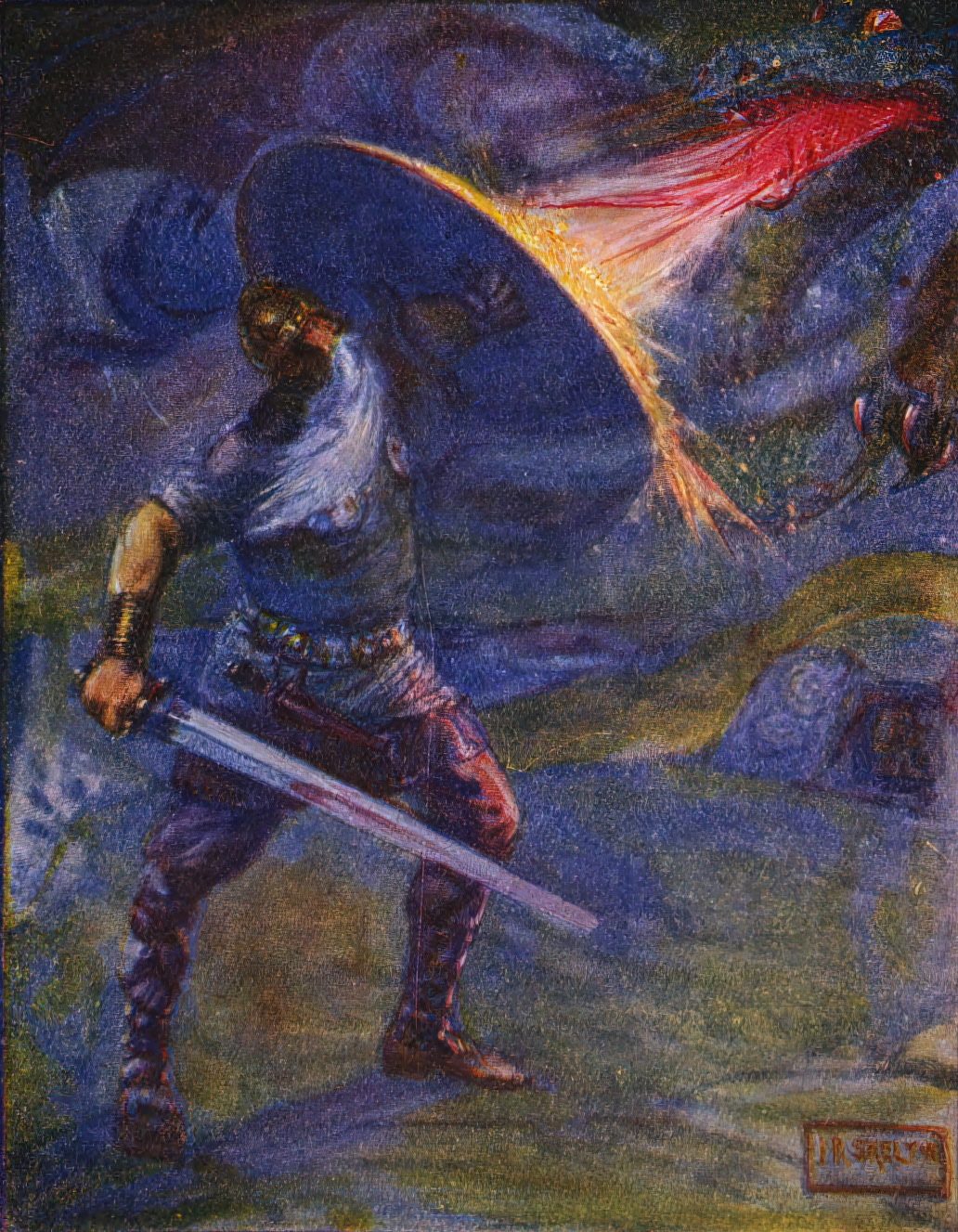
5 min read · 2 sourcesThe final act of the Anglo-Saxon poem Beowulf includes Beowulf's fight with a dragon, the third monster he encounters in the epic. On his return from Heorot, where he killed Grendel and Grendel's mother, Beowulf becomes king of the Geats and rules wisely for fifty years until a slave awakens and angers a dragon by stealing a jeweled cup from its lair. When the angry dragon mercilessly burns the Geats' homes (including Beowulf's) and lands, Beowulf decides to fight and kill the monster personally. He and his thanes climb to the dragon's lair where, upon seeing the beast, the thanes flee in terror, leaving only Wiglaf to battle at Beowulf's side. When the dragon wounds Beowulf fatally, Wiglaf attacks it with his sword, and Beowulf kills it with his dagger. This depiction indicates the growing importance and stabilization of the modern concept of the dragon within European mythology. Beowulf is the first piece of English literature to present a dragonslayer. Although the Beowulf dragon exhibits many existing motifs common to Germanic tradition, the Beowulf poet was the first to combine features and present a distinctive fire-breathing dragon. The Beowulf dragon was adapted for Middle-earth in J. R. R. Tolkien's The Hobbit (1937), one of the forerunners of modern high fantasy. The dragon fight, near the end of the poem, is foreshadowed in earlier scenes. 1
Story
After his battles against Grendel and Grendel's mother, Beowulf returns home and becomes king of the Geats. Fifty years pass with Beowulf in charge, when a local dragon is angered when a slave enters its lair and takes a cup from its treasure. The creature attacks the neighboring towns in revenge. Beowulf and a troop of men leave to find the dragon's lair. Beowulf tells his men to stay outside, that this fight is his alone, but the dragon proves strong and mortally wounds Beowulf. Meanwhile, his kinsman Wiglaf scolds the other members of the troop for not going in to help, before coming to Beowulf's aid. He cuts the dragon in the belly to reduce the flames, and Beowulf deals the fatal blow. In his death-speech, Beowulf nominates Wiglaf as his heir and asks for a monument to be built for him on the shoreline. 1
Background
Beowulf is the oldest extant heroic poem in English and the first to present a dragonslayer. The legend of the dragonslayer already existed in Norse sagas such as the tale of Sigurd and Fáfnir, and the Beowulf poet incorporates motifs and themes common to dragonlore in the poem. Beowulf is the earliest surviving piece of Anglo-Saxon literature to feature a dragon, and it is possible that the poet had access to similar stories from Germanic legend. Secular Germanic literature and the literature of Christian hagiography featured dragons and dragon fights. Although the dragons of hagiography were less fierce than the dragon in Beowulf, similarities exist in the stories such as presenting the journey to the dragon's lair, cowering spectators, and the sending of messages relaying the outcome of the fight. The dragon with his hoard is a common motif in early Germanic literature with the story existing to varying extents in the Norse sagas, but it is most notable in the Völsunga saga and in Beowulf. Beowulf preserves existing medieval dragon-lore, most notably in the extended digression recounting Sigemund the Wælsing (paralleled to the Sigurd-Fáfnir tale). Nonetheless, comparative contemporary narratives did not have the complexity and distinctive elements written into Beowulf's dragon scene. Beowulf is a hero who previously killed two monsters. The scene includes extended flashbacks to the Geatish-Swedish wars, a detailed description of the dragon and the dragon-hoard, and ends with intricate funerary imagery. Beowulf scholar J. R. R. Tolkien considered the dragon in Beowulf to be one of only two real dragons in northern European literature, writing of it, "dragons, real dragons, essential both to the machinery and the ideas of a poem or tale, are actually rare. 1
Characterization
The Beowulf dragon is the earliest example in literature of the typical European dragon and first incidence of a fire-breathing dragon. The Beowulf dragon is described with Old English terms such as draca (dragon), and wyrm (reptile, or serpent), and as a creature with a venomous bite. Also, the Beowulf poet created a dragon with specific traits: a nocturnal, treasure-hoarding, inquisitive, vengeful, fire-breathing creature. 1
Christian origin
The dragon's fire is possibly symbolic of the hellfire of the devil, reminiscent of the leviathan in the Book of Job. In the Septuagint, Job's monster is characterized as a draco, and identified with the devil. Job's dragon would have been accessible to the author of Beowulf, as a Christian symbol of evil, the "great monstrous adversary of God, man and beast alike." 1
Pagan origin
A study of German and Norse texts reveals three typical narratives for the dragonslayer: a fight for the treasure, a battle to save the slayer's people, or a fight to free a woman. The characteristics of Beowulf's dragon appear to be specific to the poem, and the poet may have melded together dragon motifs to create a dragon with specific traits that weave together the complicated plot of the narrative. The poem's story within a story following Sigemund the Wælsing parallels Beowulf and the dragon, including the hoard of treasure and slaying with a sword. Scholars suggest the Sigemund digression derives from pre-Christian Germanic mythology, possibly of Frankish origin, which preceded or paralleled the Sigurd-Fáfnir tale as found the Fáfnismál and Völsunga saga version of the story. 1
The text above is adapted from the Wikipedia article “The dragon (Beowulf)”, available under the Creative Commons Attribution-ShareAlike 4.0 licence. 1
Beowulf's dragon is dragon from the Beowulf poem, according to the structured record cited below. This entry was generated automatically from that record and has not yet been reviewed by a person familiar with the tradition. 2
The source record links this tradition to 1 external register, which can be verified through the citation. 2