The tradition & historical record
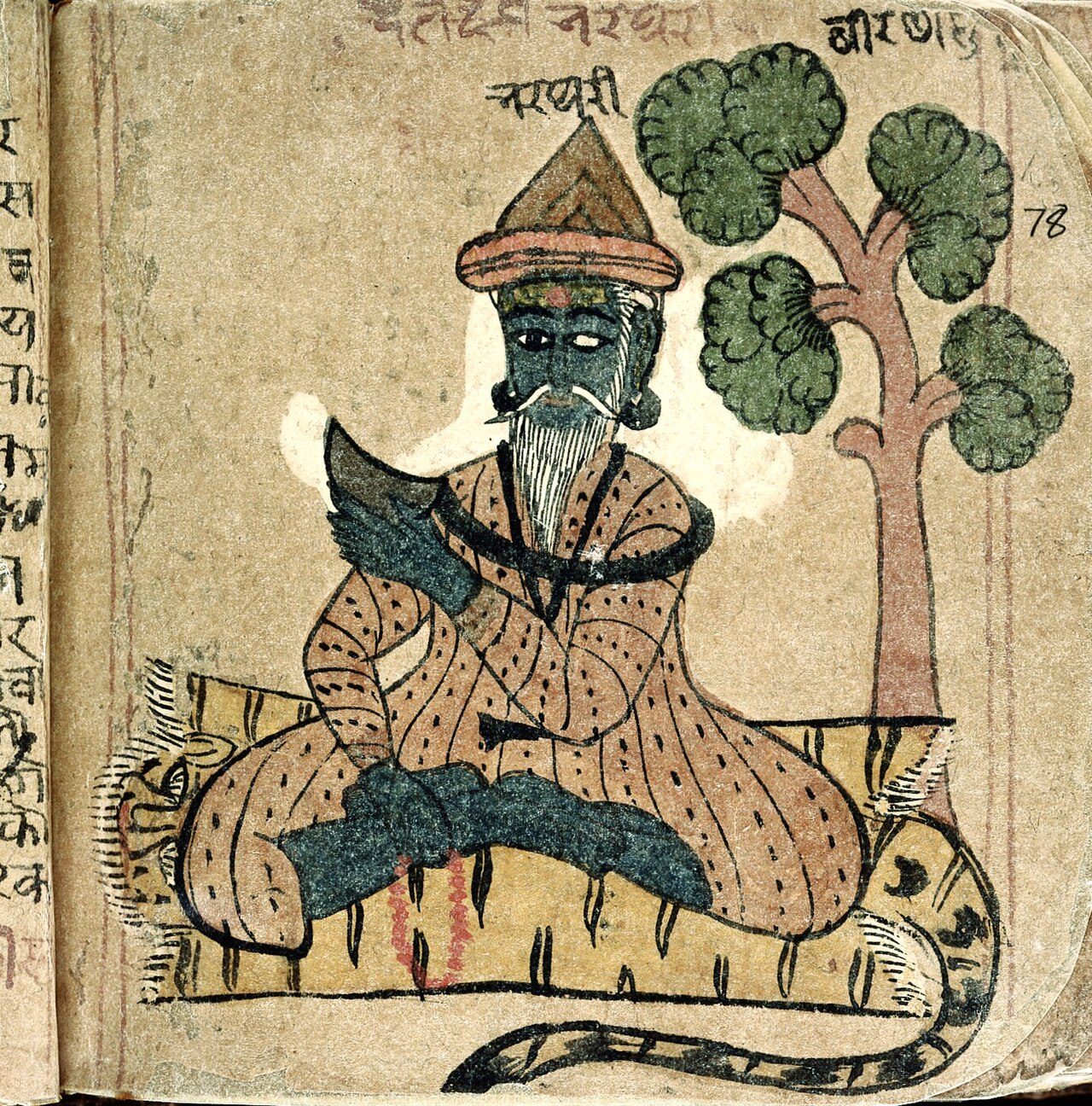
3 min read · 2 sourcesBharatthari is the hero of many folk stories in North India. He was the King of Ujjain, before renouncing the world and abdicating in the favor of his younger brother Vikramaditya. He was based on a historical figure named Bhartrihari. Stories of Bharthari and his nephew King Gopi Chand of Bengal, who are considered Nath panth yogis, abound in the Indian folklore of Rajasthan, Punjab, Gujarat, Haryana, Bihar, Uttar Pradesh, Chhattisgarh and West Bengal. Many of the details about the lives of Bharthari and his brother Vikramaditya are from the tales of Baital Pachisi (Twenty five tales of Baital), translated as 'Vikram and The Vampire' by Sir Richard Francis Burton in 1870. 1
Folklore
Bhartrhari was the elder son of King Gandharva Sena, who received the kingdom of Ujjain from The celestial god Indra and the King of Dhara. When Bhartrhari was king of 'Ujjayani' (modern day Ujjain), there lived a Brahman who got the fruit of immortality from the celestial wish granting tree, Kalpavriksha, as a result of long austerity. He decided to offer it to King Bhartrhari. The king wanted his beloved queen, Pinglah or Ananga Sena (as per Maha Kavi Kalidas), to be youthful, and thus gifted her the fruit. Raja Bhartrhari's last and youngest wife. However, the queen had a secret love affair with army chief Mahipaala, she desired him to be immortal and the enchanted fruit was given to him, he in turn passed it to his beloved, 'Lakha' the head mistress. Eventually, the fruit returned to the king. Having completed the circle, the fruit revealed the downsides of infidelity to the king, he summoned the queen and ordered her beheading, and ate the fruit himself. After that he abdicated the throne, to his younger brother Vikramaditya, and became a religious mendicant. He later became a disciple of Pattinathar (Swetharanyar or Pattinathu chettiyar is poorvashram name of this saint from Poompuhar, Tamil Nadu) who first indulged in an argument about samsari and sanyasi with king Bhartrhari later during the conversation Pattinathar said that all women have 'dual mind' and it might be the true case even with parameswari. 1
The text above is adapted from the Wikipedia article “Bharthari (king)”, available under the Creative Commons Attribution-ShareAlike 4.0 licence. 1
Bharthari is Indian Raja and saint, according to the structured record cited below. This entry was generated automatically from that record and has not yet been reviewed by a person familiar with the tradition. 2
The source record links this tradition to 2 external registers, which can be verified through the citation. 2