The tradition & historical record
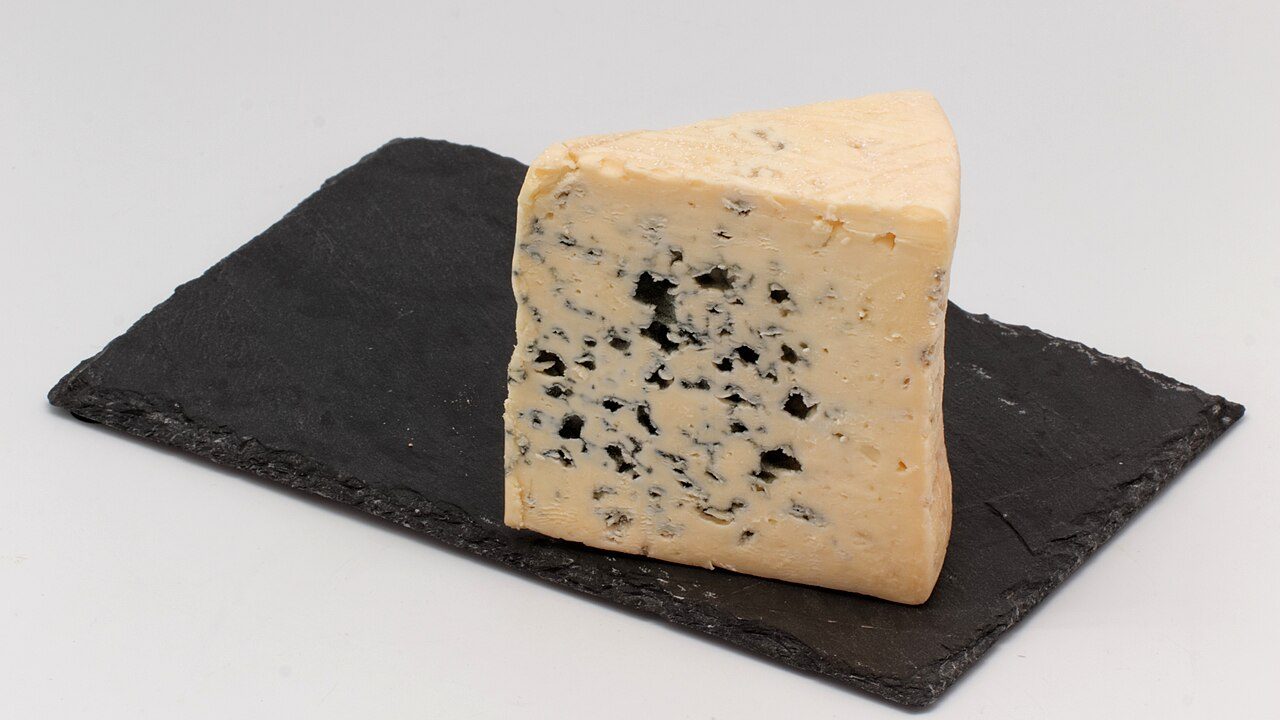
4 min read · 2 sourcesBleu des Causses (French pronunciation: [blø de kos] ; Occitan: Blau dels Causses) is a French blue cheese made from whole cow's milk. Some consider it as a mild variant of Roquefort. The cheese has a fat content of 45% and is aged for 3–6 months in Gorges du Tarn's natural limestone caves. The ripening process involving naturally temperature-controlled cellars is the major element that gives it its special aroma. Today, it is a relatively rare cheese that is only made by a handful of small producers. 1
History
The Bleu des Causses shares an ancient history with the Roquefort, in a time where the cheese was made from mixed milk from a cow and a sheep, or pure milk from one or the other, based on the season and the cheesemaker. 1
Roman Gaul
Pliny the Elder mentions that the cheeses of Mont Lozère and Gévaudan were esteemed in ancient Rome, a remark traditionally interpreted as an early reference to the region's blue cheese, but often objected to by modern authors, on the grounds that he does not clearly identify them as blue. 1
Middle Ages
An anecdote from Knotker the Stammer is often said to prove Charlemagne ate blue cheese, but in fact shows him cutting off the crust of the cheese, as for a white-rind cheese like Brie or Camembert. "15. In the same journey too he came to a bishop who lived in a place through which he must needs pass. Now on that day, being the sixth day of the week, he was not willing to eat the flesh of beast or bird; and the bishop, being by reason of the nature of the place unable to procure fish upon the sudden, ordered some excellent cheese, rich and creamy, to be placed before him. And the most self-restrained Charles, with the readiness which he showed everywhere and on all occasions, spared the blushes of the bishop and required no better fare: but taking up his knife cut off the skin, which he thought unsavoury, and fell to on the white of the cheese. Thereupon the bishop, who was standing near like a servant, drew closer and said, "Why do you do that, lord emperor? You are throwing away the very best part." Then Charles, who deceived no one, and did not believe that anyone would deceive him, on the persuasion of the bishop put a piece of the skin in his mouth, and slowly ate it and swallowed it like butter." 1
Contemporary period
Many artisanal cheese cellars refine cow's milk, sheep's milk, or even a mixture of both. It is sold without a provincial name. In 1925, during the administrative recognition of the original name of Roquefort, the cheese must be refined to Roquefort-sur-Soulzon and cheeses from cow's milk is banned. Because of this, producers of cheese from cow's milk begin to structure their organizations. The collective mark "Valmont" was created to support the sales of the cheese "bleu de l'Aveyron". The final name "Bleu des Causses" was decided on by two decrees in 1941 and 1946. The union constitution dated July 1948 and the delimitation of the geographical area in 1953. Official recognition of the Appellation d'origine contrôlée (AOC} dated June 8, 1949. In 1992, the union building opened their doors to cow breeders; they added to dairies and refineries. 1
Geographical area
The geographical area of the production of the milk and the development of the cheese covers a valley region, limestone or schist plateaus, and, to a lesser extent, some mountains. 1
The text above is adapted from the Wikipedia article “Bleu des Causses”, available under the Creative Commons Attribution-ShareAlike 4.0 licence. 1
bleu des Causses is French cheese, according to the structured record cited below. This entry was generated automatically from that record and has not yet been reviewed by a person familiar with the tradition. 2
The source record links this tradition to 7 external registers, which can be verified through the citation. 2