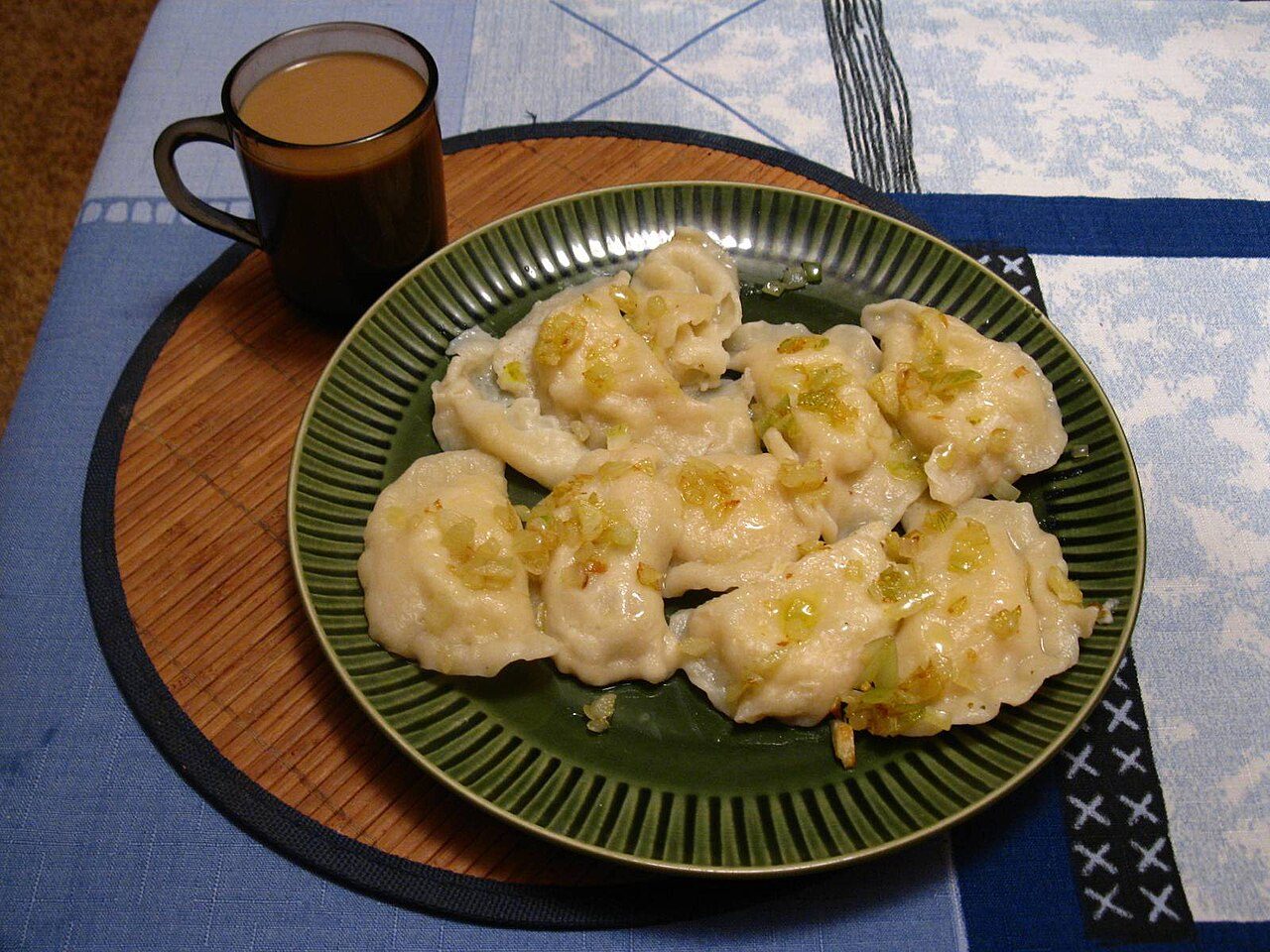
The tradition & historical record
1 min read · 2 sourcesBorș de burechiușe or borș de burechițe is a Romanian and Moldovan dish specifically from the regional cuisines of Moldova and of Bukovina. Burechiușe or gălușcă, also known as urechiușe (little ears), is dough in the shape of a ravioli-like square which is filled with mushrooms such as Boletus edulis, and sealed around its edges and boiled in a ciorbă. The borș de burechiușe are traditionally eaten on the last day of fasting at Christmas Eve. 1
Etymology
In Bukovina and Moldavia regions, the word borș is a synonym of the soup called ciorbă. The etymology of burechiușe is not clear. Burechițe may derive its name from the Turkish börek, indicating cultural and culinary influences coming from the Ottoman Empire. It could also take its name from that of the mushroom boletus, burete in its rhotacized Romanian language version, by the pattern of the ravioli. 1
The text above is adapted from the Wikipedia article “Borș de burechiușe”, available under the Creative Commons Attribution-ShareAlike 4.0 licence. 1
Borş de burechiuşe is Romanian and Moldovan dish, according to the structured record cited below. This entry was generated automatically from that record and has not yet been reviewed by a person familiar with the tradition. 2
The source record links this tradition to 1 external register, which can be verified through the citation. 2