The tradition & historical record
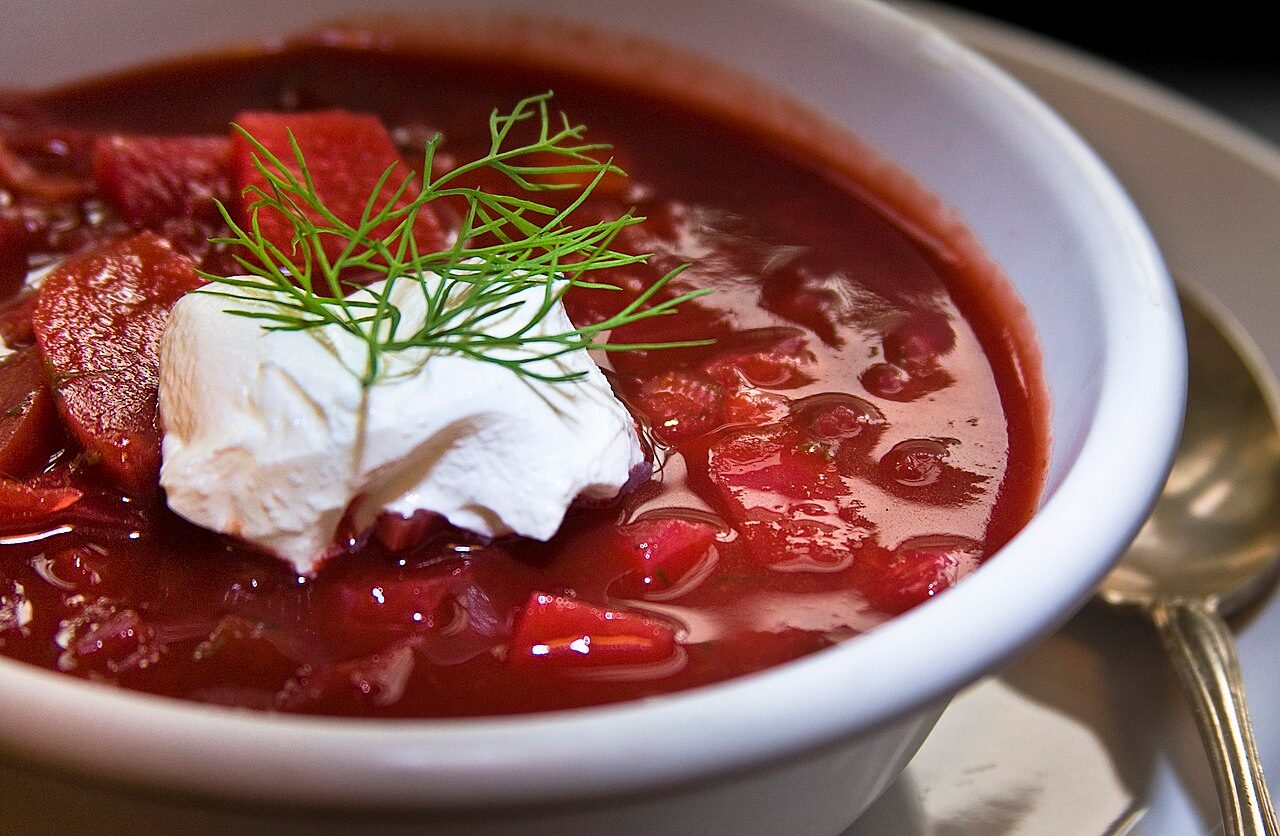
6 min read · 2 sourcesBorscht (English: ) is a sour soup, made with meat stock, vegetables and seasonings, common in Eastern Europe, Central Europe and Northern Asia. In English, the word borscht, borrowed via Yiddish, is most often associated with the variant of the soup originating in Ukraine, made with red beetroots as one of the main ingredients, which give the dish its distinctive red color. The same name, however, is also used for a wide selection of sour-tasting soups without beetroots, such as sorrel-based green borscht, rye-based white borscht, and cabbage borscht. Borscht derives from an ancient soup originally cooked from pickled stems, leaves and umbels of common hogweed (Heracleum sphondylium), an herbaceous plant growing in damp meadows, which lent the dish its Slavic name. With time, it evolved into a diverse array of tart soups, among which the Ukrainian beet-based red borscht has become the most popular. It is typically made by combining meat or bone stock with sautéed vegetables, which—as well as beetroots—usually include cabbage, carrots, onions, potatoes, and tomatoes. Depending on the recipe, borscht may include meat or fish, or be purely vegetarian; it may be served either hot or cold, and it may range from a hearty one-pot meal to a clear broth or a smooth drink. 1
Etymology
The English name derives, through Yiddish, from Ukrainian and Russian бо́рщ (borshch, Ukrainian: [ˈbɔrʃt͡ʃ] , Russian: [ˈborɕː] ). Together with cognates in other Slavic languages, such as Belarusian: бо́ршч (borshch), Polish: barszcz, and others, it comes from Proto-Slavic *bъ̃rščь, 'hogweed', and ultimately from Proto-Indo-European *bʰr̥stis, 'point', 'stubble'. The English form borscht comes from Yiddish באָרשט (borsht), as the dish was first popularized in North America by Yiddish-speaking Ashkenazi Jews from Eastern Europe. 1
Ingredients and preparation
The stock is typically made by boiling meat, bones, or both. Beef, pork or a combination of both are most commonly used, with brisket, ribs, shank and chuck considered to give the most flavorful results, especially if cooked on a high flame. Marrow bones are considered best for the bone stock. Meat stock is usually cooked for about two hours, whereas bone stock takes four to six hours to prepare. Meat and bones are usually removed afterwards and the meat is only added back into the soup about 10–15 minutes before the borscht is done. Some recipes call for smoked meats, resulting in a distinctively smoky borscht, while others use poultry or mutton stock. Fasting varieties are typically made with fish stock to avoid the use of meat, while purely vegetarian recipes often substitute forest mushroom broth for the stock. 1
The vegetables most commonly added to borscht are beetroots, white cabbage, carrots, parsley root, potatoes, onions and tomatoes. Some recipes may also call for beans, tart apples, turnip, swede, celeriac, zucchini or bell peppers. Parsnip may be used as a substitute for parsley root, and tomato paste is often used as well as or instead of fresh tomatoes. Onions, carrots, parsley root, turnip and other root vegetables are sautéed (traditionally in animal fat, especially lard or butter) and then mixed with tomatoes or tomato paste. Dry beans are boiled separately. Potatoes and cabbage are boiled in the stock for about 15 minutes before the precooked vegetables are added. The traditional technique of preparing the soup is to precook the vegetables—by sautéing, braising, boiling or baking—separately from the meat and only then to combine them with the stock. 1
Beet sour
The dominant tastes in borscht are sweet and sour. This combination is traditionally obtained by adding beet sour. The sour is made by covering sliced beetroots with lukewarm preboiled water and allowing bacteria to ferment some of the sugars present in beetroots into dextran (which gives the liquid a slightly viscous consistency), mannitol, acetic acid and lactic acid. Stale rye bread is often added to hasten the process, but usually omitted in Jewish recipes, as chametz (leavened bread) would make the sour unfit for Passover meals. Sugar, salt and lemon juice may also be added to balance the flavor. After about 2–5 days (or 2–3 weeks without the bread), the deep red, sweet and sour liquid may be strained and is ready to use. It is added to borscht shortly before the soup is done, as prolonged boiling would cause the tart flavor to dissipate. The beet sour is known in Slavic languages as kvas (lit. 'sour, acid'; compare kvass) and in Yiddish as rosl (from a Slavic word originally referring to any brine obtained by steeping salted meat or vegetables in water; compare Russian rassol, 'pickle juice', Polish rosół, 'broth'). Apart from its employment in borscht, it may also be added to prepared horseradish or used as pot roast marinade. As the traditional method of making borscht with beet sour often requires planning at least several days ahead, many recipes for quicker borscht replace the beet sour with fresh beetroot juice, while the sour taste is imparted by other ingredients. Vinegar, tomato products, lemon juice or citric acid may be used, as well as dry red wine, dill pickle juice, murături juice, sauerkraut juice, tart apples, Mirabelle plums, apricots, or a fermented rye flour and water mixture. 1
Ukrainian
There are multiple examples of the soup in Ukrainian cuisine. Virtually every oblast has its own version. Differences between particular varieties may regard the type of stock used (meat, bone, or both), the type of meat (beef, pork, poultry, etc.), the choice of vegetables and the method of cutting and cooking them. For example, although the typical recipe calls for beef and pork, the Kyiv variant uses mutton or lamb as well as beef, while in the Poltava region, the stock for borscht is cooked on poultry meat, that is, chicken, duck or goose. The use of zucchini, beans and apples is characteristic of the Chernihiv borscht; in this variant, beetroots are sautéed in vegetable oil rather than lard, and the sour taste comes solely from tomatoes and tart apples. The Lviv borscht is based on bone stock and is served with chunks of Vienna sausages. In Southern Ukraine borshch typically includes legumes. Historically, borshch with meat was reserved as a holiday dish, meanwhile varieties consumed during lent would include fish, such as dried crucian carp. Numerous seasonal varieties of borshch exist in Ukrainian tradition: in spring and during summer, green borshch is traditionally cooked, meanwhile borshch with pork would be traditionally reserved for Christmas season, and in autumn borshch with mutton and chicken was also popular. The traditional variety of borshch consumed during Lent contained fish, wheat flour, hemp oil, beans and potatoes. Other popular traditional ingredients of borshch are salo, fried sausages. 1
Polish
As well as the thick borschts described above, Polish cuisine offers a ruby-colored beetroot bouillon known as barszcz czysty czerwony, or clear red borscht. 1
The text above is adapted from the Wikipedia article “Borscht”, available under the Creative Commons Attribution-ShareAlike 4.0 licence. 1
borscht is Ukrainian beet soup, according to the structured record cited below. This entry was generated automatically from that record and has not yet been reviewed by a person familiar with the tradition. 2
The source record links this tradition to 25 external registers, which can be verified through the citation. 2