The tradition & historical record
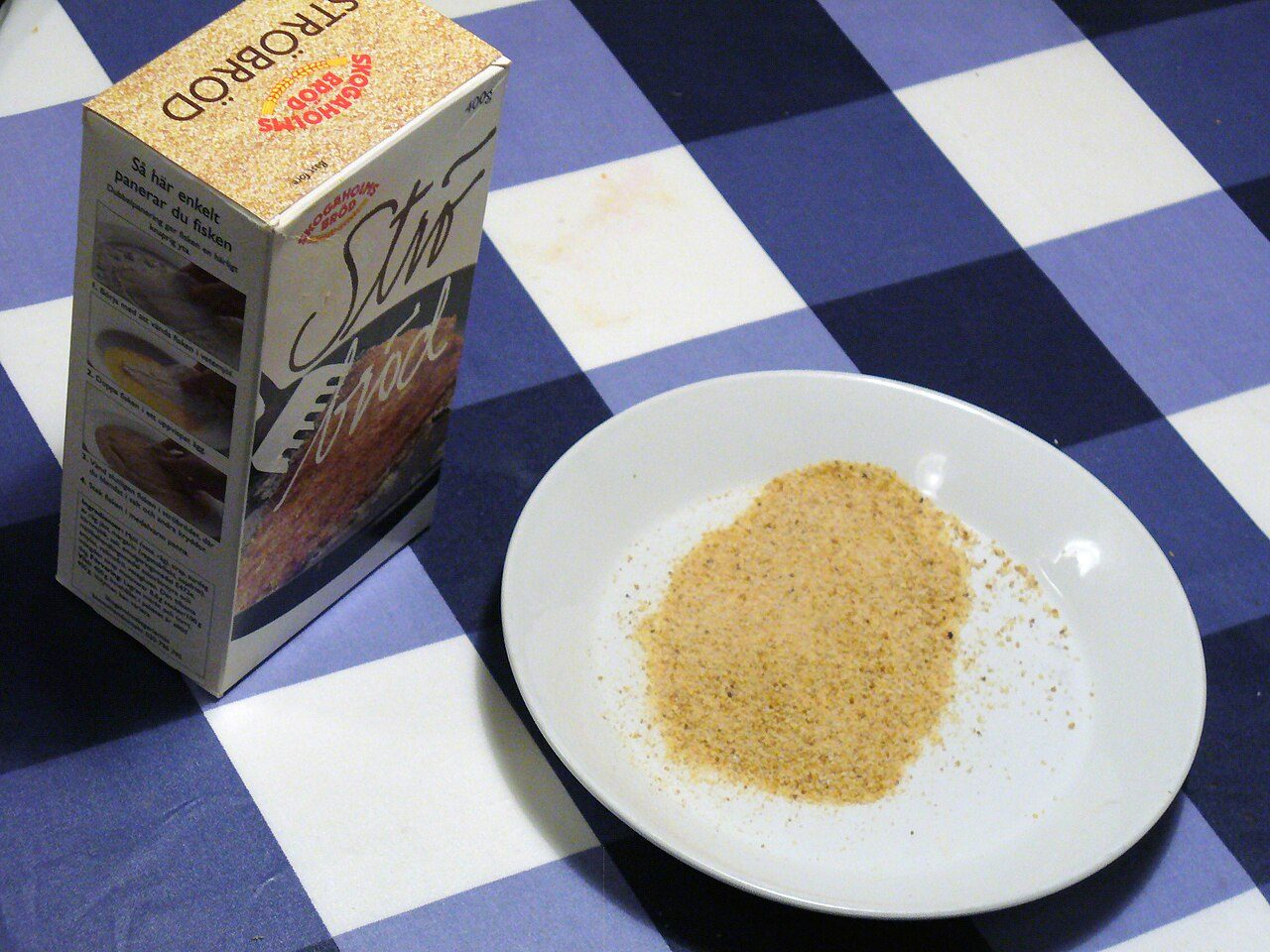
3 min read · 2 sourcesBreadcrumbs are a culinary ingredient consisting of flour or crumbled bread of varying dryness, sometimes with seasonings added. They are used for a variety of purposes, including breading or crumbing foods before frying (such as breaded cutlets like tonkatsu and schnitzel), topping casseroles, stuffing poultry, thickening stews, and adding inexpensive bulk to soups, meatloaves, and similar foods. 1
Dry
Dry breadcrumbs are made from dry breads that have been baked or toasted to remove most remaining moisture, and may have a sandy or even powdery texture. Breadcrumbs are most easily produced by pulverizing slices of bread in a food processor, using a steel blade to make coarse crumbs, or a grating blade to make fine crumbs. A grater or similar tool will also do. 1
Fresh
The breads used to make soft or fresh breadcrumbs are not quite as dry, so the crumbs are larger and produce a softer coating, crust, or stuffing. 1
Panko
Panko (パン粉) is a type of flaky breadcrumbs used in Japanese cuisine as a crunchy coating for fried foods, such as tonkatsu. Panko is made from bread baked by passing an electrical current through the dough, which yields a bread without a crust, and then grinding the bread to create fine slivers of crumb. It has a crisper, airier texture than most types of breading found in Western cuisine and maintains its texture baked or deep-fried, resulting in a lighter coating. Outside Japan, its use has become more common in both Asian and non-Asian dishes. It is often used on seafood and is typically available in Asian markets, specialty stores, and many large supermarkets. Panko is produced worldwide, particularly in Asian countries, including Japan, Korea, Malaysia, Thailand, China, and Vietnam. 1
Etymology
The Japanese first learned to make baked bread from the Portuguese. The word パン粉 (panko) is derived from pan, giving the word for bread in Japanese (derived from the Portuguese word "pão" for bread), and -粉 (-ko), a Japanese kanji indicating "flour", "coating", "crumb", or "powder" on occasion, when used as a suffix (as in komeko, "rice powder", sobako, "buckwheat flour", and komugiko, "wheat flour"). 1
Pangrattato
Pangrattato is an Italian garnish of toasted, seasoned breadcrumbs, often added to pasta or cooked vegetables. It may be flavored with ingredients such as garlic, anchovies, chili peppers or herbs. 1
The text above is adapted from the Wikipedia article “Breadcrumbs”, available under the Creative Commons Attribution-ShareAlike 4.0 licence. 1
bread crumbs is small pieces of dried bread used as a culinary ingredient, according to the structured record cited below. This entry was generated automatically from that record and has not yet been reviewed by a person familiar with the tradition. 2
The source record links this tradition to 11 external registers, which can be verified through the citation. 2