The tradition & historical record
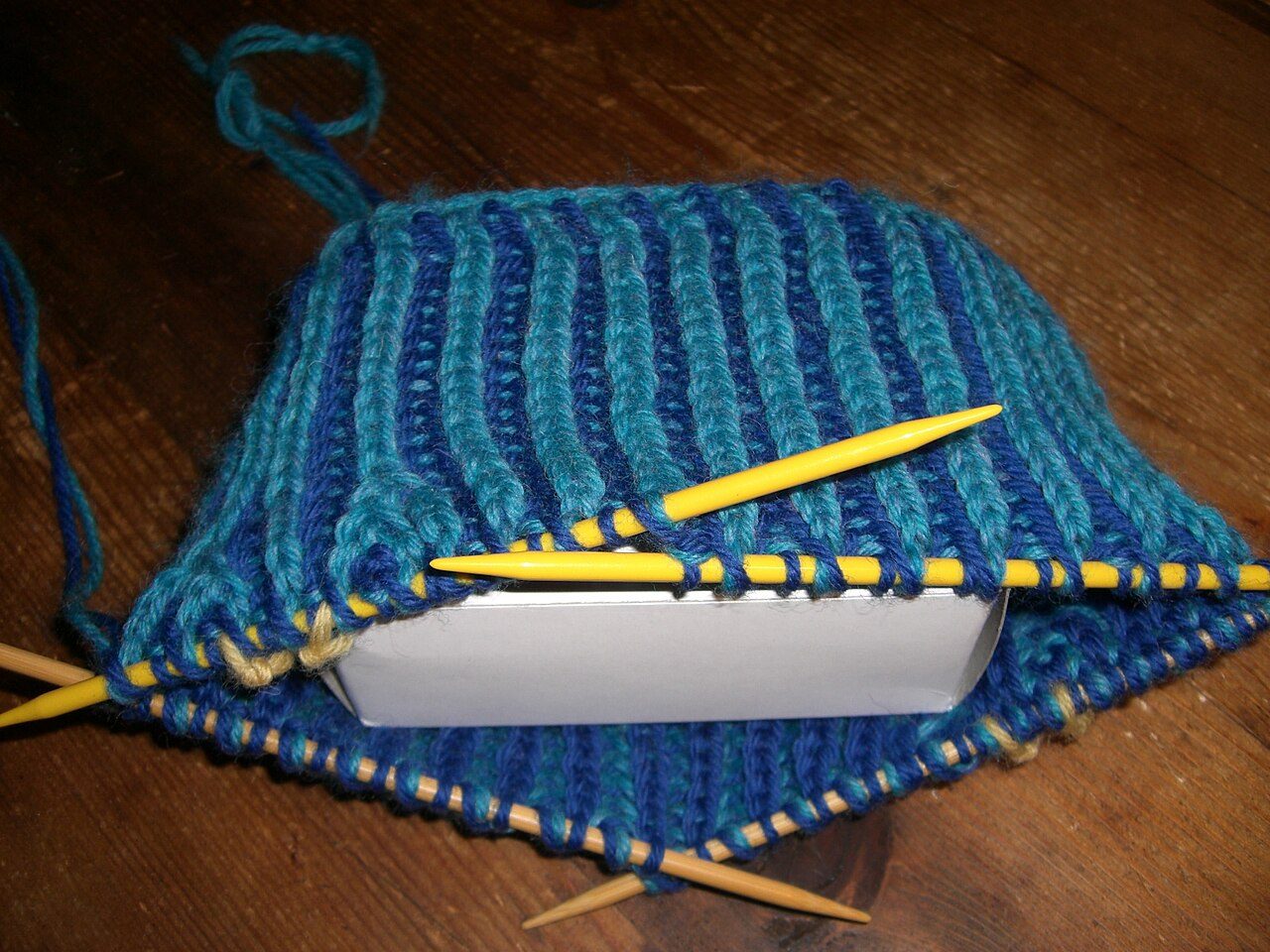
2 min read · 2 sourcesBrioche knitting is a family of knitting patterns involving tucked stitches, i.e., yarn overs that are knitted together with a slipped stitch from the previous row. Such stitches may also be made by knitting into the row below (equivalent to the slipped stitch) and dropping the stitch above (equivalent to the yarn over). These two approaches provide four ways to form brioche fabric: (1) making a yarn over before slipping every purl stitch, then knitting the pairs together in the next row, (2) making a yarn over before slipping every knit stitch, then purling the pairs together in the next row, (3) knitting into the stitch below, and (4) purling into the stitch below. The tucked stitches may form a second layer of knitting in front of the first layer, resembling an array of arches or (seen upside-down) of fish scales. Brioche knitting may have originated in the Middle East. However, the term "brioche" seems to have derived from French slang for "mistake". The name might be a reference to the brioche dinner roll, which is formed of two pieces, one stacked atop the other. Brioche stitch is also known as English rib (mostly in Europe). Brioche Stitch is included in Barbara G. Walker's A Treasury of Knitting Patterns and in Elizabeth Zimmermann's Knitting Without Tears. Nancy Marchant introduced several varieties of the brioche stitch to American knitters with her book Brioche Knitting, inspired by the brioche knitting she found very prevalent in the Netherlands. 1
The text above is adapted from the Wikipedia article “Brioche knitting”, available under the Creative Commons Attribution-ShareAlike 4.0 licence. 1
brioche knitting is family of knitting patterns involving tucked stitches, i.e., yarn overs that are knitted together with a slipped stitch from the previous row, according to the structured record cited below. This entry was generated automatically from that record and has not yet been reviewed by a person familiar with the tradition. 2
The source record links this tradition to 1 external register, which can be verified through the citation. 2