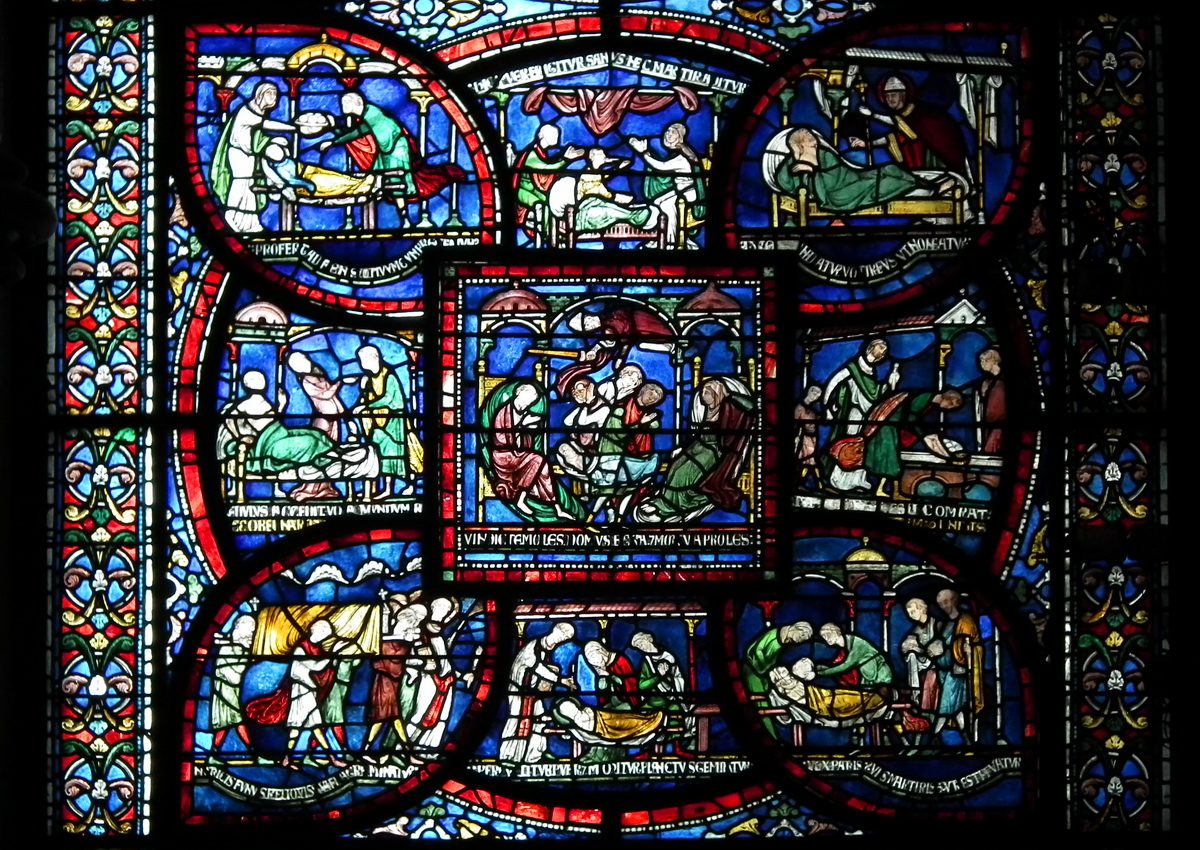
The tradition & historical record
3 min read · 2 sourcesCame glasswork is the process of joining cut pieces of art glass through the use of came strips or foil into picturesque designs in a framework of soldered metal. Final products include a wide range of glasswork, including stained glass and lead light pieces. Came is made of different metals, such as lead, zinc, brass and copper. The metal came selected generally depends upon the size, complexity and weight of the project. As an alternative to came, copper foil may be used, for small, intricate pieces. 1
Overview
Came glasswork includes assembling pieces of cut and possibly painted glass using came sections. The joints where the came meet are soldered to bind the sections. When all of the glass pieces have been put within came and a border put around the entire work, pieces are cemented and supported as needed. The work may be made waterproof by forcing a soft oily cement or mastic between the glass and the cames. A form of embellishment and gilding, such as Angel gilding and Eglomise, may be added to finish the piece. 1
Works may need to be reinforced, like large pieces or ones that will be exposed to the outdoor elements. Support can be provided as the piece is made through the use of reinforced and metal-covered lead came, the use of steel strips in the came channels, or use of rigid cames, such as copper, brass or zinc. Bars of steel or steel rebar may be attached to the back of finished works as reinforcement. 1
History
Theophilus Presbyter, the first to write about joining art glass using the came technique in the book De Divers Artibus. Theophilus was a Benedictine Monk who was a glass and pigment worker who practiced in the late 11th and early 12th centuries. 1
Materials
Materials to complete a glasswork project may include the pattern, cut glass, came, wood trim, solder, cement. Additional supplies include newspaper, cutter oil, a plywood board, masking tape, flux, and whiting. 1
Came
Lead came is often supplied in lengths of 2 m and in widths of differing sizes. It also comes in flat or domed profiles. 1
Brass and copper
Brass and copper have been used to bring a copper or golden hue to the works. Generally, though, they were used only for windows between about 1890 and 1920. Both metals were often alternatives to zinc for Frank Lloyd Wright designed windows. 1
The text above is adapted from the Wikipedia article “Came glasswork”, available under the Creative Commons Attribution-ShareAlike 4.0 licence. 1
Came glasswork is Glass joined with came strips or foil, according to the structured record cited below. This entry was generated automatically from that record and has not yet been reviewed by a person familiar with the tradition. 2
The source record links this tradition to 1 external register, which can be verified through the citation. 2