The tradition & historical record
5 min read · 2 sourcesCaribbean folklore includes a mix of traditions, tales, and beliefs of the Caribbean region. Caribbean folklore was shaped by a history filled with violence, colonialism, slavery, and multicultural influences. Specifically, influences from African, Creole, Asian, Indigenous American, European, and Indian cultures converged in the Caribbean to create a blend of lore unique to the region. Caribbean folklore has a variety of different characters that portray different traits. Folklore has evolved by blending folk speech, Creole dialogue, and various other elements that create the literary form of folklore, which portrays the "spirit" and "soul" of the Caribbean. Many themes are covered in Caribbean folklore, including colonial legacies, diversity in cultures, and the search for identity. Writers such as Nalo Hopkinson use these folklore elements in their writings by weaving myths and traditions into their modern-day storytelling. 1
Background
Folklore is a cultural body of traditional customs, sayings, dances, tales, or art forms that are preserved among a group of people. Different groups have different tales and stories of their people. In Caribbean folklore, different characters have remained consistent throughout time through both oral and written stories, such as the "Ananse" and "Papa Bois". Over the past 80 years, the use of folk speech and Creole dialogue include other folklore materials and the use of folk speech in the narrative voice has evolved. Folklore has served as a vulcanizing agent to create a new form of literature that is unique to the Caribbean, a literature that includes the soul and spirit of a region and its people. Many Caribbean societies have a history of colonialism, slavery, outside influences, and the struggles for independence. These issues have shaped Caribbean folklore's representation in Caribbean children's literature. The Caribbean region has a history of violent imperial domination, which contrasts with its Edenic setting. This history involves the extermination of Native Americans, the African slave trade, and the arrival of indentured servants from China and East India. This diverse mix of cultures, languages, and traditions contributes to Caribbean folklore. Because of the region's history with the African slave trade, Caribbean folklore is intrinsically linked with African folklore. Many of the tales, songs, proverbs, riddles, and superstitions that are found on the islands of the Caribbean can be directly traced back to Africa. Religious ideas and rituals brought over from Africa have inspired new variations to emerge. 1
Characters
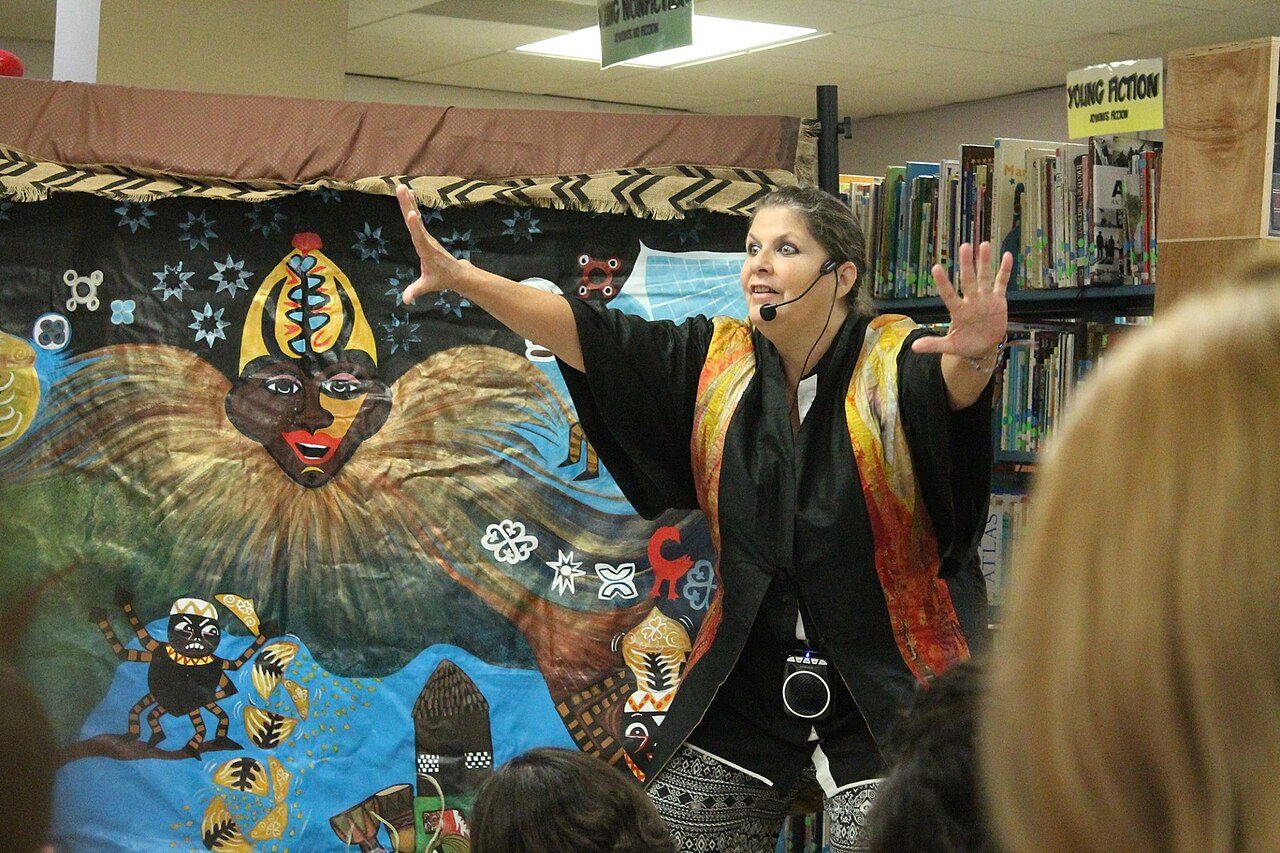
Popular throughout the Caribbean region are the Anancy Stories (also known as Nancy Stories), which have their roots in West Africa. Ananse is the Asante word for spider. The trickster Anancy (also known as Ananci, Ananse, Anansi, Ananci Krokoko, and Brer Nancy), with his quick-witted intelligence and his knack for surviving the odds, often through trickery, is popular in this genre of African-Caribbean folk-tale characters, although there are other West African influences in folklore characters, including the hare and tortoise, which appear separately or together in folktales from both Yoruba and Ibo peoples. In addition to these stories, African religious figures also form a notable part of Caribbean folklore. Many of the supernatural folklore figures have characteristics identical to those of African deities and include the following. "Papa Bois" appears in many forms, sometimes as a deer, sometimes in old ragged clothes, sometimes hairy and though very old, strong and muscular, with cloven hoofs and leaves growing out of his beard. As the guardian of the animals and the custodian of the trees, he is known to sound a cow's horn to warn his friends of the approach of hunters. He does not tolerate killing for killing's sake, or the wanton destruction of the forest. "Mama D'Leau" "Madre de aguas" "La Diablesse", the devil woman, is sometimes personified as an old crone, who steps forth with her cloven hoof from behind a tree on a lonely road, the sound of chains mingling with the rustle of her petticoat. Sometimes, she takes the form of a beautiful woman to lure some unsuspecting passerby to his death or perhaps to madness. 1
Roy Heath
Roy Heath was a Guyanese author who wrote novels based on stories from Afro-Guyanese and Amerindian folklore. Some of the themes his novels explored include doom, dreams, and the use of masks, all motifs in Caribbean folklore. Many of his works also reflect the interconnections between oral and written folklore in African and African-Caribbean traditions. His notable novels include The Murderer (1978), Kwaku; or the Man Who Could Not Keep His Mouth Shut (1982), Orealla (1984), and The Shadow Bride (1988). 1
Grace Hallworth
Grace Hallworth is a storyteller from Trinidad and Tobago, whose notable works include Stories to Read and Tell (1973), The Carnival Kite (1980), Mouth Open and Story Jump Out (1984). She retells traditional Caribbean tales, preserving and revitalizing Caribbean narratives. 1
Dionne Brand
Dionne Brand is a writer and political activist from Trinidad and Tobago. Her writings cover Caribbean cultures, addressing themes of race, history, memory, gender, and sexuality. Brand is known for her poetry collections Earth Magic (1979) and A Caribbean Dozen (1994). These works offer a unique perspective on the essence of childhood within Caribbean culture. 1
The text above is adapted from the Wikipedia article “Caribbean folklore”, available under the Creative Commons Attribution-ShareAlike 4.0 licence. 1
Caribbean folklore is recorded in open cultural data. The structured record cited below does not describe the practice, and this entry has not yet been reviewed by a person familiar with the tradition. 2
The source record links this tradition to 1 external register, which can be verified through the citation. 2