The tradition & historical record
6 min read · 2 sourcesCarpet cleaning is performed to remove stains, dirt, debris, and allergens from carpets. Common methods include hot water extraction, dry-cleaning, and vacuuming. 1
Hot water extraction
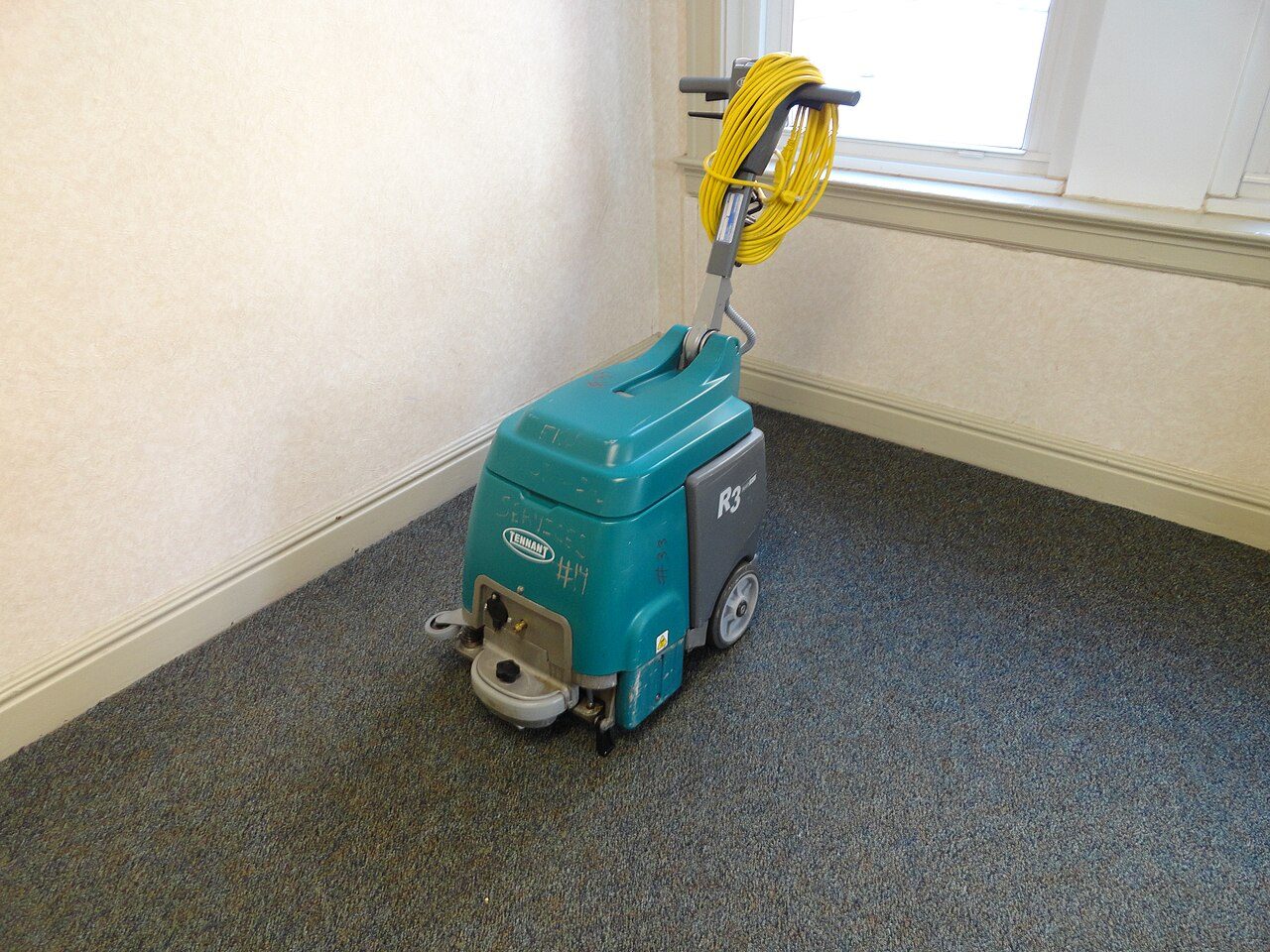
Hot water extraction, sometimes mistakenly called "steam cleaning", uses equipment that sprays hot water and detergent into the carpet and extracts it along with any dislodged and dissolved dirt. For a brief period in the 1970s, hot water extraction practices then known as steam cleaning were heavily decried in the United States due to lobbying by dry foam cleaners to the Better Business Bureaus of various states. Hot water extraction equipment may be a portable electrical units, or for large jobs truck mount carpet cleaner with long hoses may be used as this may be faster and more effective than portable equipment. 1
A common process of hot water extraction begins with preconditioning. Alkaline agents such as ammonia solution for synthetic carpets, or mild acidic solutions such as dilute acetic acid for woollen carpets, are sprayed into the carpet, then agitated with a grooming brush or an automatic scrubbing machine. Next, a pressurized manual or automatic cleaning tool known as a wand passes over the surface to rinse out all pre-conditioner, residue, and particulates. If an alkaline detergent is used on a woollen carpet, a mild acetic acid solution will neutralize the alkaline residues and restore neutral fiber pH. Thorough extraction is important to avoid problems such as mold growth and browning of wool. Carpet cleaning specialists try to find a balance between rapid drying (using less fluid) and the need to remove the most soil (using more fluid). Drying time may also be decreased by fans, de-humidifiers or simply opening windows. 1
Dry-cleaning
Many dry carpet-cleaning systems rely on specialized machines. These systems are mostly "very low moisture" (VLM) systems, relying on dry compounds complemented by application cleaning solutions, and are growing significantly in market share due in part to their very rapid drying time, a significant factor for 24-hour commercial installations. Dry-cleaning and "very low moisture" systems are also often faster and less labor-intensive than wet-extraction systems. Heavily soiled areas require the application of manual spotting, pretreatments, preconditioners, and/or "traffic-lane cleaners", (commonly sprayed onto carpet prior to the primary use of the dry-cleaning system) which are detergents or emulsifiers which break the binding of different soils to carpet fibers over a short period of time. For example, one chemical may dissolve the greasy films that bind soils to the carpet, and thus prevent effective soil removal through vacuuming. The solution may add a solvent like d-limonene, petroleum byproducts, glycol ethers, or butyl agents. The amount of time the pretreatment dwells in the carpet should be less than 15 minutes, due to the thorough carpet brushing common to these "very low moisture" systems, which provides added agitation to ensure the pretreatment works fully through the carpet. The benefit of dry carpet cleaning, over wet solutions, is that dry chemical compounds do not attract dirt, like dried shampoo. While dry carpet cleaning is more expensive and more time-consuming to clean than bonnet or extraction, dry cleaning formulas put less stress on the carpets themselves. 1
Dry compound
A 98% biodegradable or other, slightly moist absorbent cleaning compound may be spread evenly over carpet and brushed or scrubbed in. For small areas, a household hand brush can work such a compound into carpet pile; working like "tiny sponges", the attracted cleaning solution dissolves dirt, and dirt and grime is attracted/absorbed to the compound. After a short drying time (the cleaning solution which is attracted to the compound must evaporate), it will be removed with a vacuum cleaner, the drier the better, leaving carpet immediately clean and dry. However, it is very difficult to remove all residues. The residues can cause allergies and biological compounds may cause discolourations on carpets. For commercial applications, a specially designed cylindrical counter-rotating brushing system is used, without a vacuum cleaner. Machine scrubbing is more typical, in that hand scrubbing generally cleans only the top third of carpet. 1
Encapsulation
In the 1990s, new polymers began literally encapsulating (crystallizing) soil particles into dry residues on contact. In the conventional cleaning process surfactant molecules attach themselves to oily soil particles, suspending them (emulsification) so that they can be easily rinsed away. Surfactant (detergent) molecules and emulsified soils which escape being rinsed away, remain in the fibre and continue to attract soiling. Encapsulators are specialty detergent polymers which become part of the detergent system. As drying occurs (20-30 min. drytime), after cleaning, these encapsulators bind the detergent molecules and residual soils in a brittle, crystalline structure. Detergent and soil particles can no longer attract other soils and are easily removed by dry vacuuming. In addition to binding the detergent and soil residues the encapsulation chemistry coats the clean fibre with the same brittle film. This reduces the fibre's affinity for oily and particulate soils. As this brittle film "breaks away" and more soil is removed, the appearance of the fibre improves as opposed to soiling more rapidly. Products which also employ fluorochemical technology, display dramatically extended anti re-soiling time periods. Cleaning solution is applied by rotary machine, brush applicator, or compression sprayer. Dry residue is vacuumable immediately (20-30 min. drying time), either separately or from a built-in unit of the cleaning-system machine. 1
Bonnet
After a cleaning product is deposited onto the surface as mist, a round buffer or "bonnet" scrubs the mixture with a rotating motion. This industry machine resembles a floor buffer, with an absorbent spin or oscillating pad that attracts soil and is rinsed or replaced repeatedly. The bonnet method is not strictly dry-cleaning. To reduce pile distortion, the absorbent bonnet should be kept well-lubricated with cleaning solution. It is not recommended to dunk the bonnet in a bucket of cleaning solution and then wring it out with a mop-bucket wringer, as this will make the bonnet too wet. It is important to change or turn the bonnet early, as bonnets can become filled with soil in just a few hundred square feet. Once loaded with soil, the bonnet will not hold any more; instead, it simply moves the soil from one area to another. An overly wet bonnet also deposits residues that attract soils when they are dry, creating the need to clean more often. It is recommended for robust and not for high floor carpet, it swirls the floor. It distorts pile and grinds dirt deeper in carpet fiber, and also has an abrasive effect. When there is a large amount of foreign material in the carpet, extraction with a wet process may be needed. 1
The text above is adapted from the Wikipedia article “Carpet cleaning”, available under the Creative Commons Attribution-ShareAlike 4.0 licence. 1
carpet cleaning is process of removing dirt and stains from carpets which can be achieved using a number of different methods, according to the structured record cited below. This entry was generated automatically from that record and has not yet been reviewed by a person familiar with the tradition. 2
The source record links this tradition to 3 external registers, which can be verified through the citation. 2