The tradition & historical record
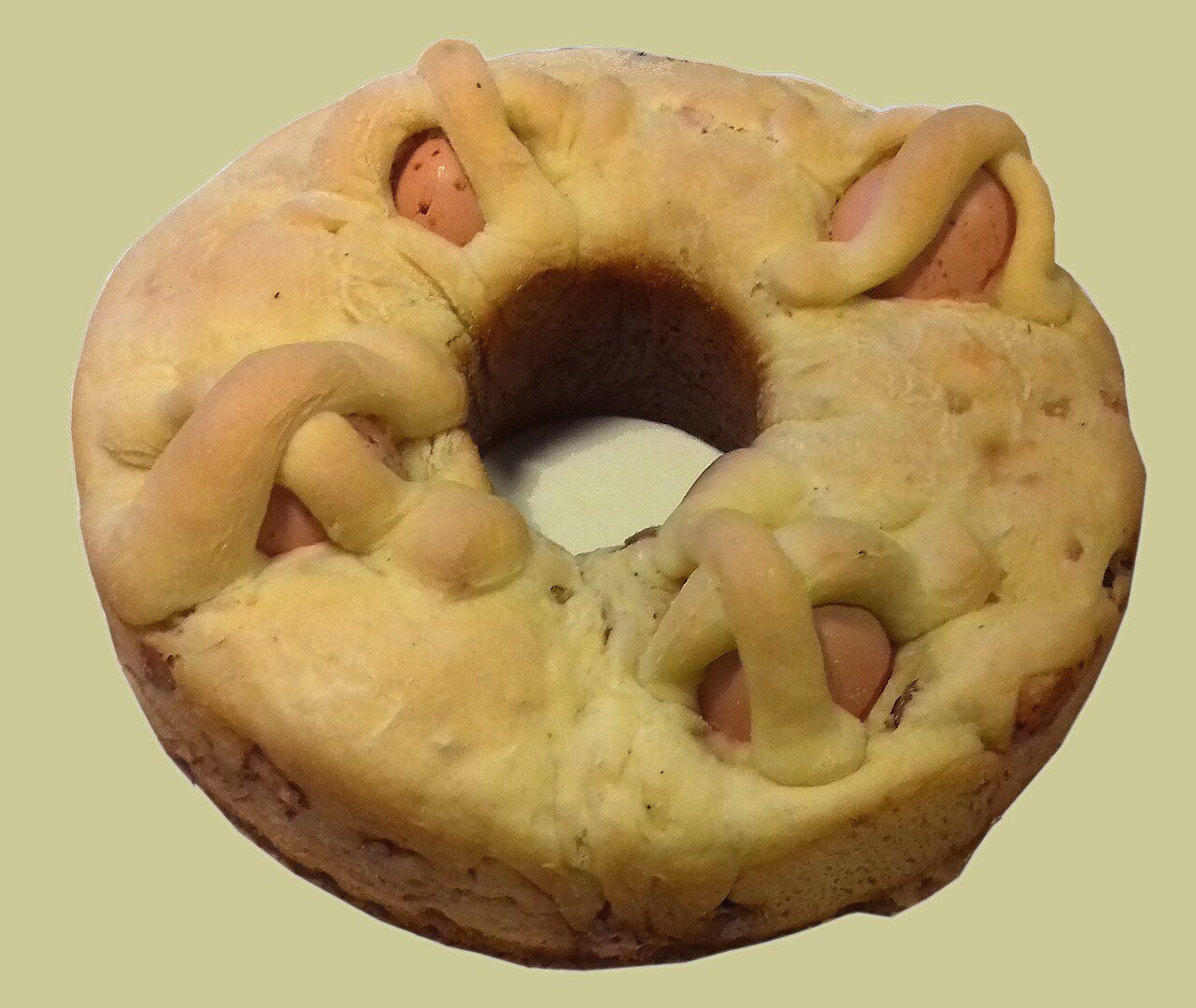
4 min read · 2 sourcesCasatiello (Neapolitan: casatiéllo; Italian: casatiello or casatello) is a leavened savory bread originating from Naples prepared during the Easter period. There are sweet versions of the bread in various regions of Italy. Its basic ingredients are flour, lard, cheese, salami, cracklings, eggs and black pepper. 1
Etymology
The bread's name derives probably from the Neapolitan word caso (Italian: cacio, 'cheese', hence casatiello), an ingredient that is part of its dough. 1
History
The existence of casatiello, like that of pastiera, another Neapolitan Easter product, has been attested at least since the seventeenth century: the proof comes from the folk tale La gatta Cenerentola (Italian for 'Cinderella the Cat') published in 1634–1636 in the short story collection Pentamerone, ovvero Lo Cunto de li cunti by Giambattista Basile, a Neapolitan writer (writing in the Neapolitan language) who lived between the 16th and 17th centuries. The bread is mentioned in the passage where he describes the king's celebrations to find the girl who had lost her slipper: 1
In the 19th century, casatiello is also mentioned in the book Costumi e tradizioni di Napoli e dintorni (Italian for 'Customs and traditions of Naples and the surrounding area'), published in 1858 and edited by Francesco De Bourcard, a Neapolitan scholar of Swiss origin, who describes the bread and its preparation, stating that the casatello (sic) was baked at home for the Easter lunch and offered as a gift to neighbors and "to the servants and the laundress". 1
Ingredients and preparation
Casatiello is based on a bread dough enriched with cheese (usually smoked scamorza, but also pecorino and some Parmesan can be used), lard, ciccioli and other cured meats. The dough is worked into the shape of a doughnut, placed in a mould and left to rise for a long time, at least 12 hours; if made with quick leaven, about two hours are enough. The bread is then baked, traditionally in a wood-fired oven. Casatiello is usually prepared on Good Friday, left to rise overnight, baked the following day, and eaten on Holy Saturday and Easter Monday. The casatiello, unlike similar products such as tortano, is prepared around Easter, from which it borrows the symbolism: the strips of bread arranged to cage the eggs half-submerged in the dough represent the cross on which Jesus died while the ring shape is a reminder of the cyclical nature of the Easter resurrection and of Christ's crown of thorns. During the preparation, the eggs are placed whole and baked in the oven together with the dough. While some bakers put them raw, others prefer to use already hard-boiled eggs. The cooking takes place at 170 °C (338 °F) for about 60 minutes. The bread can also be used as a packed lunch during the traditional trips out of town (Italian: Gite fuori porta) on Easter Monday. Casatiello can be kept for a maximum of two or three days, then it becomes harder and harder. In Naples, a stale casatiello is named "ammazzaruto" (lit. 'not enough leavened'), and then by extension "hard". 1
Variants
Tortano is a very similar product: the two main differences are the use of eggs, which in casatiello are also placed in the upper part and not only hard-boiled and in small pieces in the dough as in tortano, and that of charcuterie, which is part of the dough filling in casatiello, whereas it is omitted in tortano. 1
Sweet variant
The sweet version of casatiello has as main ingredients eggs, sugar, lard and icing, and is decorated on the surface with diavulilli ('little devils', Neapolitan for 'coloured dragées'). This variant is widespread in Caserta, in the island of Procida and in the Benevento and Vesuvian area. Other sweet versions are found in Monte di Procida and in the Nolano area. 1
The text above is adapted from the Wikipedia article “Casatiello”, available under the Creative Commons Attribution-ShareAlike 4.0 licence. 1
Casatiello is Italian leavened savory bread, according to the structured record cited below. This entry was generated automatically from that record and has not yet been reviewed by a person familiar with the tradition. 2
The source record links this tradition to 2 external registers, which can be verified through the citation. 2