The tradition & historical record
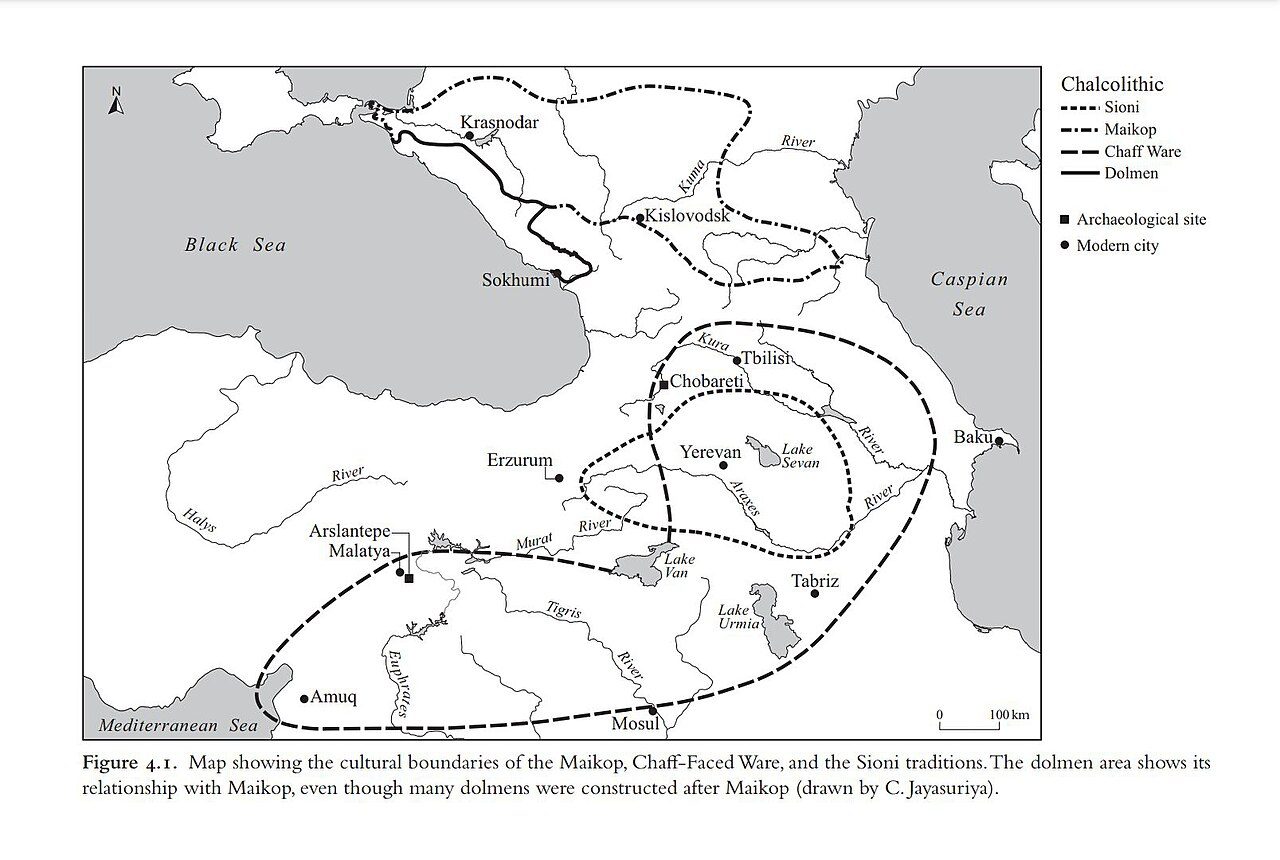
1 min read · 2 sourcesChaff-Faced Ware (sometimes abbreviated as CFW, and alternately called Chaff-Tempered Ware) is a Late Chalcolithic (4300-3500BCE) pottery which has found from Cilicia to the South Caucasus. In the South Caucasus, its variant is known as Leyla-Tepe culture, while in northern Mesopotamia it is usually referred to as Amuq F pottery. 1
Origin
Initially, Chaff-Faced Ware was associated with northern Mesopotamia, Syria and a migration of Uruk people, but recently the discovery of large number of Chaff-Faced Ware sites in the South Caucasus has changed the perceptions about its origins. Catherine Marro concluded that the core region from where the ware emerged was between the Euphrates and the Kura basin. The tempering chaff in the pottery was frequent in South Caucasian Neolithic sites. This type of ware is also known as a Beveled rim bowl. 1
The text above is adapted from the Wikipedia article “Chaff-Faced Ware”, available under the Creative Commons Attribution-ShareAlike 4.0 licence. 1
Chaff-Faced Ware is recorded in open cultural data. The structured record cited below does not describe the practice, and this entry has not yet been reviewed by a person familiar with the tradition. 2