The tradition & historical record
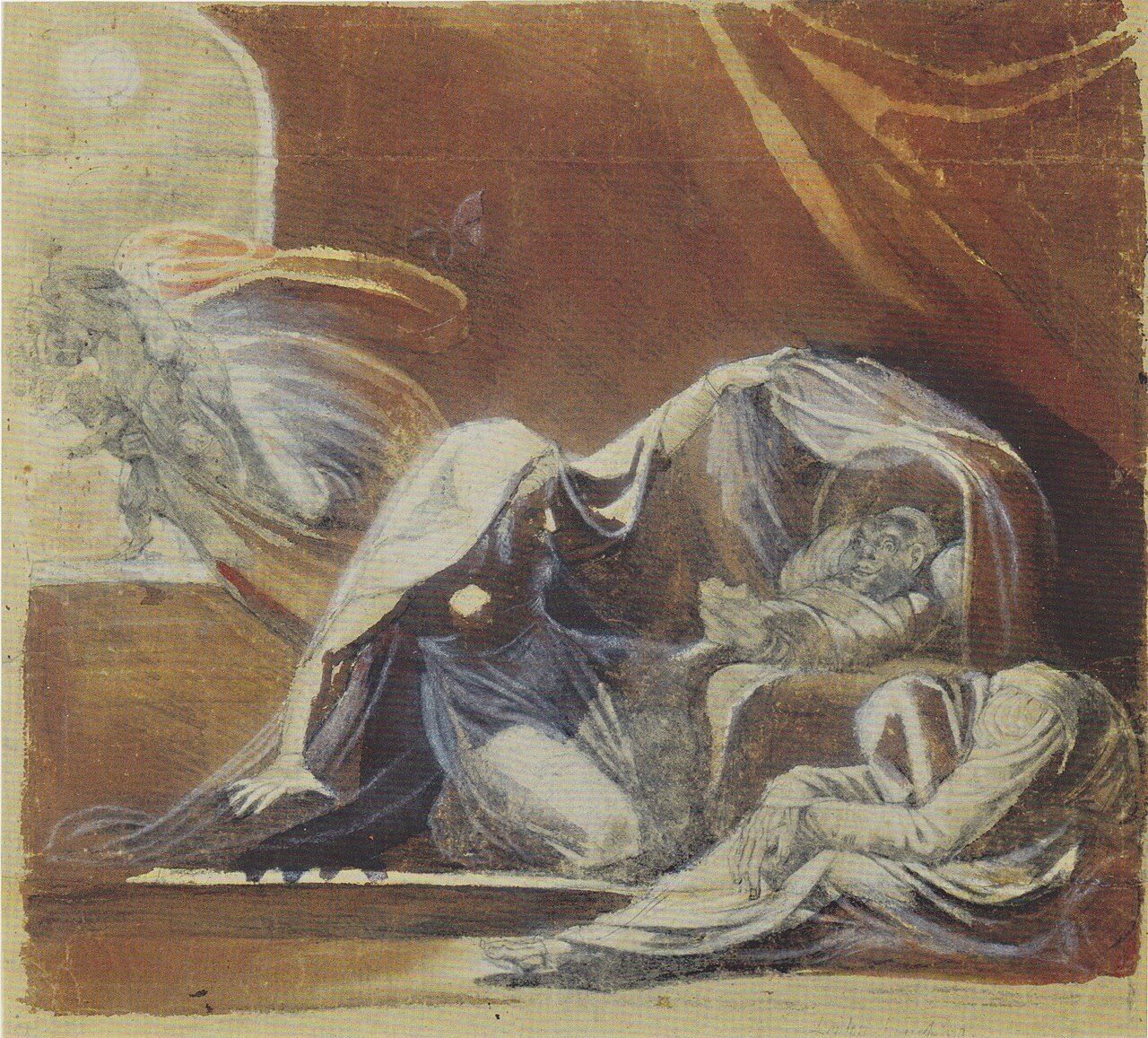
6 min read · 2 sourcesA changeling, also historically referred to as an auf or oaf, is a human-like creature found throughout much of European folklore. According to folklore, a changeling was a substitute left by a supernatural being when kidnapping a human being. Although sometimes it was a "stock" (a piece of wood made magically to resemble the kidnapped human), more often the changeling was a supernatural being made magically to look like the kidnapped human. 1
Supernatural beings blamed for stealing children included fairies, elves, demons, trolls, nereids and many others. Usually, the kidnapped human was a child; but there were cases, particularly in Scandinavia and Ireland, where adults were taken. Some modern scholars have argued these stories of replaced children originated as folklore explanations for autism or other developmental conditions. 1
Description
A changeling is typically identifiable via several traits, which vary from culture to culture. 1
In Irish legend, a fairy child may appear sickly and will not grow in size like a normal child, and may have notable physical characteristics such as a beard or long teeth. They may also display intelligence far beyond their apparent years and possess uncanny insight. A common way that a changeling could identify itself is through displaying unusual behaviour when it thinks it is alone, such as jumping about, dancing or playing an instrument – though this last example is found only within Irish and Scottish legend. A human child might supposedly be taken due to many factors: to act as a servant, the love of a human child, or malice. Most often, it was thought that fairies exchanged the children. In rare cases, the very elderly of the fairy people would be exchanged in the place of a human baby so that the old fairy could live in comfort, coddled by its human parents. Simple charms such as an inverted coat or open iron scissors left where the child sleeps were thought to ward them off; other measures included a constant watch over the child. Folklorist D. L. Ashliman proposes in his essay 'Changelings' that changeling tales illustrate an aspect of family survival in pre-industrial Europe. A peasant family's subsistence frequently depended upon the productive labour of each member, and it was difficult to provide for a person who was a permanent drain on the family's scarce resources. "The fact that the changelings' ravenous appetite is so frequently mentioned indicates that the parents of these unfortunate children saw in their continuing existence a threat to the sustenance of the entire family. 1
Function
In medieval Scandinavia, it was believed that trolls considered it more respectable to be raised by humans than by their kind and would consequently seize the opportunity to give their children a human upbringing. Some believed that trolls would only take unbaptised children, since once a child had been baptized – and therefore received into the Catholic faith – the trolls were powerless to abduct it. Beauty in human children and young women, particularly traits that evoke brightness or reflectivity, such as blonde hair and blue or silver eyes, are said to attract fairies, as they perhaps find preciousness in these traits. In Scottish folklore, the children might be replacements for fairy children in the tithe to Hell; this is best known from the ballad of Tam Lin. According to common Scottish myths, a child born with a caul (part of the amniotic membrane) across their face is a changeling and will soon die (is "of fey birth"). Other folklore says that human milk is necessary for fairy children to survive. In these cases, either the newborn human child would be switched with a fairy baby to be suckled by the human mother, or the human mother would be taken back to the fairy world to breastfeed the fairy babies. Human midwives were also thought to be necessary to bring fairy babies into the world. Some stories tell of changelings who forget they are not human and proceed to live a human life. However, in some stories, changelings who do not forget return to their fairy family, possibly leaving the human family without warning. The human child that was taken may often stay with the fairy family forever. 1
Cornwall
The Mên-an-Tol stones in Cornwall are said to have a fairy or pixie guardian who can make miraculous cures. In one case, a changeling baby was passed through the stone for the mother to have her real child returned to her. Evil pixies had changed her child, and the stones could reverse their spell. 1
Germany
In Germany, the changeling is known as Wechselbalg, Wechselkind, Kielkopf or Dickkopf (the last hinting at the huge necks and heads of changelings). Several methods are known in Germany to identify a changeling and to return the replaced real child: 1
confusing the changeling by cooking or brewing in eggshells. This will force the changeling to speak, claiming its age and revealing its position beyond synchronicity. attempting to heat the changeling in the oven – perhaps a lie by capacity to endure present. hitting or whipping the changeling The changeling must sometimes be fed with a woman's milk before replacing the children. In German folklore, several possible parents are known for changelings. Those are: 1
the devil, a belief shared by Martin Luther who advocated for baptism of changelings. a female dwarf the Fenixmännlein a water spirit a Roggenmuhme/Roggenmutter ("Rye Aunt"/"Rye Mother", a demonic woman living in cornfields and stealing human children) 1
Ireland
In Ireland, looking at a baby with envy – "over looking the baby" – was dangerous, as it endangered the baby, who was then in the fairies' power. So too was admiring or envying a woman or man dangerous, unless the person added a blessing; the able-bodied and beautiful were in particular danger. Women were especially in danger in liminal states: being a new bride or mother. Putting a changeling in a fire would cause it to jump up the chimney and return the human child. Still, at least one tale recounts a mother with a changeling finding that a fairy woman came to her home with the human child, saying the other fairies had done the exchange, and she wanted her own baby. The tale of surprising a changeling into speech – by brewing eggshells – is also told in Ireland, as in Wales. Various legends describe other ways to foil a would-be fairy kidnapper. One was to shout "Gairim agus coisricim thú " (I bless you) or "God bless you," which would cause the fairy to abandon the child it was trying to steal. 1
The text above is adapted from the Wikipedia article “Changeling”, available under the Creative Commons Attribution-ShareAlike 4.0 licence. 1
changeling is creature in folklore, according to the structured record cited below. This entry was generated automatically from that record and has not yet been reviewed by a person familiar with the tradition. 2
The source record links this tradition to 12 external registers, which can be verified through the citation. 2