The tradition & historical record
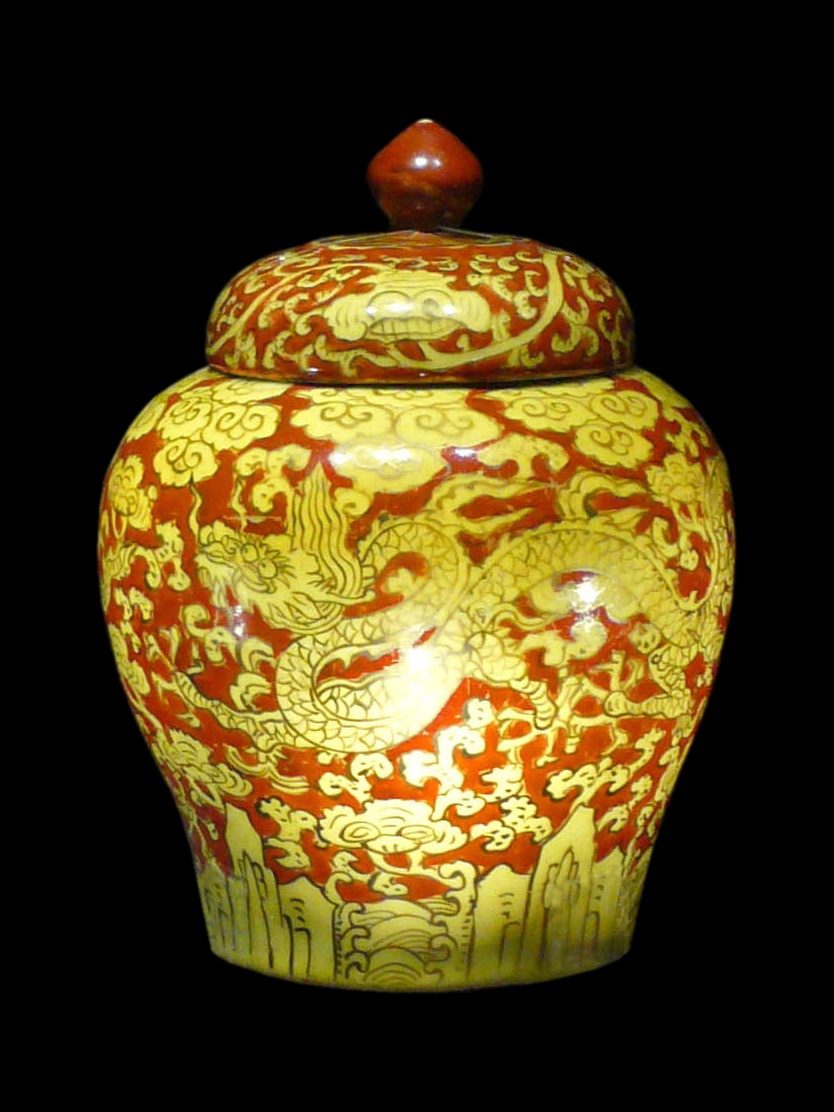
6 min read · 2 sourcesChinese ceramics are one of the most significant forms of Chinese art and ceramics globally. They range from construction materials such as bricks and tiles, to hand-built pottery vessels fired in bonfires or kilns, to the sophisticated Chinese porcelain wares made for the imperial court and for export. The oldest known pottery in the world was made during the Paleolithic at Xianrendong Cave, Jiangxi Province, China. Chinese ceramics show a continuous development since pre-dynastic times. Porcelain was a Chinese invention and is so identified with China that it is still called "china" in everyday English usage. Most later Chinese ceramics, even of the finest quality, were made on an industrial scale, thus few names of individual potters were recorded. Many of the most important kiln workshops were owned by or reserved for the emperor, and large quantities of Chinese export porcelain were exported as diplomatic gifts or for trade from an early date, initially to East Asia and the Islamic world, and then from around the 16th century to Europe. Chinese ceramics have had an enormous influence on other ceramic traditions in these areas. Increasingly over their long history, Chinese ceramics can be classified between those made for the imperial court to use or distribute, those made for a discriminating Chinese market, and those for popular Chinese markets or for export. 1
Terminology and categories
The earliest Chinese pottery was earthenware, which continued in production for utilitarian uses throughout Chinese history, but was increasingly less used for fine wares. Stoneware, fired at higher temperatures, and naturally impervious to water, was developed very early and continued to be used for fine pottery in many areas at most periods; the tea bowls in Jian ware and Jizhou ware made during the Song dynasty are examples. 1
Porcelain, on a Western definition, is "a collective term comprising all ceramic ware that is white and translucent, no matter what ingredients are used to make it or to what use it is put". The Chinese tradition recognizes two primary categories of ceramics: high-fired (cí 瓷) and low-fired (táo 陶), so doing without the intermediate category of stoneware, which in Chinese tradition is mostly grouped with (and translated as) porcelain. Terms such as "porcellaneous" or "near-porcelain" may be used for stonewares with porcelain-like characteristics. The Erya defined porcelain (cí) as "fine, compact pottery (táo)". Chinese pottery can also be classified as being either northern or southern. China comprises two separate and geologically different land masses, brought together by continental drift and forming a junction that lies between the Yellow and Yangtze rivers, sometimes known as the Nanshan-Qinling divide. The contrasting geology of the north and south led to differences in the raw materials available for making ceramics; in particular the north lacks petunse or "porcelain stone", needed for porcelain on the strict definition. 1
Materials
Chinese porcelain is mainly made by a combination of the following materials: 1
Kaolin – essential ingredient composed largely of the clay mineral kaolinite. Porcelain stone – decomposed micaceous or feldspar rocks, historically also known as petunse. Feldspar Quartz 1
Technical developments
In the context of Chinese ceramics, the term porcelain lacks a universally accepted definition (see above). This in turn has led to confusion about when the first Chinese porcelain was made. Claims have been made for the late Eastern Han dynasty (100–200 AD), the Three Kingdoms period (220–280 AD), the Six Dynasties period (220–589 AD), and the Tang dynasty (618–906 AD). Kiln technology has always been a key factor in the development of Chinese pottery. The Chinese developed effective kilns capable of firing at around 1,000 °C (1,830 °F) before 2000 BC. These were updraft kilns, often built below ground. Two main types of kilns were developed by about 200 AD and remained in use until modern times. These are the dragon kiln of hilly southern China, usually fuelled by wood, long and thin and running up a slope, and the horseshoe-shaped mantou kiln of the north Chinese plains, smaller and more compact. Both could reliably produce the temperatures of up to 1,300 °C (2,370 °F) or more needed for porcelain. In the late Ming, the egg-shaped kiln (zhenyao) was developed at Jingdezhen, but mainly used there. This was something of a compromise between the other types, and offered locations in the firing chamber with a range of firing conditions. 1
History
Important specific types of pottery, many coming from more than one period, are dealt with individually in sections lower down. 1
Neolithic
Pottery dating from 20,000 years ago was found at the Xianrendong Cave site in Jiangxi province, making it among the earliest pottery yet found. Another reported find is from 17,000 to 18,000 years ago in the Yuchanyan Cave in southern China. 1
By the Middle and Late Neolithic (about 5000 to 1500 BCE) most of the larger archaeological cultures in China were farmers producing a variety of attractive and often large vessels, often boldly painted, or decorated by cutting or impressing. Decoration is abstract or of stylized animals – fish are a speciality at the river settlement of Banpo. The distinctive Majiayao pottery, with orange bodies and black paint, is characterised by fine paste textures, thin walls, and polished surfaces; the almost complete lack of defects in excavated pots suggests a high level of quality control during production. The Majiayao and other phases of the Yangshao culture are well-represented in Western museums, with Banshan pots as the most widely recognized type of Neolithic Chinese pottery in the West. Banshan urns are characterized by a short, narrow neck atop a wide-shouldered vessel tapering to an often very narrow base; there are usually two ring handles attached to the middle of the vessel, and the ornament is slip-painted in purplish black and plum-red pigments. The designs frequently comprise four large roundels, linked by strongly curved lines or loops.Distinct from Central China ceramic tradition developed in the modern eastern coastal provinces of Shandong, Jiangsu, and Zhejiang, with principal cultures like Dawenkou, Longshan, Majiabang, Songze, and Hemudu. The most significant technological aspect of ceramics in the region was the development of the fast wheel in the Dawenkou culture shortly after c. 3000 bce. 1
The text above is adapted from the Wikipedia article “Chinese ceramics”, available under the Creative Commons Attribution-ShareAlike 4.0 licence. 1
Chinese ceramics is pottery and porcelain from China, according to the structured record cited below. This entry was generated automatically from that record and has not yet been reviewed by a person familiar with the tradition. 2
The source record links this tradition to 20 external registers, which can be verified through the citation. 2