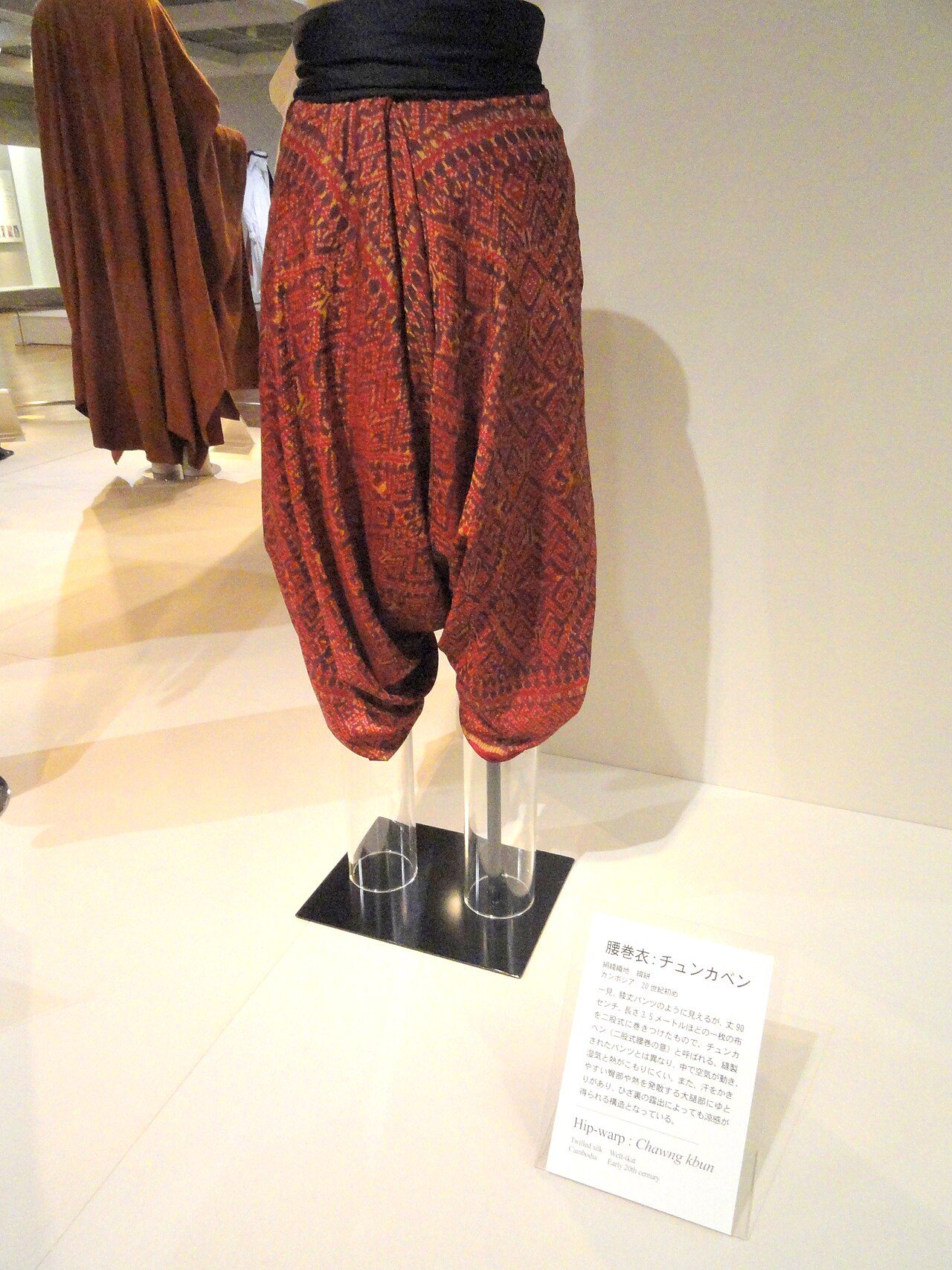
The tradition & historical record
2 min read · 2 sourcesSompot chong kben (Khmer: សំពត់ចងក្បិន, sâmpót châng kbĕn [sɑmput cɑːŋ kɓən]) is a unisex lower-body wraparound garment. It originated in ancient Cambodia and was later adopted in neighbouring countries including Laos and Thailand, where it is known as chong kraben (โจงกระเบน) and commonly worn by women, particularly those of middle to high socio-economic status. 1
Etymology
Sompot chong kben (សំពត់ចងក្បិន) combines three Khmer words: សំពត់ (/sɑmpʊət/, sampot), a long, rectangular cloth worn around the lower body; ចង (/cɑɑŋ/, chang), refers to the part of the cloth that's twisted into a bunch; and ក្បិន (/kbən/, kben), to the bunch's role in concealing "private parts". Chong kraben (โจงกระเบน) is used among Thai people and derived from these Khmer words. 1
History
According to scholars, one can contend that the Khmer chong kben corresponds to the Indian dhoti. Different styles of chong kben are apparent on Ankorian bas-reliefs. The garment's end panels can present as follows: rolled into a bunch, pulled through the legs, and then secured in the back waistband, or with a belt; deities and kings present a style that entails pulling one front end to the back as the other end drapes the front with the tip secured in the waist-area, creating a pocketfold; knotting the chong kben at the waist with one end hanging front and center and the other pulled back through the legs and slid under the fabric to hang in the center, and a minimal chong kben resembling a loincloth, carved onto “austerely-garbed Brahman priests,” laborers, soldiers, slaves from the mountains, and prisoners of war in bas-reliefs. An exuberant version, or “flared” chong kben, is shown on protagonists of the Mahabharata-epic bas-reliefs, as well as high-ranking soldiers and warrior kings. By the 17th century, the royal court of Siam had also adopted the sampot chong kben. In 1856, Siamese King Mongkut gifted US President Franklin Pierce four Khmer silk garments. Three were woven silk sampot chong kben in hol pattern, a textile achieved from the distinct, sophisticated Khmer uneven twill groundweave. 1
The text above is adapted from the Wikipedia article “Sompot chong kben”, available under the Creative Commons Attribution-ShareAlike 4.0 licence. 1
Chong Kben is wrapped and draped pants of Southeast Asia, according to the structured record cited below. This entry was generated automatically from that record and has not yet been reviewed by a person familiar with the tradition. 2
The source record links this tradition to 1 external register, which can be verified through the citation. 2