The tradition & historical record
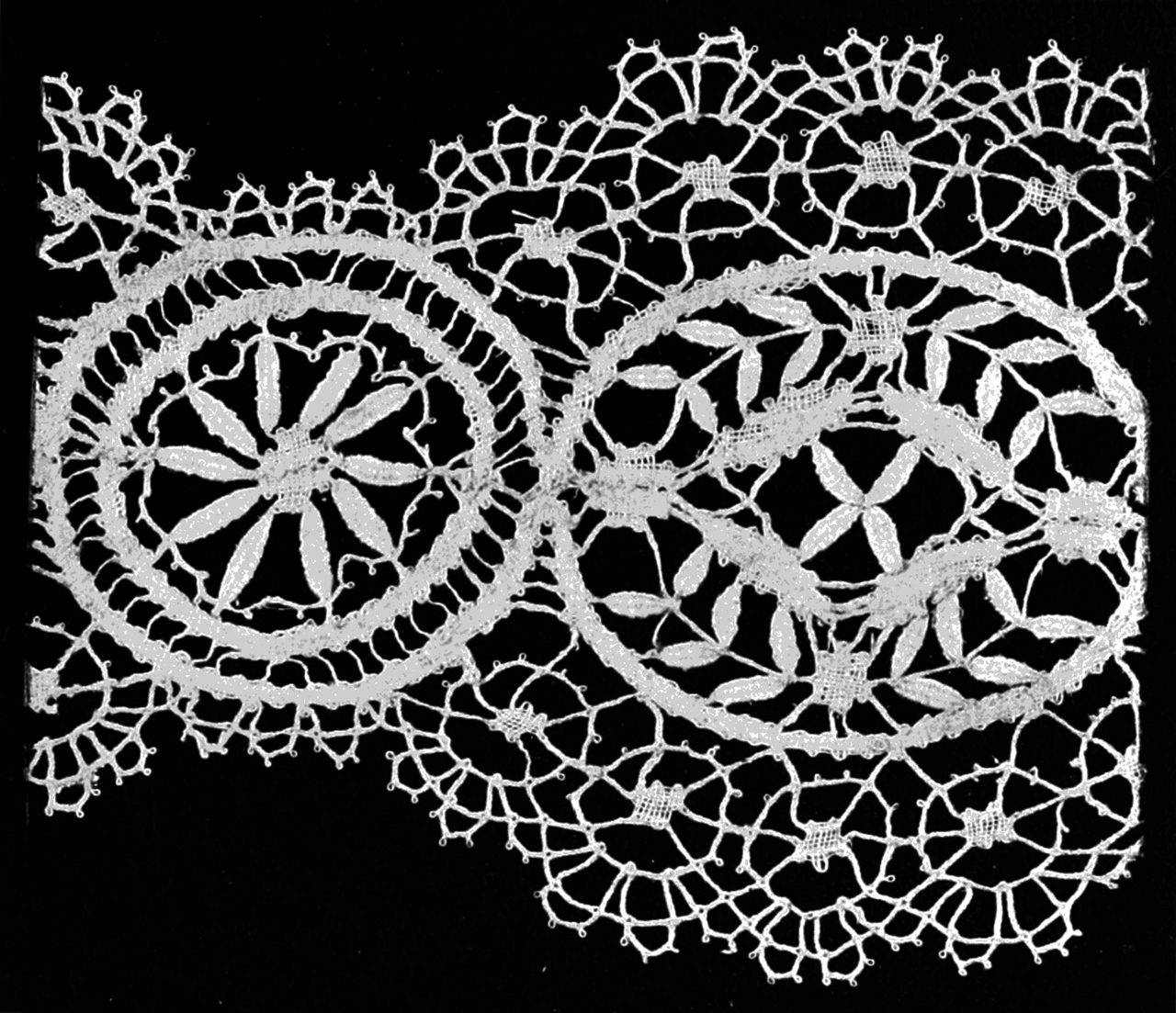
1 min read · 2 sourcesCluny lace is a bobbin lace style, worked as a continuous piece. It is a heavy plaited lace of geometric design, often with radiating thin, pointed wheatears (closely woven leaves). It is a guipure style of lace. 1
History
Cluny lace originated in France. It appeared in the nineteenth century in Le Puy and Mirecourt in Lorraine, reputedly using designs from the Museum of Antiquities at the Hotel Cluny, Paris. Cluny lace was also made in the English Midland lacemaking areas. The laces shares common features with Bedfordshire lace. 1
The text above is adapted from the Wikipedia article “Cluny lace”, available under the Creative Commons Attribution-ShareAlike 4.0 licence. 1
Cluny lace is type of bobbin lace, according to the structured record cited below. This entry was generated automatically from that record and has not yet been reviewed by a person familiar with the tradition. 2
The source record links this tradition to 3 external registers, which can be verified through the citation. 2