The tradition & historical record
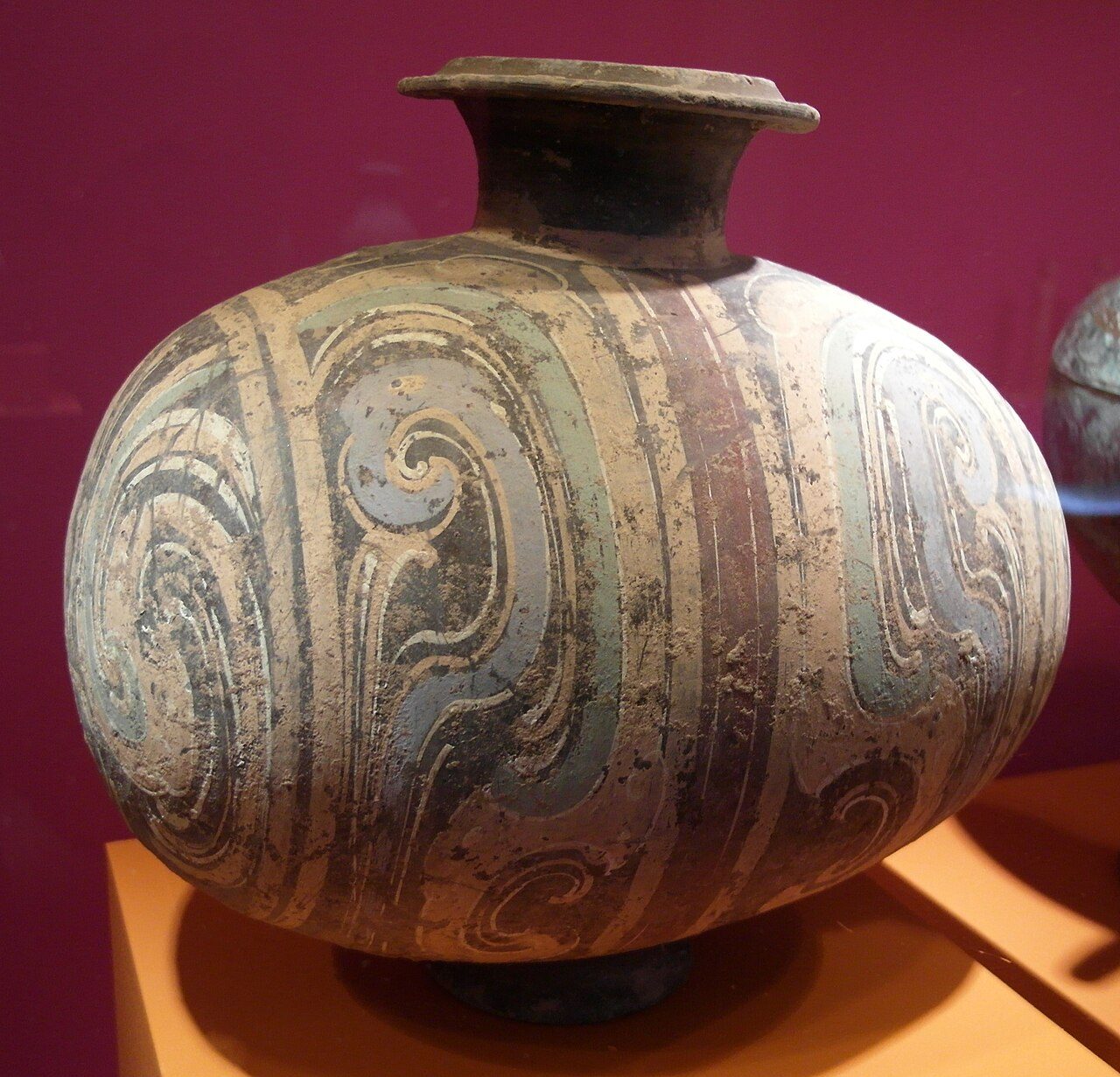
1 min read · 2 sourcesCocoon jars or Cocoon-shaped jars are Chinese funerary pottery vessels, belonging to the period of the 1st millennium BCE. The shape is similar to the Cypriot Barrel-shaped jugs, as is generally the decoration, with vertical bands across the breadth of the vessels. The earliest type of cocoon-form jar in China dates to the Western Zhou period (99-771 BCE), either in ceramic or in bronze. The Qin dynasty period has many of them, particularly in relation with the Mausoleum of the First Emperor. It has been suggested that the Chinese obtained this design from nomadic people, especially the Rong and Di cultures, through the medium of the steppes of Central Asia. 1
The text above is adapted from the Wikipedia article “Cocoon jar”, available under the Creative Commons Attribution-ShareAlike 4.0 licence. 1
Cocoon jar is pottery from Cyprus, according to the structured record cited below. This entry was generated automatically from that record and has not yet been reviewed by a person familiar with the tradition. 2