The tradition & historical record
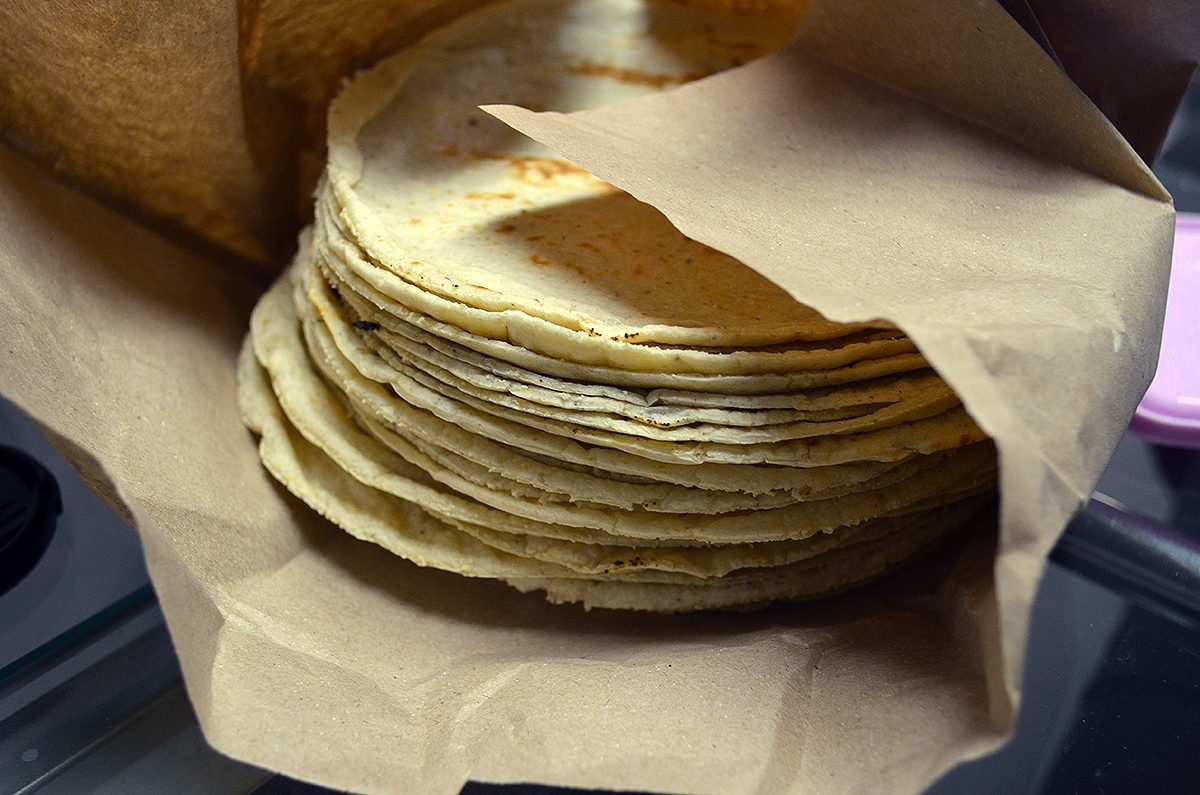
6 min read · 2 sourcesIn Mexico and Central America, a corn tortilla or just tortilla (, Spanish: [toɾˈtiʝa]) is a type of thin, unleavened flatbread, made from hominy, that is the whole kernels of maize treated with alkali to improve their nutrition in a process called nixtamalization. A simple dough made of ground hominy, salt and water is then formed into flat discs and cooked on a very hot surface, generally an iron griddle called a comal. A similar flatbread from South America, called an arepa (made with ground maize, not hominy, and typically much thicker than tortillas), also predates the arrival of Europeans to America. The Aztecs and other Nahuatl-speakers call tortillas tlaxcalli ([t͡ɬaʃˈkalli]). They were called tortilla by the Spanish from its resemblance to traditional Spanish round, unleavened cakes and omelettes. The successful conquest of the Aztec empire by the Spanish and the subsequent colonial empire ruled from the former Aztec capital have ensured that this variation become the prototypical tortilla for much of the Spanish-speaking world. Maize kernels naturally occur in many colors, depending on cultivar: from pale white, to yellow, to red and bluish purple. Likewise, corn meal and the tortillas made from it may be similarly colored. White and yellow tortillas are by far the most common, however. In Mexico, there are three colors of maize dough for making tortillas: white maize, yellow maize and blue maize (also referred to as black maize). 1
Etymology
Tortilla, from Spanish torta, cake, plus the diminutive -illa, literally means "little cake". Nahuatl tlaxcalli is derived from the verb (i)xca "to bake" with the help of the prefix tla- and two common suffixes -l- and -li (<-tli), that is "something baked". Tortilla in Iberian Spanish also means omelette. As such, this corn flour flatbread tortilla is not to be confused with the Spanish omelette or any other egg-based one. 1
History
The corn tortilla was first developed in Mexico, during prehistoric times. It has since become a staple carbohydrate in North American and Mesoamerican cultures. It predates its derivative, the wheat flour tortilla (tortilla de harina or tortilla de trigo), in all such cultures. This is attributed to the fact that old world wheat was neither known nor grown in the Americas prior to European colonization. In Aztec times two or three corn tortillas would be eaten with each meal, either plain or dipped in mole or a chili pepper and water sauce. Tortillas were also sold at Aztec marketplaces filled with turkey meat, turkey eggs, beans, honey, squash, prickly pears and various preparations of chili pepper. Analogous staple carbohydrates in New World cultures, all made from hominy and serving a similar nutritional function, include the sope, the totopo, the gordita, the tlacoyo of Mexico, and the pupusa of Central America. The arepa of northern South America, though similar, is made with ground maize, not hominy, and does not offer the same nutrition profile as foods whose maize has been processed with alkali. The tamal (or tamale) of Mexico is also made from nixtamal (the Nahuatl word for hominy is the source of the term 'nixtamalization'), but is much thicker and a dish unto itself, usually including other ingredients and flavors. 1
Mexico
Maize has been a staple food for thousands of years. It is the most-planted crop in the Mexican region. The country grows more than 42 distinct maize cultivars, each of which has several varieties. These varieties are estimated to number more than 3,000 by the International Center for the Improvement of Maize and Wheat (CIMMYT). The characteristics of each variety depend upon soil conditions, humidity, altitude, and its means of cultivation. Some of the earliest evidence of maize cultivation suggests that its original domestication was in fact simultaneous in several places. Maize is the basis of most Mexican cuisine, with some exception in the culinary traditions of northern Mexico, where wheat is taking the place of maize as the cereal base. In Mexico, the primary use of maize is the tortilla, but it is also a principal ingredient in other foods including tamales and atole. The maize used for tortillas can be ripe and dry, but it is also consumed fresh and mature (maize), or soft and fresh (xilote). Tortillas are consumed daily. Factory-made tortillas are widely sold, although they can easily be made at home. Tortilla production starts in the early morning as lunch is the main meal of the day for most people. In Mexico, lunch is eaten between 1:30 p.m. and 3:30 p.m. (1330 to 1530). Some supermarkets and grocery stores sell freshly made tortillas throughout the day. Mexican and, more generally, Latin American dishes made with maize tortillas include: 1
Chalupas Chilaquiles Enchiladas Enfrijoladas Entomatadas Gorditas Pan de cazón Pastel azteca Peneques Quesadillas Sincronizadas Sopes Tacos Tacos dorados Tlayudas Totopos – Tortilla chips Tortilla soup Tostadas 1
Preparation
A tortilla is made by curing maize in limewater in the nixtamalization process, which causes the skin of the corn kernels to peel off (the waste material is typically fed to poultry), then grinding and cooking it, kneading it into a dough called masa nixtamalera, pressing it flat into thin patties using a rolling pin, tortilla press or by hand, and cooking it on a very hot comal (originally a flat terra cotta griddle, now usually made of light sheet-metal instead). The process, called nixtamalization, was developed indigenously by pre-Columbian cultures and predates European contact by many centuries, if not millennia. Soaking the maize in limewater is important because it makes available the B vitamin niacin and the amino acid tryptophan. When maize was brought to Europe, Africa and Asia from the New World, this crucial step was often omitted. Those whose diet consisted mostly of corn meal often became sick — because of the lack of niacin and tryptophan — with the deficiency disease pellagra, which was common in Spain, Northern Italy, and the southern United States. In Mexico, particularly in the towns and cities, corn tortillas are often made nowadays by machine and are very thin and uniform, but in many places in the country, they are still made by hand, even when the nixtamal is ground into masa by machine. Corn tortillas are customarily served and eaten warm; when cool, they often become rubbery or grainy as the cooked starches stale. 1
Nutrition
An uncooked corn tortilla made with nixtamalized corn at 46% hydration and depending on corn variety used and variations, consists of 45% carbohydrates, 3% fat, and 6% protein (table). In a 100 gram reference amount, a raw corn tortilla supplies 218 calories and is a rich source (20% or higher of the Daily Value, DV) of phosphorus (45% DV) and magnesium (20% DV). It is a moderate source (10-19% DV) of vitamin B6, niacin, manganese, and zinc (table). 1
The text above is adapted from the Wikipedia article “Corn tortilla”, available under the Creative Commons Attribution-ShareAlike 4.0 licence. 1
corn tortilla is unleavened flatbread made from ground corn (maize), according to the structured record cited below. This entry was generated automatically from that record and has not yet been reviewed by a person familiar with the tradition. 2
The source record links this tradition to 11 external registers, which can be verified through the citation. 2