The tradition & historical record
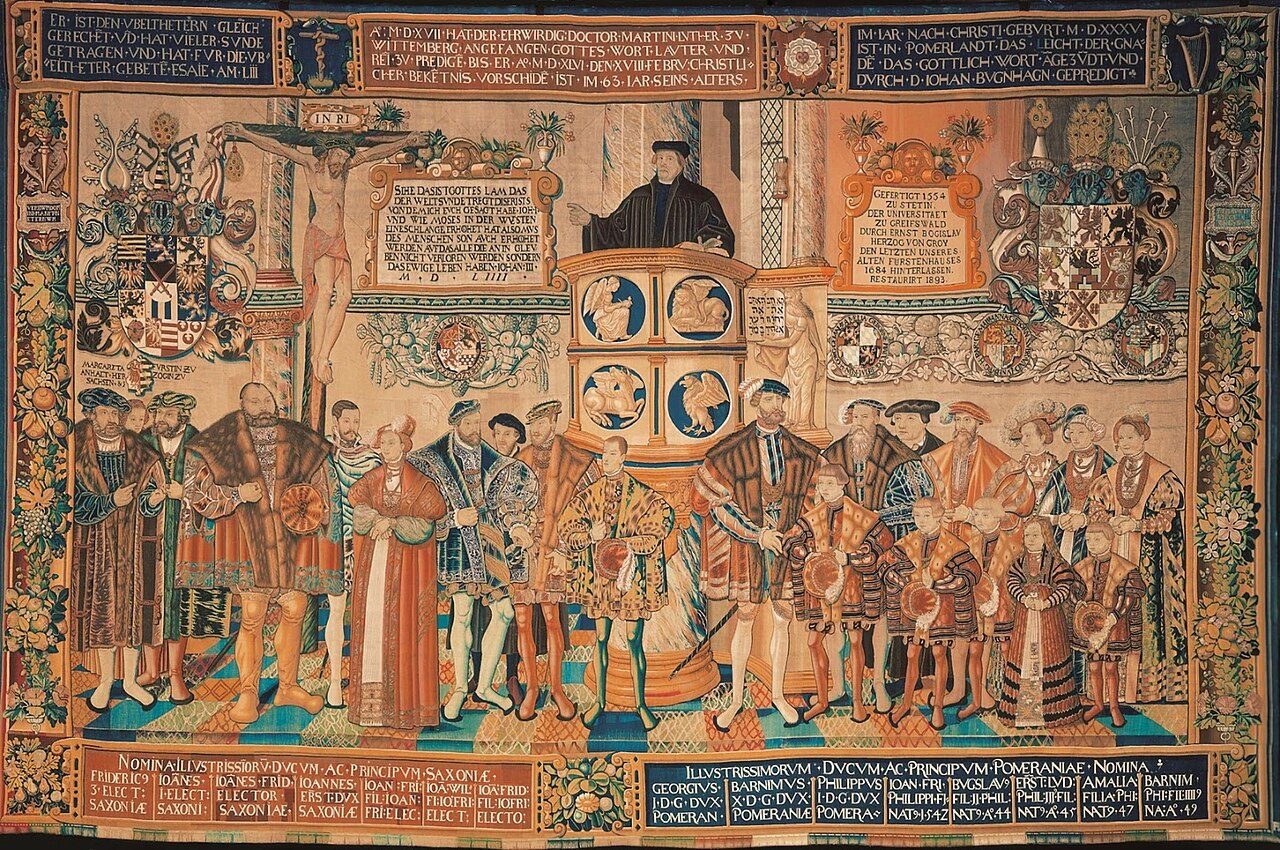
2 min read · 2 sourcesThe Croÿ-Teppich (Tapetum Concordiae) is a 6.80 metre long and 4.32 metre tapestry, which is owned by the University of Greifswald. It is considered a unique cultural and historical testimony from the time of the Reformation due to its size, depiction and quality of execution. The work was commissioned by Duke Philip I, Duke of Pomerania in 1554 and made by Peter Heymans, a Dutch image weaver, in Szczecin or Jasenitz. The basse-lisse technique was used. On the carpet is a depiction of the Pomeranian Duke Philip I with his family as well as the family of his wife Maria of Saxony, Duchess of Pomerania, of the Course of Saxony Princely House on the occasion of the wedding. The figures are arranged below the preaching Martin Luther. Also in the background are the Protestant reformers Philipp Melanchthon and Johannes Bugenhagen. But not only the wedding is to be depicted, but also the longed-for unity of faith within Lutheranism in view of the disputes after the Augsburg Interim of 1548 (thesis by Heimo Reinitzer). Ernst Bogislaw von Croÿ, son of Duchess Anna von Pommern, donated the tapestry to the Greifswald University in 1681. 1
The text above is adapted from the Wikipedia article “Croÿ-Teppich”, available under the Creative Commons Attribution-ShareAlike 4.0 licence. 1
Croy tapestry is tapestry woven in the workshop of Peter Heyman, according to the structured record cited below. This entry was generated automatically from that record and has not yet been reviewed by a person familiar with the tradition. 2
The source record links this tradition to 1 external register, which can be verified through the citation. 2