The tradition & historical record
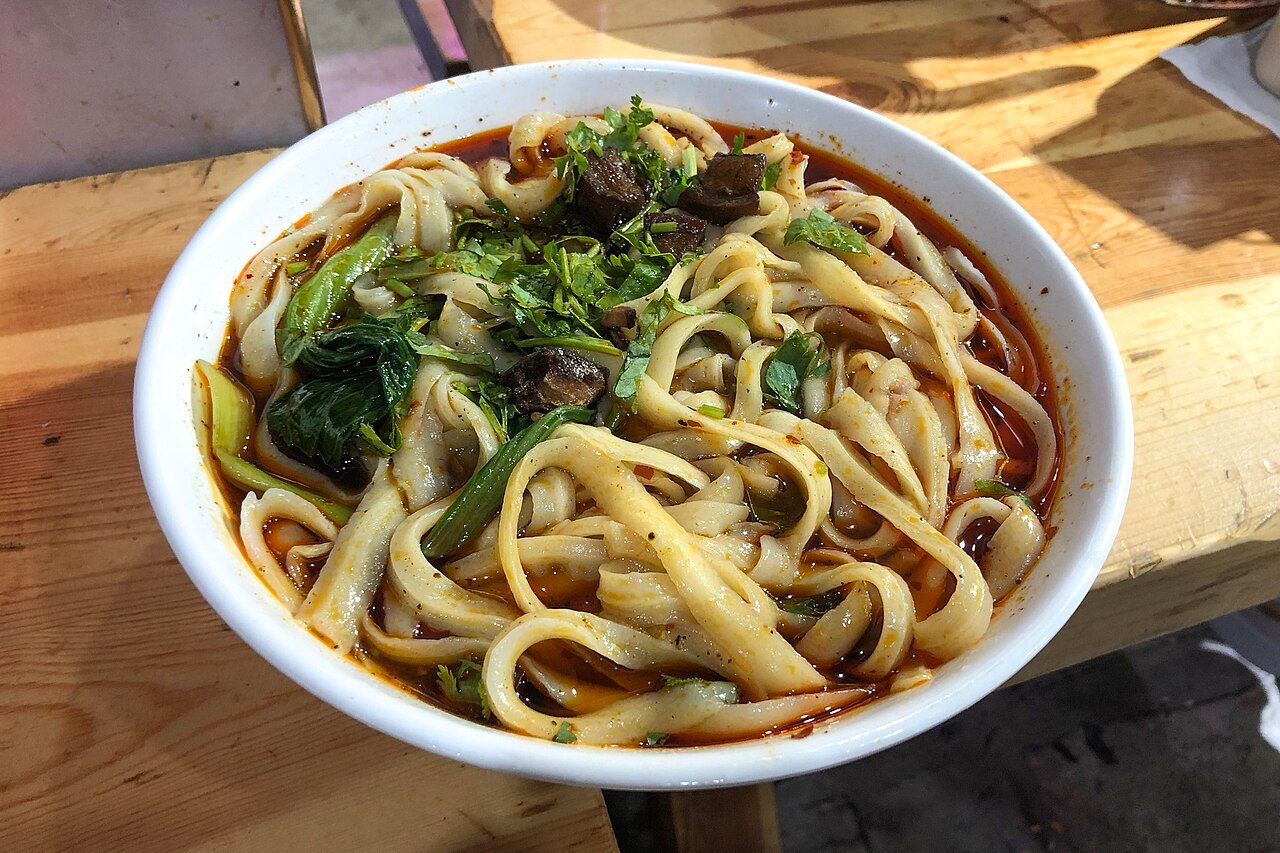
2 min read · 2 sourcesKnife-cut noodles (traditional Chinese: 刀削麵; simplified Chinese: 刀削面; pinyin: dāoxiāomiàn), also known as knife-sliced noodles or knife-shaved noodles in English, are a type of noodle in Chinese cuisine often associated with Shanxi province. As the name implies, unlike pulled noodles, they are prepared by thinly cutting a block of dough directly into boiling water. The resulting noodles are ribbon-shaped, fairly thick, and chewy when cooked. Among the knife-cut noodle variations in Shanxi, the style from Datong became the most famous. 1
Preparation
The noodles are made by mixing water and flour, and other ingredients to create dough. Cooking oil is added to increase elasticity and chewiness. After resting, the dough chunk is then sliced in a quick motion with strips of dough going directly into the boiling water. Learning the technique to do this can take years, but a skilled chef can slice up to 200 strands per minute. This makes the noodles very fresh. The noodles are usually served in broth, but they are sometimes fried. 1
The text above is adapted from the Wikipedia article “Knife-cut noodles”, available under the Creative Commons Attribution-ShareAlike 4.0 licence. 1
dāoxiāo miàn is Shanxi noodles, according to the structured record cited below. This entry was generated automatically from that record and has not yet been reviewed by a person familiar with the tradition. 2
The source record links this tradition to 5 external registers, which can be verified through the citation. 2