The tradition & historical record
2 min read · 2 sourcesDaunian pottery was produced in Daunia, located in the modern Italian provinces of Barletta-Andria-Trani and Foggia. It was created by the Daunians, a tribe of the Iapygian civilization who had probably migrated from Illyria. 1
History
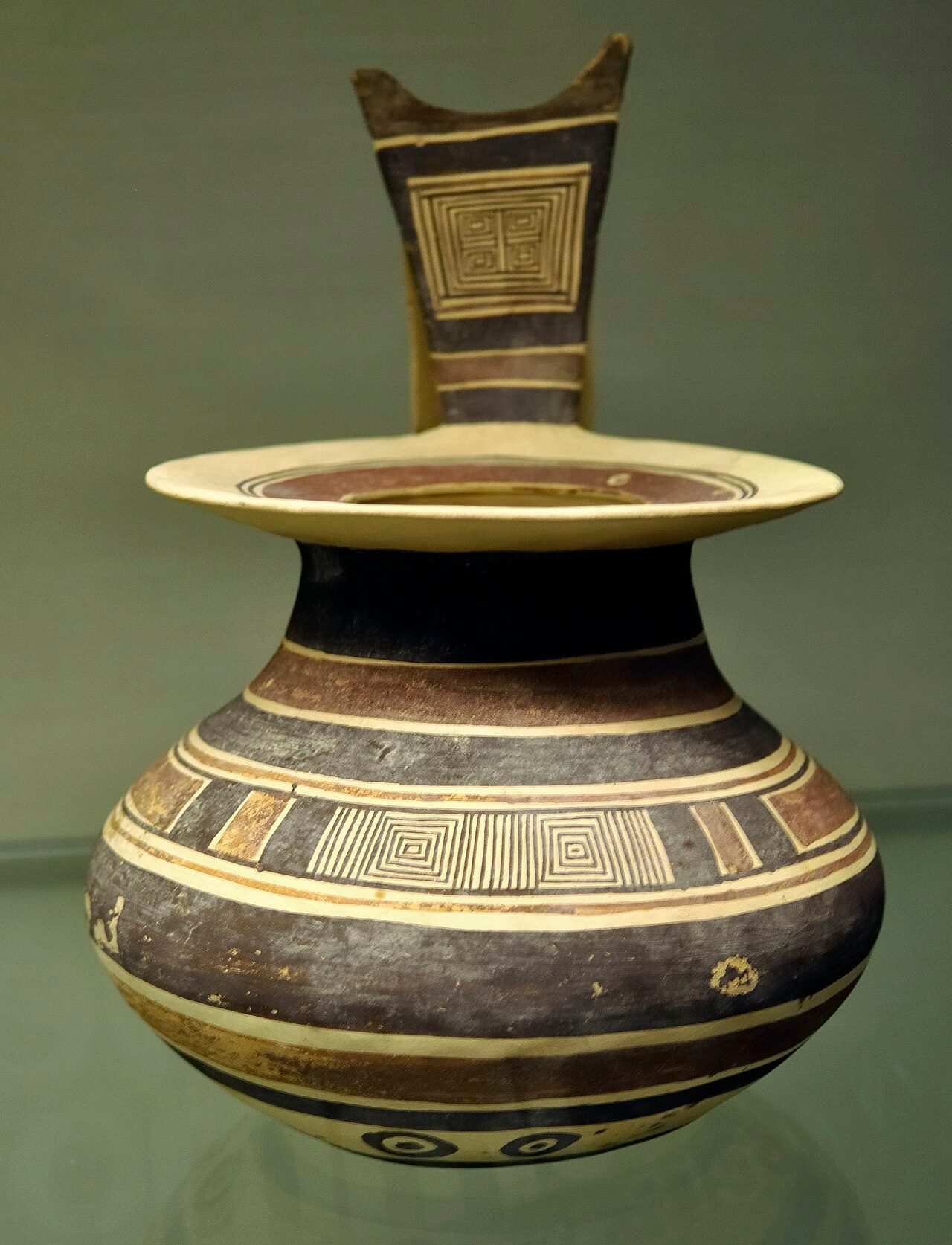
Daunian pottery production began around 700 BC in regional centers such as Ordona and Canosa di Puglia. The early designs featured geometric patterns painted on the pottery. These ceramics were hand-formed rather than made on a potter's wheel. 1
Materials and techniques
Daunian pottery was typically decorated with red, brown, or black earth colors. The common motifs included diamonds, triangles, circles, equilateral crosses, squares, arcs, and several swastika patterns. The development of Daunian pottery styles occurred independently from early Greek ceramics. 1
Forms and styles
Typical Daunian pottery forms include the askos, hopper vessels, and bowls with loop handles. Notably, some pieces feature manual or anthropomorphic protomes attached to or depicted graphically on the sides and handles. 1
Greek influence
From the fifth century BC, Daunian pottery began to exhibit influences from Greek styles, including the depiction of crude human, bird, and plant figures. Between 350 BC and 250 BC, the decorative styles evolved even further. 1
Notable artifacts
Some of the notable Daunian pottery artifacts include various geometric designs and forms such as the askos and bowls with loop handles. 1
The text above is adapted from the Wikipedia article “Daunian pottery”, available under the Creative Commons Attribution-ShareAlike 4.0 licence. 1
Daunian pottery is local ancient ceramics style in south Italy, according to the structured record cited below. This entry was generated automatically from that record and has not yet been reviewed by a person familiar with the tradition. 2
The source record links this tradition to 1 external register, which can be verified through the citation. 2