The tradition & historical record
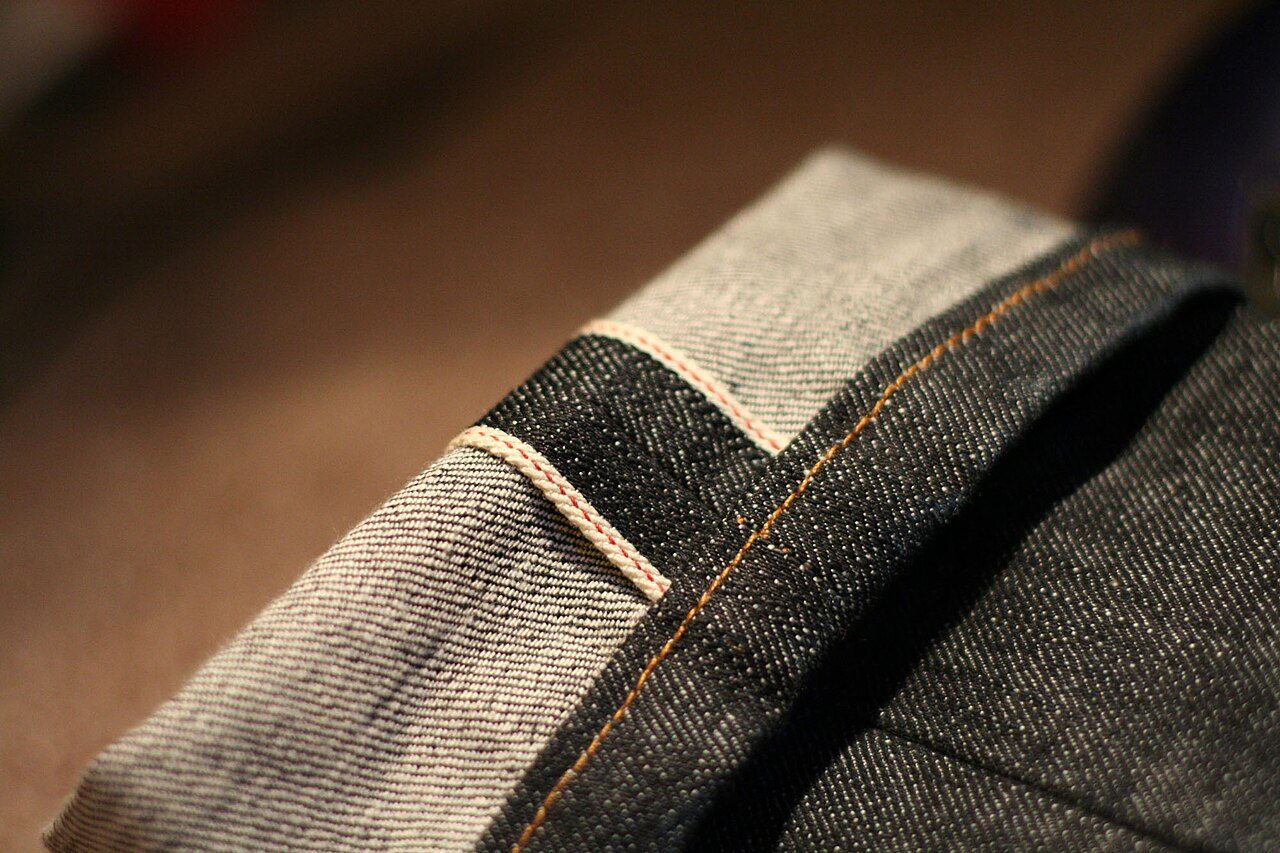
5 min read · 2 sourcesDenim is a sturdy, cotton, warp-faced textile in which the weft passes under two or more warp threads. This twill weave produces a diagonal ribbing that distinguishes it from cotton duck. Denim, as it is recognised today, was first produced in Nîmes, France. Denim is available in a range of colors, but the most common type of denim is indigo denim in which the warp threads are dyed while the weft threads are left white. As a result of the warp-faced twill weave, one side of the textile is dominated by the blue warp threads, and the other side is dominated by the white weft threads. Jeans made from this cloth are thus predominantly white on the inside. Denim is used to create a wide variety of garments, accessories, and furniture. 1
Etymology
Denim originated as a contraction of the French phrase sergé de Nîmes ('serge from Nîmes'). 1
History
Denim has been used in the United States since the mid-19th century. Denim initially gained popularity in 1873 when Jacob W. Davis manufactured the first pair of rivet-reinforced denim pants. The popularity of denim jeans exceeded the production capacity of Davis's small shop, so he moved his production to the facilities of dry goods wholesaler Levi Strauss & Co., which had been supplying him with bolts of denim fabric. Throughout the 20th century, denim was used for durable uniforms such as those issued to staff of the French national railways. In the post-war years, the Royal Air Force issued olive-drab denim coveralls (colloquially known as "denims") for dirty work. During the mid-20th century, particularly in the 1950s and 1960s, denim underwent a significant shift in its functionality. Denim evolved from being primarily associated just about workwear and durability and became part of a younger culture. It was strongly associated with rebellion and nonconformity, which was being largely influenced by famous actors, popular films of the time, and significant figures. Younger generations began wearing denim on a more regular day basis rather than only wearing for work and labor. With younger ages starting to wear denim on a more regular basis it helped push denim into the mainstream fashion industry. By the late 1960s, denim had spread beyond just the United States and had become widely adopted in other parts of the world. As denim became increasingly accepted by younger generations, its use expanded rapidly. By the late 1960s, it had moved from being seen as just rebellious clothing to something that was more widely accepted in everyday life. 1
Creating denim
All denim is created through generally the same process: 1
Raw cotton fibers are converted to filament yarn. The warp yarn is dyed, while the weft is left undyed (usually) or dyed. The yarns are woven on a shuttle loom, projectile loom, air-jet loom, or water-jet loom. The woven product is sanforized. Denim fabric 1
Yarn production
Traditional denim yarn is composed entirely of cotton. Once cotton fibers are cleaned and combed into long, cohesive lengths of similar-length fiber, they are spun into yarn using an industrial machine. Throughout the creation of denim, washes, dyes, or treatments are used to change the appearance of denim products. Some yarns may substitute an elastane component such as Spandex/Lycra for up to 3% of the cotton, the woven form of which (typically called 'stretch denim') may have a elasticity of up to 15%. 1
Dyeing
Denim was originally dyed with indigo dye extracted from plants, often from the genus Indigofera. In South Asia, indigo dye was extracted from the dried and fermented leaves of Indigofera tinctoria; this is the plant that is now known as "true indigo" or "natural indigo". In Europe, the use of Isatis tinctoria, or woad, can be traced back to the 8th century BC, although it was eventually replaced by Indigofera tinctoria as the superior dye product. However, most denim today is dyed with synthetic indigo dye. In all cases, the yarn undergoes a repeated sequence of dipping and oxidation—the more dips, the stronger the color of the indigo. Before 1915, cotton yarns were dyed using a skein dyeing process, in which individual skeins of yarn were dipped into dye baths. Rope dyeing machines were developed in 1915, and slasher or sheet dyeing machines were developed in the 1970s. These methods involve a series of rollers that feed continuous yarns in and out of dye vats. In rope dyeing, continuous yarns are gathered together into long ropes or groups of yarns – after these bundles are dyed, they must be re-beamed for weaving. In sheet dyeing, parallel yarns are laid out as a sheet in the same order in which they will be woven; because of this, uneven dye circulation in the bath can lead to side-to-side color variations in the woven cloth. Rope dyeing eliminates this possibility because color variations can be evenly distributed across the warp during beaming. Denim fabric dyeing is divided into two categories: indigo dyeing (Indigo dye is a unique shade of blue) and sulfur dyeing (Sulfur dye is a synthetic organic dye and it is formed by sulphurisation of organic intermediates, this contains nitro or amino groups). 1
The text above is adapted from the Wikipedia article “Denim”, available under the Creative Commons Attribution-ShareAlike 4.0 licence. 1
denim is sturdy cotton or cotton-blend twill textile, according to the structured record cited below. This entry was generated automatically from that record and has not yet been reviewed by a person familiar with the tradition. 2
The source record links this tradition to 22 external registers, which can be verified through the citation. 2