The tradition & historical record
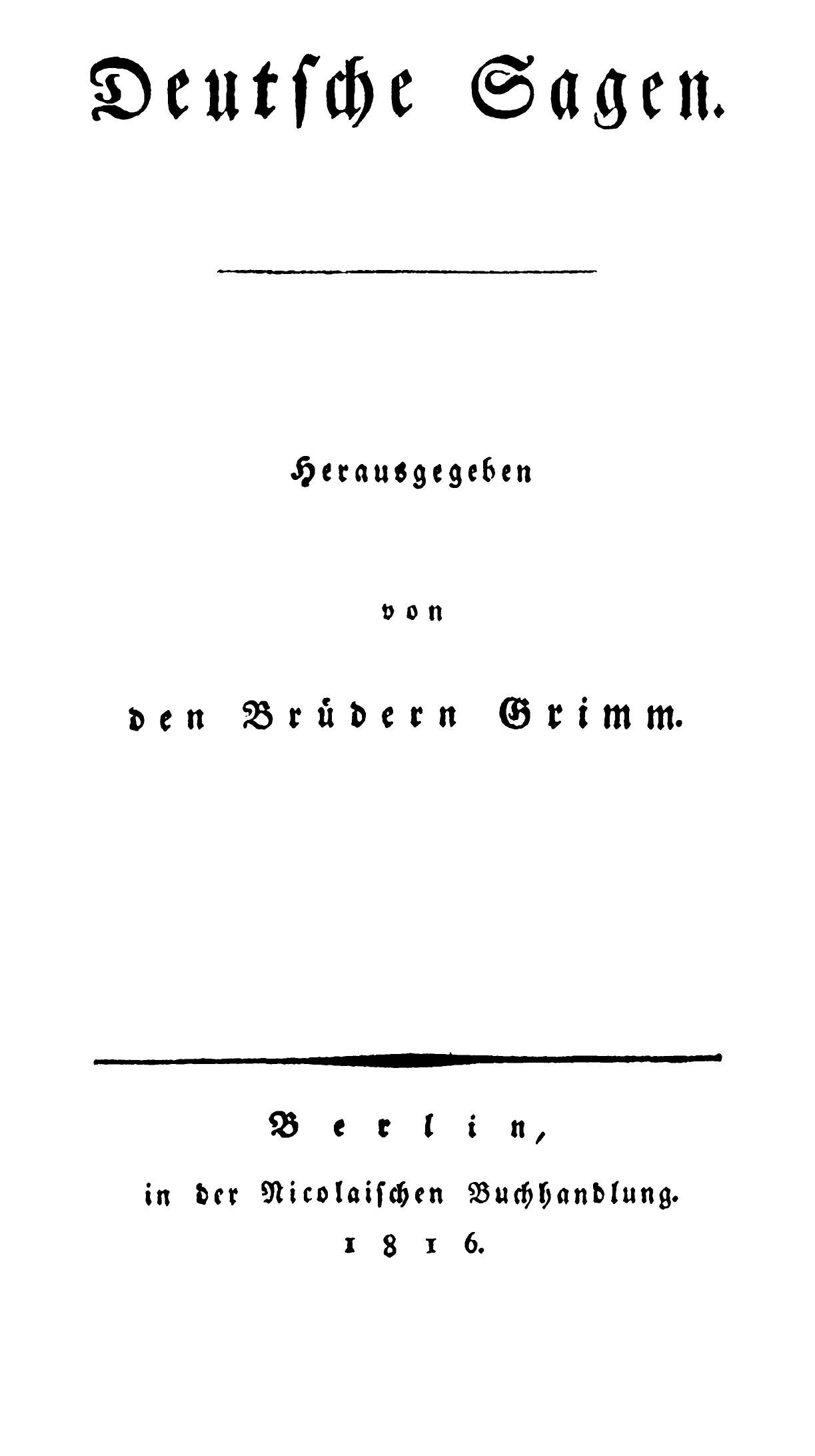
2 min read · 2 sourcesDeutsche Sagen ("German Legends") is a publication by the Brothers Grimm, appearing in two volumes in 1816 and 1818. The collection includes 579 short summaries of German folk tales and legends (where "German" refers not just to German-speaking Europe generally but includes early Germanic history as well). Deutsche Sagen followed the 1812 publication of Kinder- und Hausmärchen (known in English as Grimms' Fairy Tales). It never gained the wide popular appeal and influence of the latter, although it did influence the scholarly study of folk narrative. The first volume contains 362 short tales, provided in short summary with a source. The source is in some cases "oral", with the region where it was collected (as in no. 1, Die drei Bergleute im Kuttenberg "the three miners in Kuttenberg", marked "oral" from Hessen), in other cases with a reference to the tale's previous publication (as in no. 362, Die drei Alten "The three old men", attributed to "Schmidt aus Lübek", im Freimüthigen 1809. Nr. 1.) The tales of the first volume tend to blend common concerns of the poor and working classes with magical realism including the attainment of wealth and status, and includes references to Frau Holle, the Wild Hunt, ghostly apparitions, and magic, the devil, dwarves, giants, kobolds, nixes, etc. 1
The text above is adapted from the Wikipedia article “Deutsche Sagen”, available under the Creative Commons Attribution-ShareAlike 4.0 licence. 1
Deutsche Sagen is group of literary works by the Grimm Brothers, according to the structured record cited below. This entry was generated automatically from that record and has not yet been reviewed by a person familiar with the tradition. 2
The source record links this tradition to 3 external registers, which can be verified through the citation. 2