The tradition & historical record
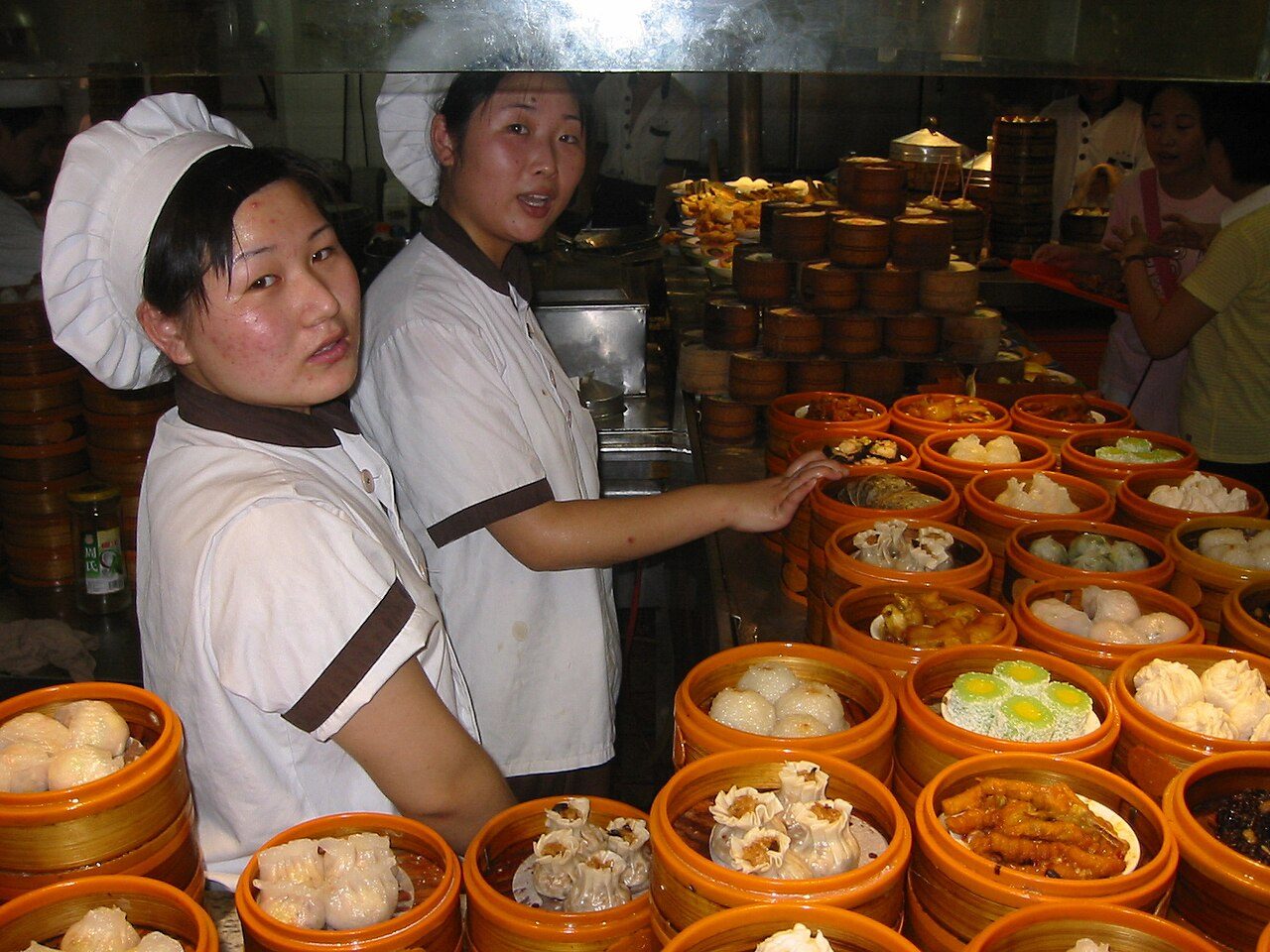
6 min read · 2 sourcesDim sum (traditional Chinese: 點心; simplified Chinese: 点心; pinyin: diǎn xīn; Jyutping: dim2 sam1) is a large range of small Chinese dishes that are traditionally eaten in restaurants for brunch. Most modern dim sum dishes are commonly associated with Cantonese cuisine, although dim sum dishes also exist in a few other Chinese cuisines. In the tenth century, when the city of Canton (Guangzhou) began to experience an increase in commercial travel, many frequented teahouses for small-portion meals with tea called yum cha (brunch). Yum cha includes two related concepts. The first is "one bowl with two pieces" (一盅兩件), in reference to the custom of serving teahouse customers two delicately made food items, savory or sweet, to complement their tea. The second is "dim sum", which translates literally to "touch the heart", the term used to designate the small food items that accompanied the tea. Teahouse owners gradually added various snacks called dim sum to their offerings. The practice of having tea with dim sum eventually evolved into the modern yum cha. Cantonese dim sum culture developed rapidly during the latter half of the nineteenth century in Guangzhou. Cantonese dim sum was originally based on local foods. As dim sum continued to develop, chefs introduced influences and traditions from other regions of China. 1
Etymology
The original meaning of the term "dim sum" remains unclear and contested. Some references state that the term originated in the Eastern Jin dynasty (317 AD–420 AD). According to one legend, to show soldiers gratitude after battles, a general had civilians make buns and cakes to send to the front lines. "Gratitude" (點點心意; dim2 dim2 sam1 ji3), later shortened to dim sum (點心), came to represent dishes made similarly. 1
Some versions date the legend to the Southern Song dynasty (960–1279) after the term's earliest attestation in the Book of Tang. Written in the Five Dynasties and Ten Kingdoms period (907–979), the book uses dim sum as a verb instead (Chinese: 治妝未畢, 我未及餐, 爾且可點心, "I have not finished preparing myself and am not ready for a proper meal; therefore, you can treat yourself to some small snacks.") In this context, "dim sum" means "to barely fill your stomach". Dim sum dishes are usually associated with "yum cha" (飲茶), which is known as the Cantonese brunch tradition. Chinese food historian Yan-kit So has described dim sum as:Literally translated as "so close to the heart", they are, in reality, a large range of hors d'oeuvres Cantonese people traditionally enjoy in restaurants (previously teahouses) for breakfast and lunch but never for dinner, washed down with tea. "Let's go yum cha" (to drink tea) is understood among the Cantonese to mean going to a restaurant for dim sum; such is the twin linkage between the food and the beverage. 1
Cuisine
There are at least two thousand types of dim sum in total across China, and over one thousand available in Guangdong alone. Dim sum are usually eaten as breakfast or brunch. Cantonese dim sum has a very broad range of flavors, textures, cooking styles, and ingredients, and can be classified into regular items, seasonal offerings, weekly specials, banquet dishes, holiday dishes, house signature dishes, travel-friendly, as well as breakfast or lunch foods and late night snacks. The subtropical climate of the southeast quadrant of Guangdong partly influences dim sum's portion size. It can cause a decrease in appetite, so that people prefer eating scaled-down meals throughout the day rather than the customary three large meals. Teahouses in Guangzhou served "three teas and two meals," which included lunch and dinner, and breakfast, afternoon, and evening teas with dim sum. Many dim sum dishes are made of seafood, chopped meats, or vegetables wrapped in dough or thin wrappings and steamed, deep-fried, or pan-fried. A traditional dim sum brunch includes various types of steamed buns, such as cha siu bao (a steamed bun filled with barbecue pork), rice or wheat dumplings, and rice noodle rolls that contain a range of ingredients, including beef, chicken, pork, prawns, and vegetarian options. Many dim sum restaurants also offer plates of steamed green vegetables, stuffed eggplant, stuffed green peppers, roasted meats, congee and other soups. Dessert dim sum is also available and can be ordered at any time since there is not a set sequence for the meal. It is customary to order "family-style", sharing the small dishes consisting of three or four pieces of dim sum among all members of the dining party. Small portion sizes allow people to try a wide variety of food. 1
Dishes
Dim sum restaurants typically have a wide variety of dishes, usually several dozen. 1
Tea
Tea is considered to be very important, so much so that it is considered just as important as the food itself. Teas served during dim sum include: 1
Chrysanthemum tea: instead of tea leaves, it is a flower-based tisane (herbal tea) made from flowers of the species Chrysanthemum morifolium or Chrysanthemum indicum, which are the most popular in East Asia. To prepare the tea, chrysanthemum flowers (usually dried) are steeped in hot water (usually 90 to 95 °C (194 to 203 °F) after cooling from a boil) in a teapot, cup, or glass. A common mix with pu-erh is called guk pou (菊普; guk1 pou2) from its component teas. Green tea: freshly picked leaves that go through heating and drying processes but not oxidation, so keep their original green color and chemical compounds, like polyphenols and chlorophyll. Produced all over China, and the most popular category of tea, green teas include the representative Dragon Well (龍井; lung4 zeng2) and Biluochun from Zhejiang and Jiangsu provinces, respectively. Oolong tea: partially oxidizing the tea leaves imparts them with characteristics of both green and black teas. Oolong teas are closer in taste to green than black tea, yet have less of a "grassy" taste. Major oolong-tea producing areas such as Fujian, Guangdong, and Taiwan line the southeastern coast of China. Tieguanyin or Ti Kuan Yin (鐵觀音; tit3 gun1 jam1): one of the most popular, originated in Fujian province, and is a premium variety with a delightful fragrance. Pounei (Cantonese) or pu-erh tea (Mandarin): usually a compressed tea, pu-erh has unique, earthy notes derived from years of fermentation. Scented teas: various mixes of flowers with green, black, or oolong teas exist. Flowers used include jasmine, gardenia, magnolia, grapefruit flower, sweet-scented osmanthus, and rose. 1
History
Dim sum is part of the Chinese tradition of snacks originating from the Song dynasty (960–1279), when royal chefs created various dishes such as minced pheasant, lark tongue, and desserts made from steamed milk and bean paste. Guangzhou experienced an increase in commercial travel in the tenth century At that time, travelers would frequent teahouses for small-portion meals with tea called yum cha or "tea" meals. Yum cha includes two related concepts. The first, 一盅兩件, translates literally as "one cup, two pieces". 1
The text above is adapted from the Wikipedia article “Dim sum”, available under the Creative Commons Attribution-ShareAlike 4.0 licence. 1
dim sum is style of Chinese cuisine of bite-sized portions served in small steamer baskets or plates, according to the structured record cited below. This entry was generated automatically from that record and has not yet been reviewed by a person familiar with the tradition. 2
The source record links this tradition to 19 external registers, which can be verified through the citation. 2